Chewing has changed
If the implant tooth touches first or feels sore after eating, say so. Other dental work since your last visit can change the bite, so let us know what has been done.


Most implant care happens at your own bathroom sink, between visits. Implant maintenance for Erin pairs a professional review of the restoration, gum and bite with a home routine you can actually keep up.
Professional visits matter, but they happen a few times a year. Everything in between depends on what you do each morning and night. For an implant, that routine often looks a little different from caring for natural teeth, because the shape of the restoration and the gum around it can create spots that ordinary brushing misses.
A maintenance review is where the two halves meet. The clinician checks the visible crown or appliance, the components underneath, the gum seal and the supporting bone, and also asks how your cleaning is going. If a tool is not reaching, or a spot keeps collecting food, the review is the moment to work out why.
Households in Erin village, Hillsburgh and the countryside around them often plan dental trips carefully, so it is worth making each one useful. Bring the brushes or aids you use at home, describe any area that feels difficult and mention health changes. We can then fine-tune both the professional care and the routine you carry out yourself.
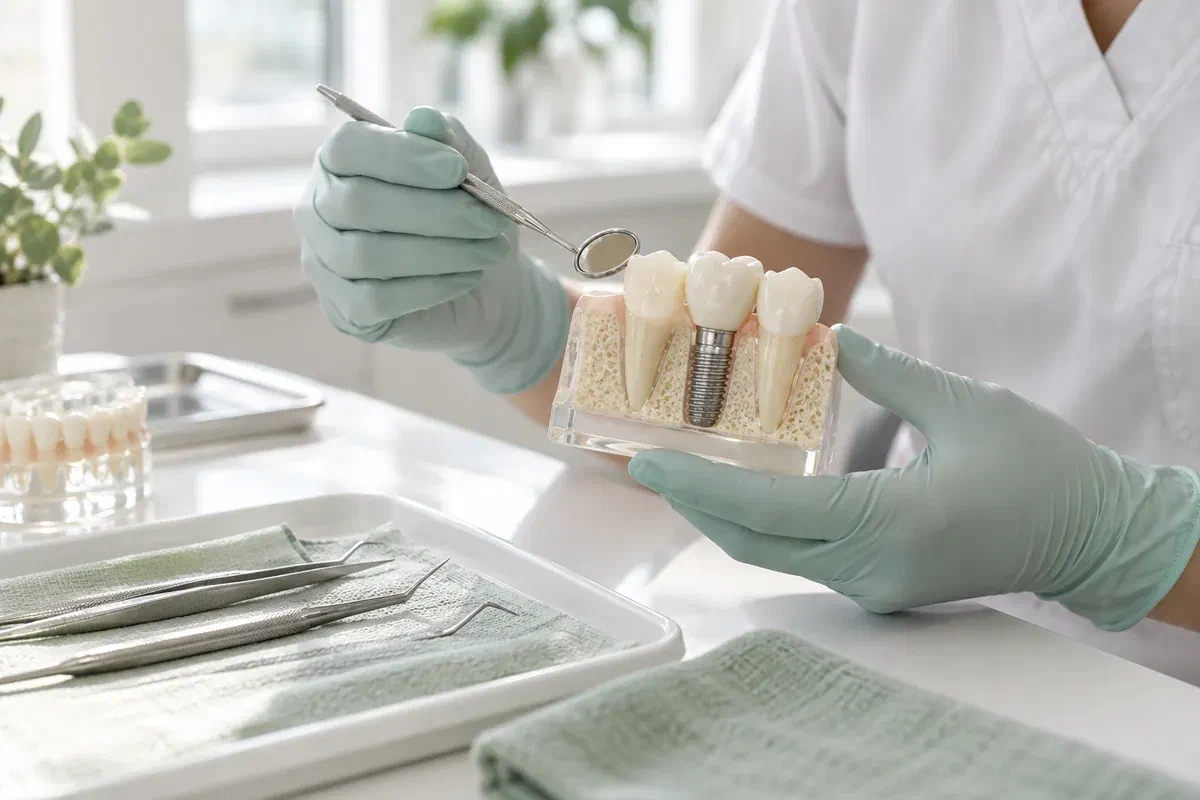
You do not have to identify what is wrong. Explain what you feel, where cleaning is difficult and how long it has been that way, and the examination can be pointed at the right place.
If the implant tooth touches first or feels sore after eating, say so. Other dental work since your last visit can change the bite, so let us know what has been done.
A crown, bridge, clip or connecting component may be moving. It does not automatically mean the fixture is in trouble, but the part should be identified and the cause found.
Arthritis, a new medicine, a health diagnosis or poorer eyesight can make a familiar routine harder. Tell us, as different aids or methods may be easier for you to manage.
Swelling, discharge, a restoration that has loosened or pain that is increasing should be assessed soon. Call the clinic instead of waiting for your next review.
Reviews let the team see how well your routine is working on the actual surfaces of your restoration, and how the gum and components are doing over time. They also help tell apart a cleaning adjustment from a concern that needs a separate assessment or repair.
No routine, at home or at the clinic, can guarantee an implant will remain free of complications. Your plan should be personal, and new findings may change the interval or the advice. Ask what is being watched and how your routine is affecting it.
Patient information: European Federation of Periodontology — dental implants
Notes from each visit show whether hard-to-clean areas are getting better. If your implant was placed elsewhere, knowing the system and restoration helps the team suggest suitable aids.
Food trapping might mean a technique change, a contour issue or a loose component. Checking each avoids assuming all symptoms are about hygiene, or that a loose part means the implant must come out.
Ask which tools suit your restoration, how to replace worn ones and who would handle a repair if needed. Clear answers make home care simpler to keep up between trips.
Each visit follows your restoration. A single crown, a bridge on implants and an overdenture each have different cleaning needs, and the review adjusts to fit.
We cover the implant’s history, repairs and previous cleanings, then talk through what your routine looks like now. Health and medication updates, symptoms, movement and appliance trouble are all noted.
The clinician checks the restoration, bite and gum, paying attention to surfaces that are hard to reach. When the history and findings warrant it, an image or additional record may be suggested.
Professional care is matched to your design, and we show you how to reach any difficult spot. If a part, the tissue or the restoration’s shape needs separate treatment, we explain what was found and what we propose.
You leave with the aids and steps to use, the symptoms that should prompt a call and your return date. If other clinicians share your care, responsibilities are confirmed.
The simplest routine you will actually follow is better than a perfect one you abandon. Ask for a demonstration, keep your implant details and get in touch when something changes instead of saving it for a recall.
Use the recommended brushes or aids gently and consistently. If one area stays hard to reach or a tool starts snagging, tell us; it may need a different aid or a reassessment rather than more pressure.
Avoid tightening, adjusting or gluing any part of the restoration. These need proper assessment and equipment, and home attempts can hide the cause or damage parts that might otherwise be reused.
Keep a simple record of your implant system if known, any repairs, the aids you use and the clinicians involved. It is handy if a different team ever needs to look at your restoration.
Clear answers make daily implant care easier to keep up. These questions focus on cleaning at home and on the ongoing care of the whole restoration.
Book at our Bronte Street practice for a review of your implant, the tissue supporting it and the cleaning you do at home. We will explain what we see, refine your routine and arrange further care when cleaning is not the whole answer.
If a part has come off, keep it safe and call us. Let us know about movement, swelling or rising discomfort when booking.
