A change in chewing
An implant tooth that meets early or feels sore under pressure is useful information. Let us know about recent treatment on other teeth, because a change in the bite can affect how the implant is loaded.


Part of an implant sits where nobody can see it, so a review relies on careful examination and, when justified, imaging. Implant maintenance for Puslinch explains what is checked, why, and what the findings mean.
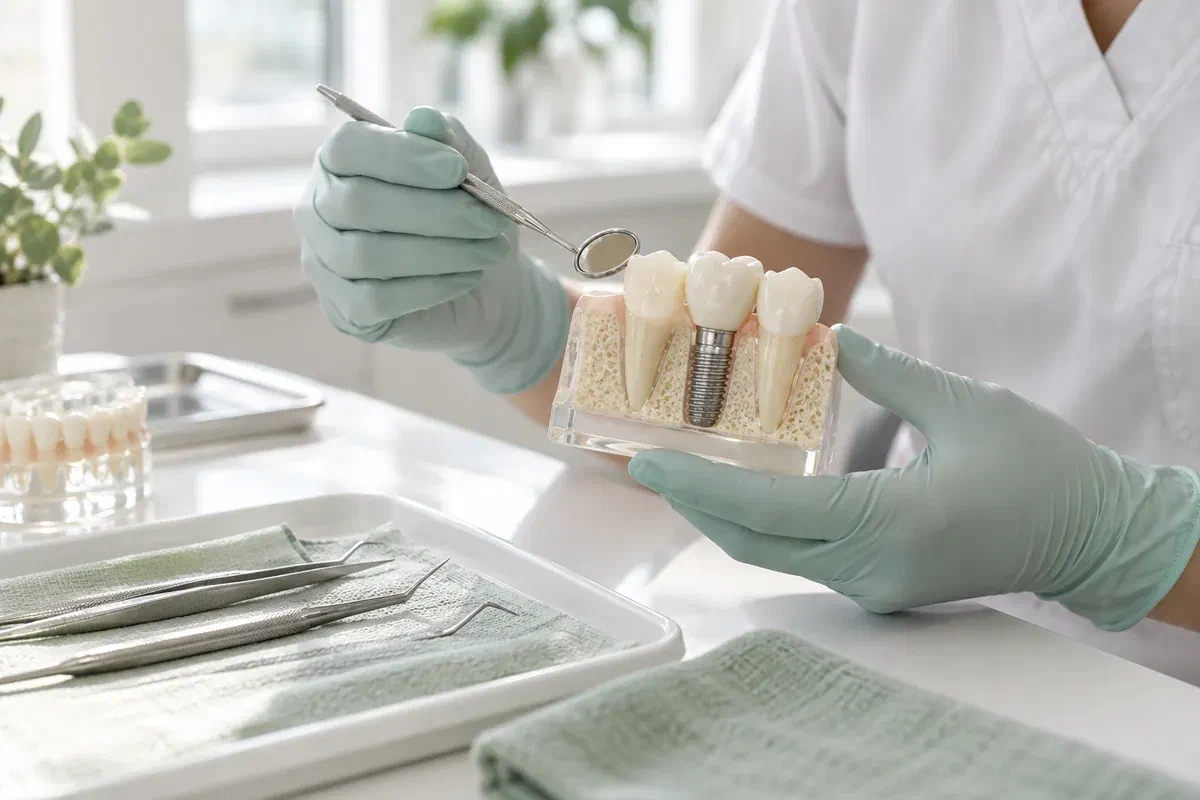
When you look at your implant you see a tooth. Beneath it are a connecting component, a fixture and the bone that holds it, with the gum forming a collar around the join. People often ask how anyone can tell what is happening down there, and whether that means an X-ray at every appointment.
The honest answer is that a review gathers information in several ways. The clinician looks at the restoration and gum, checks your bite, asks about symptoms and compares findings with earlier records. Imaging is one tool among these, used when the history or the examination suggests it would answer a real question.
From Puslinch, it helps to bring any implant records you hold, including earlier images if the original office provided them, and a note of what has felt different. Mention health changes too. With that in hand, we can explain what we are checking and plan maintenance that suits the restoration you have.
There is no need to know which layer of the implant is involved. Describe what you feel and when, and the clinician can focus the examination on the restoration and tissue most likely to explain it.
An implant tooth that meets early or feels sore under pressure is useful information. Let us know about recent treatment on other teeth, because a change in the bite can affect how the implant is loaded.
A crown, bridge, attachment or connecting part might be moving. That is not the same as the fixture losing support, and an examination is the first step in telling the two apart.
Diagnoses, medicines or difficulty using your cleaning aids can affect the gum and your routine. Share them, so the assessment and any advice take your current situation into account.
Please call about swelling, discharge, a loose restoration or worsening pain. These should be assessed promptly instead of being saved for a routine appointment.
A single examination tells part of the story. Repeated reviews let the team compare the gum, restoration and your routine over time, and decide whether a change reflects everyday cleaning or something that warrants a specific assessment or repair.
Maintenance cannot guarantee an implant will avoid complications. Your plan should be tailored, and new findings may alter the interval, the records needed or the care offered. Feel free to ask what each test or image is meant to show.
Patient information: European Federation of Periodontology — dental implants
Previous notes and images allow like-for-like comparison. If your implant was placed by another office, asking them for system details and past images can make later decisions clearer.
Component problems and tissue changes may cause similar symptoms but are investigated differently. Considering both prevents assuming every symptom is a hygiene problem or that a loose part means the implant has failed.
Ask how a repair would be handled, whether replacement parts are available for your system and who would provide the care. Knowing this ahead of time removes some uncertainty if a problem arises.
Your restoration influences each step. Reviewing one crown is different from checking a multi-implant bridge or a removable denture held by attachments, and each may need different records.
We discuss when the implant was placed, repairs, previous care and how you clean it now. You tell us about health or medication changes and any symptoms, movement or appliance concerns.
The clinician looks at the restoration, the bite and the gum around the implant. If something in the history or examination raises a question that imaging could answer, it will be explained before any image is taken.
Maintenance is adapted to your design. When findings point to a component, tissue or design problem that needs a separate procedure, the team explains what they saw and what they suggest.
You leave understanding what was checked, how to keep the restoration clean, which signs mean you should call and when to return. If other clinicians share your care, we clarify how records will be shared.
The routine between visits shapes much of what a review finds. Ask to see how to clean your restoration, keep your records together and call when something changes rather than waiting for your scheduled visit.
Use the tools and technique shown for your implant. If an area becomes tricky to reach or a tool no longer passes easily, tell us, since a reassessment may help more than extra force.
Do not tighten screws, adjust attachments or glue a loose crown. These parts need correct assessment and tools, and changing them at home can obscure what went wrong or damage something serviceable.
If you have system details, repair notes or past images, keep them with the contact details of the clinicians involved. These make comparison easier and help if a different team ever needs to assess your implant.
Understanding how your implant is assessed makes the recommendations easier to follow. These questions focus on examinations, records and the ongoing care of the restoration.
Book at our Bronte Street practice so we can look over the implant, the tissue holding it and the way you keep it clean. We will explain the examination, any records recommended and the next step if care beyond cleaning is needed.
If a component has come off, keep it in a safe container and call us. When booking, mention any movement, swelling or increasing discomfort.
