Whether the tooth truly has to go
Ask what is threatening the tooth and whether keeping it, at least for now, is a reasonable path. A careful second look examines the tooth on its own terms before replacement is treated as settled.


One dentist suggests an implant, another a bridge, and you are left wondering whether the tooth could simply stay. A second opinion for Halton Hills households sets those choices side by side and explains what each would ask of you.
Conflicting advice is one of the most common reasons people seek an implant second opinion. Perhaps one practice recommended replacing a tooth with an implant, a friend mentioned a bridge, and part of you hopes the original tooth can be kept. Each path has its own requirements, and it can be hard to compare them from a brochure.
A second opinion is a fresh, independent assessment of your mouth and the proposals in front of you. The dentist examines the tooth and its neighbours, looks at the available records, and explains what the findings suggest about each option. Nobody is assuming the first recommendation was wrong.
Households across Halton Hills, from Georgetown and Acton to Glen Williams, often fit dental visits around work and school, so bringing your written plans and any imaging lets one appointment cover more ground. We will say plainly what can be judged on the day and what might need more information.
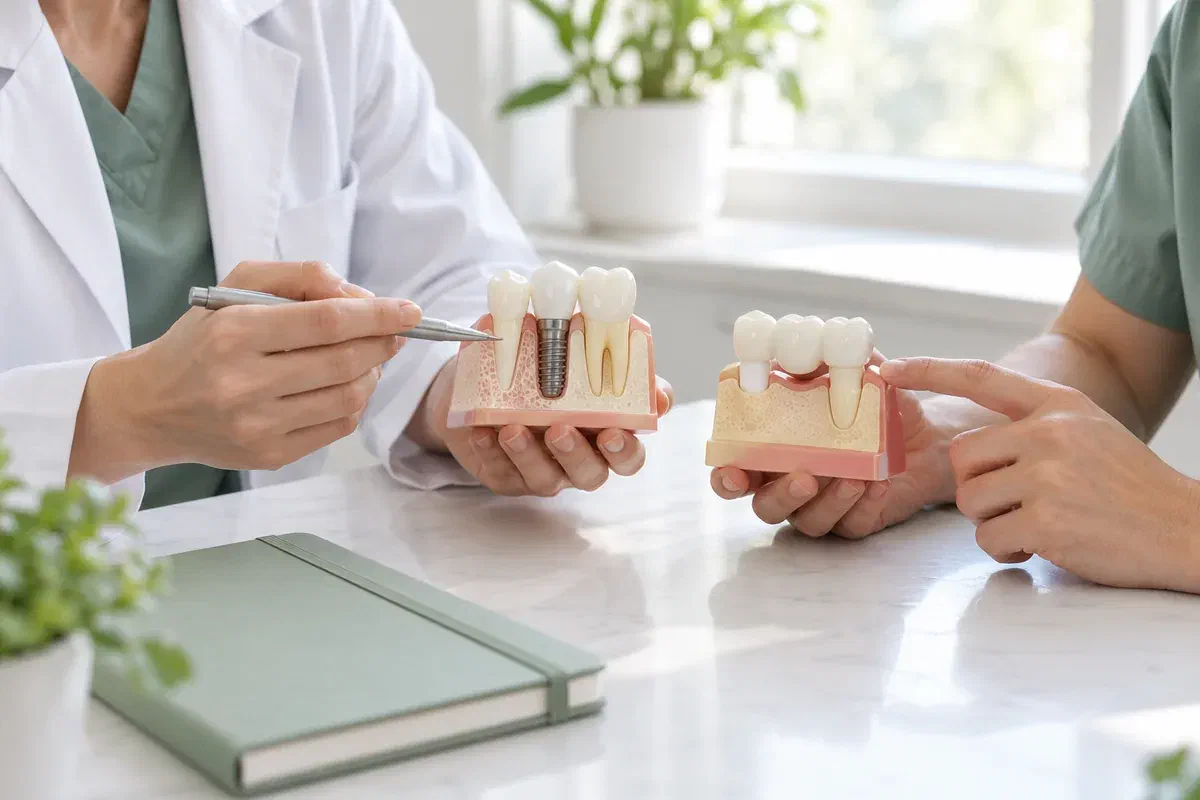
Some people mainly want to know whether a tooth can be saved. Others are torn between an implant and a bridge, or puzzled by the extra steps in one plan. Pinning the question down in advance makes the conversation more productive.
Ask what is threatening the tooth and whether keeping it, at least for now, is a reasonable path. A careful second look examines the tooth on its own terms before replacement is treated as settled.
These involve different preparation, different effects on neighbouring teeth, and different upkeep. Bring both proposals in writing so the discussion can weigh their scope and reasoning, rather than only what they cost.
If you already have an implant and something has changed, say what it is: discomfort, appearance, a loose feeling, or cleaning difficulty. Records about its parts help, and some problems are better assessed by a specialist.
Planning conversations can wait; worsening pain, swelling, discharge, and a loosening restoration cannot. Phone the clinic about changing symptoms so the urgent issue is addressed first.
An additional consultation lets you review the evidence and ask how each possible treatment fits what matters most to you. It might confirm the implant recommendation, favour a bridge or keeping the tooth, or reveal that something still needs to be checked before any option can be weighed.
When one dentist leans toward an implant and another toward a bridge, it is often a matter of judgment rather than error. Both may be reasonable, with different consequences for neighbouring teeth, surgery, and long-term care. Ask where the views agree and what each one prioritises.
An implant depends on bone and gum health and on surgery; a bridge depends on the teeth beside the gap; keeping the tooth depends on its own outlook. The discussion helps separate what is known from what is expected.
You might care most about preserving neighbouring teeth, avoiding surgery, appearance, or how easy cleaning will be. A second opinion helps you see which option serves those aims and what each cannot offer.
You may decide to raise what you learned with the dentist who made the first recommendation. An extra opinion can support that conversation without any need to change practices.
This is usually more involved than a glance at an estimate. Check in advance which records are worth bringing, what the assessment fee includes, whether the review will cover one tooth or more, and whether further tests could come up.
Describe each proposal and what remains unclear to you. Share your goals, any symptoms, how past dental work has gone, and relevant health information, so the dentist understands your question and its setting.
Plans, X-rays or scans, and any implant details are reviewed. The dentist examines the tooth in question, the teeth beside it, and the gums, then tells you whether the available information supports an opinion.
We go over what the examination supports for each option, what remains uncertain, and how they compare. If a specialist or further records are recommended, ask exactly which question that step would answer.
Before you leave, confirm the key conclusions and any follow-up. You can request a plain-language summary, then decide whether to speak with the first dentist, look for more information, or carry on planning.
The second opinion is most useful when you read its reasoning next to the first proposal. Keep the notes together, and resist judging the options by a single line from each.
Note which teeth each plan involves, what preparation it includes, and what restoration it ends with. An implant plan and a bridge plan may differ in cost and timing for reasons that go beyond price.
If you want records or findings shared, talk with each team about suitable arrangements. Clear communication helps with questions about earlier findings, components, and who will look after future care.
While you compare long-term options, follow advice on any active problem. Ask what can safely wait and what should be treated sooner, so the decision process doesn’t let something else slip.
You don’t need to doubt anyone’s advice to want the options compared. These answers may help you prepare for the visit.
Book a visit to our Bronte Street practice to compare implant, bridge, and other options, or to discuss an existing restoration. Bring the written proposals and your questions so the appointment stays focused on your choice.
Let us know about pain, swelling, or anything loose when arranging the visit, so urgent problems can be identified early.
