

Illustrative dentist and patient discussion of an implant treatment sequence
Restorative Dentistry

Dental Implant Treatment Planning in Acton

When a tooth has to come out, the replacement plan is best made before the extraction, not after. For people in Acton, we map what follows removal so each step has a reason.

Before the extraction

Plan the replacement while the tooth is still there

A cracked root or a tooth beyond repair often starts the implant conversation. It is tempting to deal with the removal first and think about replacement later, yet the way a tooth comes out, and what is done to the site at that time, can affect the options that follow.

Treatment planning puts the whole route in order: assessment, extraction, any preservation or preparation of the site, placement, healing, the restoration and maintenance. These stages may be split between clinicians and each relies on the last. Keeping the final tooth in mind from day one helps make sure it will have the space, appearance, bite and cleaning access it needs.

Coming from Acton, you may prefer to group early visits or know which ones need recovery time. Tell us that, and anything about cost or how you feel about a gap. We will work those concerns in while the clinical needs and realistic timing lead.

Plan ahead of an extraction
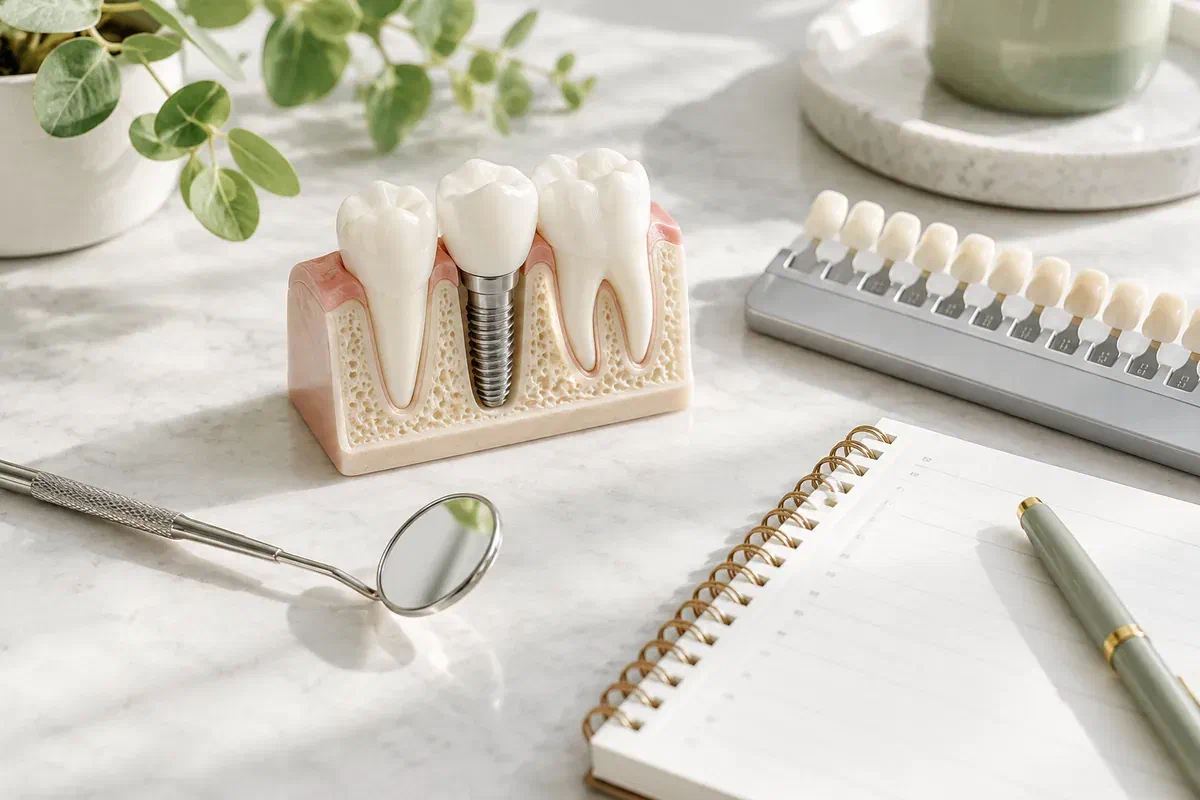
Implant teaching model, shade guide, and blank notebook on a consultation desk
Decisions at the start

What removal sets in motion

Some choices are made at the extraction itself, while others wait until healing has been reviewed. Knowing which is which helps you treat an early timeline as provisional.

The condition of the site after removal

Infection, gum disease nearby or the amount of bone around the tooth can influence what happens next. Ask what will be assessed before and after extraction, and what must be settled before an implant is considered.

Filling the gap after the tooth comes out

Ask whether a temporary replacement suits you once the tooth is gone and what restrictions it would carry. Protecting the healing socket, eating comfortably and appearance all factor in.

One clinician or two

The extraction, placement and crown may be done by different people. Ask who coordinates the sequence, since that shapes estimates, after-care contacts and the timing of each next appointment.

An offer to remove a tooth and place an implant in the same visit may or may not suit your site. Ask what findings would decide that and what the fallback would be.

Planning before removal pays off

Fewer regrets about the order of things

Deciding on the replacement first means the extraction can be carried out with the next step in mind. You can also weigh the expected benefit of an implant against the time, upkeep and any additional procedures before committing to removal.

Planning cannot guarantee how a socket heals or rule out a surprise. It should describe the main uncertainties and how a change in approach would be handled. If the socket heals differently than hoped, you should expect a fresh conversation about cost and your agreement before anything new is done.

Patient information: Canadian Dental Association — dental implants

The future tooth guides today’s choices

Knowing the intended crown, bridge or appliance helps the team plan for support and position. That keeps chewing, appearance and cleaning part of the decision from the start.

A healing timeline you can prepare for

Knowing when you may need someone to drive you, a quiet day or a temporary tooth helps with work and home. The team can explain which intervals are set by healing.

Options kept open

Planning early lets you compare an implant with a bridge or removable appliance before the tooth is gone. Include maintenance and future repairs in the comparison.

From failing tooth to finished one

Mapping the steps after removal

The outline comes from discussion, examination and the records your situation calls for. It often becomes clearer after extraction and healing, and you should know when each decision is due.

  1. Assess the tooth and the area around it

    We review why the tooth is failing, nearby restorations, your health history and your goals. The dentist examines the site and decides what further information is needed before removal.

  2. Decide on the end result and the extraction approach

    We discuss the final restoration and how the site should be handled when the tooth comes out, including any preservation of the socket, imaging, referral and temporary options.

  3. Sequence healing, placement and restoration

    You see the order of appointments and who provides each one. A clear estimate separates included care from work that depends on how the site heals, and notes what could shift timing.

  4. Review the site before moving forward

    After extraction and at each later milestone, the team examines healing and confirms the planned approach still suits. Any change is explained and discussed before the next stage.

During healing

Look after the socket and the schedule

Keep your after-extraction instructions, the current plan and the clinic’s number together. If anything changes between visits, contact us before the next step goes ahead.

Ask what the coming appointment is for

A healing check, a procedure and a planning review need different preparation. Confirm which one is next, whether you need a ride, and follow the instructions for that visit.

Report anything unexpected

Swelling that worsens, persistent pain, a new medicine or a problem with a temporary can matter. Call the clinic so the team can judge whether it affects the plan.

Look past the final fitting

Once the restoration is in, care continues with cleaning advice and reviews. Ask who will monitor the implant and the tooth on it, and how to get help if a concern develops.

After removal

What can happen next

Several pathways may be reasonable once a tooth is removed. Compare what each means for site preparation, surgery, healing, the interim tooth, design of the restoration and long-term care.

When the site needs time to heal or be prepared

Removal now, implant later

The extraction and placement are separated by a healing period, sometimes with preservation or preparation in between. Ask what each interval achieves and how readiness is judged.

Where examination findings support it

Removal and placement together

In suitable cases, an implant can be placed at the time of extraction. Ask what would make that appropriate and what happens if conditions on the day rule it out.

When a non-implant approach fits better

A bridge or removable replacement

These follow their own sequence after extraction and have their own upkeep. Compare them on your situation, priorities and what each can realistically achieve.

Extraction and implant questions

Things to ask before the tooth comes out

Understanding why visits after an extraction are spaced the way they are makes the plan easier to follow. These questions separate clinical needs from practical preferences.

(905) 876-4488
Should my implant be planned before my tooth is removed?
Ideally, yes. Knowing the intended replacement can influence how the extraction is done and whether anything is placed in the socket at that time. Ask the dentist to talk through the replacement options before scheduling removal.
What is socket preservation?
It refers to steps taken at extraction to help maintain the shape of the site for later treatment, sometimes with graft material. It is not needed in every case. Ask whether it is recommended for you and why.
How long after an extraction can an implant be placed?
It varies. Some sites are suitable at the time of removal, while others need weeks or months of healing first. The timing depends on the site and how it heals, which the team will review before setting a date.
Can I keep a failing tooth until I decide what to do?
Sometimes, depending on the cause and whether infection is present. Ask what the risks of waiting are in your case. If you have pain, swelling or signs of infection, contact the clinic promptly rather than waiting.
Will the same clinician remove the tooth and place the implant?
Not always. The plan should state who does each stage and who coordinates. Ask how records and instructions will pass between offices so the next step is ready when healing allows.
Can the extraction and early reviews be scheduled to suit trips from Acton?
Ask when booking. Healing checks may be short, and where the sequence allows they can be timed sensibly. The spacing of key stages still depends on how the site heals.
Implant planning for Acton

Talk replacement before removal.

Arrange a visit to our Bronte Street practice before a planned extraction so we can map what comes after. We will look at the tooth and the site, list the decisions ahead and explain how removal, healing, the new tooth and maintenance connect.

If another dentist has recommended removal, bring their notes or imaging reports so we can build on them.

Visit Milton Dental Clinic
Unit 1, 342 Bronte St. S, Milton, ON L9T 5B7
Get directions Clinic hours
Monday–Thursday
11am–7pm
Friday–Sunday
By appointment only

Areas we serve

  • Milton
  • Oakville
  • Mississauga
  • Georgetown
  • Halton Hills
  • Acton
  • Campbellville
  • Brampton
  • Burlington
  • Puslinch
  • Rockwood
  • Erin
  • Caledon
  • Etobicoke
  • Old Milton
  • Bronte Meadows
  • Timberlea
  • Dorset Park
  • Dempsey
  • Clarke
  • Beaty
  • Coates
  • Harrison
  • Scott
  • Willmott
  • Ford
  • Bowes
  • Cobden
  • Walker
  • Mountain View
  • Milton Heights
  • Hawthorne Village
  • Valley View
  • Fallingbrook
  • Nassagaweya
  • Trafalgar
  • Esquesing
  • Nelson
  • Brookville
  • Moffat
  • Glen Williams
  • Norval
  • Limehouse
  • Stewarttown
  • Ashgrove
  • Hornby
  • Silver Creek
  • Speyside
  • Scotch Block
  • North Oakville
  • River Oaks
  • Glen Abbey
  • West Oak Trails
  • Palermo
  • Bronte Creek
  • College Park
  • Joshua Creek
  • Uptown Core
  • Preserve
  • Iroquois Ridge
  • Lisgar
  • Meadowvale
  • Meadowvale Village
  • Churchill Meadows
  • Erin Mills
  • Central Erin Mills
  • Streetsville
  • East Credit
  • Creditview
  • Heartland
  • Sheridan
  • Mount Pleasant
  • Credit Valley
  • Huttonville
  • Churchville
  • Springbrook
  • Northwest Brampton
  • Bram West
  • Fletcher's Meadow
  • Fletcher's Creek South
  • Alton Village
  • Orchard
  • Millcroft
  • Headon Forest
  • Tansley
  • Brant Hills
  • Tyandaga
  • Kilbride
  • Lowville
  • Aberfoyle
  • Morriston
  • Arkell
  • Hillsburgh
  • Freelton
  • Carlisle
  • Waterdown
  • Flamborough
  • Mountsberg

How can we help?

Milton Dental Clinic

Have a question about your smile? Choose the option that works best for you.

For urgent dental concerns, please call.
Messages are reviewed during clinic hours.