

Illustrative dentist and patient discussion of an implant treatment sequence
Restorative Dentistry

Dental Implant Treatment Planning in Georgetown

Implant, bridge or removable partial: the right answer often depends on the route as much as the result. From Georgetown, plan each option’s stages side by side before you choose.

Weighing the choices

Is an implant the right way to replace this tooth?

That question is hard to answer until you can see what each option involves. An implant, a fixed bridge and a removable partial each follow a different sequence, need different upkeep and suit different mouths. Planning lays those paths out so the decision rests on more than a first impression.

For an implant, the path usually runs from assessment through any groundwork the site needs, placement, healing and the restoration, then into long-term care. Different clinicians may share the stages. The tooth or appliance at the end must fit the gap, match your smile, cope with chewing and be cleanable, so it is considered first.

Many people from Georgetown come to this decision after losing a tooth unexpectedly. Bring up anything practical, from budget and time off to the gap itself, and we will talk it through while the clinical findings and realistic timing guide the advice.

Compare your replacement options
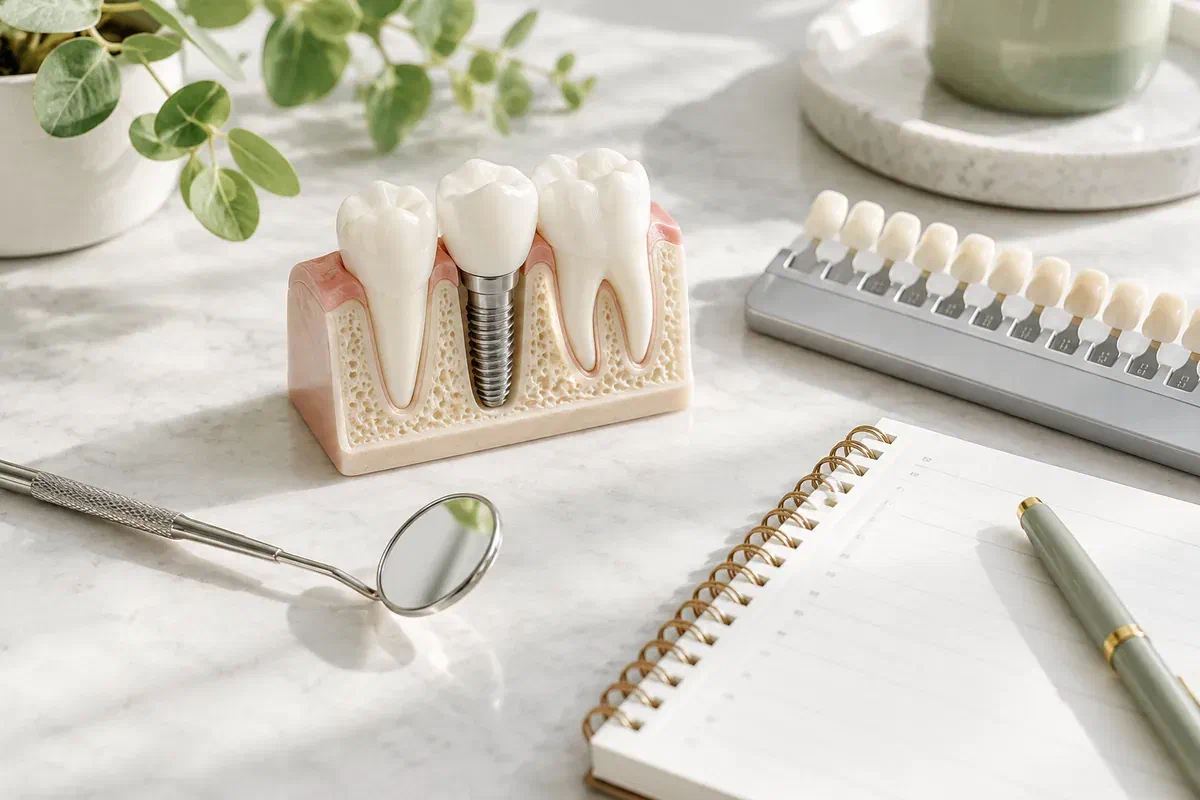
Implant teaching model, shade guide, and blank notebook on a consultation desk
Things that tip the balance

Three factors that shape the choice

Some parts of each pathway are settled early, others depend on findings that come later. Knowing the difference keeps an early estimate from feeling like a fixed promise.

The condition of the site and its neighbours

Decay, gum health, a tooth that still needs removing or the bone at the site may favour one option or add steps to another. Ask what has to be treated first and what will be checked before each next stage.

How you would manage in between

An implant may involve a healing period with a temporary tooth; a bridge or partial follows its own interim arrangement. Ask how each would look and function day to day, and how a healing site would be protected.

Who provides each route

Some options may be completed in one office, while others involve a referral. Ask who coordinates the plan, which affects estimates, follow-up contacts and the final fitting.

Advertised fast implant options may not reflect what your site needs. Ask which findings set the timing and what could change the order.

Deciding with the full picture

Choose the route, not just the tooth

When each option is mapped out, you can compare appointments, healing, maintenance and the chance of extra procedures directly. The expected benefit of an implant becomes something you can weigh rather than assume.

Planning cannot rule out an unexpected finding or promise how a site will heal. It should explain where uncertainty sits for each choice and how a change of direction would be handled, including revised estimates and consent.

Patient information: Canadian Dental Association — dental implants

Restoration-led thinking

What the final crown, bridge or partial needs drives where support goes. Starting from the finished tooth keeps comfort, appearance and cleaning part of every comparison.

A realistic picture of time

Implants often involve more stages than a bridge, and a partial has its own fitting visits. Knowing when you may need recovery time or a temporary helps you choose the route that fits your life.

Long-term costs and care included

A fair comparison counts maintenance, possible repairs and eventual replacement, not just the first treatment. Ask what each option usually needs over time.

How we help you decide

Four steps toward a confident choice

We combine discussion, examination and appropriate records. The plan sharpens as information comes in, and you should know when each decision is expected.

  1. Understand your priorities and your mouth

    We talk about the gap, nearby restorations, your health history and what matters most, whether that is chewing, appearance or avoiding surgery. The dentist examines the area and notes what else is needed.

  2. Outline each reasonable option

    For every suitable route, we describe the final restoration and anything needed first. For an implant that can include imaging or site work, and we are clear about what a temporary can do.

  3. Compare stages, providers and estimates

    You see the order of visits and who provides each one for the options being considered. Estimates distinguish included care from conditional work and note what could affect timing.

  4. Revisit once you have chosen

    After you decide, the treating team re-checks findings before each major step to make sure the chosen approach still fits. Any significant change is explained before you continue.

After the decision

Keep the comparison and the final plan

Hold on to the outline of the route you chose and the clinic’s contact details. If your health or circumstances change, let us know so the next step reflects your current situation.

Find out what each visit involves

Ask whether you are coming in for an examination, treatment or a check, and whether you should arrange a ride. Follow the instructions for that visit rather than assuming.

Keep us updated

A new diagnosis, a change in medicines, symptoms near the site or a problem with a temporary can matter. Let the clinic know before your next appointment so the team can assess it.

Plan for maintenance from the start

Whichever option you choose, cleaning guidance and reviews continue. Ask who will monitor the replacement over time and how to arrange help if something changes.

Side by side

Three ways to fill a gap

Each route can be clinically reasonable depending on your situation. Compare preparation, surgery if any, healing, the interim tooth, design of the final restoration and long-term upkeep.

Where bone or gum must be readied, or allowed to heal

An implant in planned stages

Extraction, site work, placement and restoration may each have their own interval. Ask what each pause allows and how progress is judged before moving on.

When findings support a coordinated approach

An implant with some steps combined

Certain procedures may be done together in a suitable case. Ask which ones and what the alternative is if conditions during treatment make combining them unwise.

When a non-implant option better suits you

A bridge or removable partial

These involve their own sequence and maintenance and may affect neighbouring teeth differently. The comparison should reflect your mouth and what each can realistically achieve.

Questions about choosing

Before you pick an option

Knowing why each route is structured as it is makes them easier to compare. These questions separate clinical requirements from preferences that may have some room.

(905) 876-4488
How does a bridge differ from an implant in terms of treatment steps?
A bridge usually involves preparing neighbouring teeth and fitting a fixed restoration, without surgery at the gap. An implant involves placement and healing before the final tooth. Ask how each would affect the teeth on either side of the space.
Is a removable partial denture still a reasonable choice?
For some people, yes. A partial can replace one or more teeth without surgery and may suit certain situations or priorities. The dentist can explain its advantages and limits for your mouth, including how it is held in place, how it may feel when eating and what adjustments or relines it might need over the years.
Does waiting to decide affect my options?
Sometimes. After a tooth is lost, the site and nearby teeth can change over time. Ask whether delaying would affect what is possible, so you can take the time you need with that in mind.
Which option is easiest to keep clean?
Each requires a routine. Implants and bridges need careful cleaning around and under them, and partials are removed for cleaning. Ask what daily care would look like for each before choosing, and be honest about the routine you are likely to keep up, since that matters as much as the option itself.
Can the final restoration be designed before choosing implant treatment?
Considering the intended tooth early is part of good planning, because it helps decide which support is needed. Final details, such as exact shape and shade, are still confirmed as treatment progresses and the site heals.
Will I need many trips from Georgetown for an implant compared with a bridge?
Usually an implant has more stages, including healing reviews, while a bridge tends to be completed in fewer visits. Ask for a likely visit count for each option, keeping in mind that findings during treatment may change it, and let us know if certain days are easier for you to make the trip.
Implant planning in Georgetown

Compare first. Decide when you’re ready.

Book a planning appointment at our Bronte Street practice to look at an implant alongside the alternatives. We will review where you are now, set out the decisions that remain and explain how preparation, the final restoration and upkeep fit together for each route.

If you have earlier estimates or recommendations, bring them so we can include them in the comparison.

Visit Milton Dental Clinic
Unit 1, 342 Bronte St. S, Milton, ON L9T 5B7
Get directions Clinic hours
Monday–Thursday
11am–7pm
Friday–Sunday
By appointment only

Areas we serve

  • Milton
  • Oakville
  • Mississauga
  • Georgetown
  • Halton Hills
  • Acton
  • Campbellville
  • Brampton
  • Burlington
  • Puslinch
  • Rockwood
  • Erin
  • Caledon
  • Etobicoke
  • Old Milton
  • Bronte Meadows
  • Timberlea
  • Dorset Park
  • Dempsey
  • Clarke
  • Beaty
  • Coates
  • Harrison
  • Scott
  • Willmott
  • Ford
  • Bowes
  • Cobden
  • Walker
  • Mountain View
  • Milton Heights
  • Hawthorne Village
  • Valley View
  • Fallingbrook
  • Nassagaweya
  • Trafalgar
  • Esquesing
  • Nelson
  • Brookville
  • Moffat
  • Glen Williams
  • Norval
  • Limehouse
  • Stewarttown
  • Ashgrove
  • Hornby
  • Silver Creek
  • Speyside
  • Scotch Block
  • North Oakville
  • River Oaks
  • Glen Abbey
  • West Oak Trails
  • Palermo
  • Bronte Creek
  • College Park
  • Joshua Creek
  • Uptown Core
  • Preserve
  • Iroquois Ridge
  • Lisgar
  • Meadowvale
  • Meadowvale Village
  • Churchill Meadows
  • Erin Mills
  • Central Erin Mills
  • Streetsville
  • East Credit
  • Creditview
  • Heartland
  • Sheridan
  • Mount Pleasant
  • Credit Valley
  • Huttonville
  • Churchville
  • Springbrook
  • Northwest Brampton
  • Bram West
  • Fletcher's Meadow
  • Fletcher's Creek South
  • Alton Village
  • Orchard
  • Millcroft
  • Headon Forest
  • Tansley
  • Brant Hills
  • Tyandaga
  • Kilbride
  • Lowville
  • Aberfoyle
  • Morriston
  • Arkell
  • Hillsburgh
  • Freelton
  • Carlisle
  • Waterdown
  • Flamborough
  • Mountsberg

How can we help?

Milton Dental Clinic

Have a question about your smile? Choose the option that works best for you.

For urgent dental concerns, please call.
Messages are reviewed during clinic hours.