

Illustrative dentist and patient discussion of an implant treatment sequence
Restorative Dentistry

Dental Implant Treatment Planning in Mississauga

Fitting implant care around a full workweek starts with knowing which dates healing sets and which ones can bend. We build that map with you before you commit, so travel from Mississauga stays manageable.

Implants and a busy calendar

Fixed dates, flexible dates

Ask anyone who has been through implant care what surprised them, and the answer is often the number of separate visits. Assessment, groundwork at the site, placement, healing checks, the final restoration and later maintenance can stretch over months, sometimes with more than one clinician involved.

A treatment plan turns that stretch into something you can schedule. It shows how each stage depends on the last and keeps the finished tooth in view from the start, because its size, shape, position and cleaning needs influence decisions made long before it is fitted.

For people in Mississauga juggling work and family, the practical side matters. Tell us which days are hard to free up, how you feel about a temporary gap and what budget questions you have. We will plan around them where the clinical requirements and realistic healing times allow.

Map your implant appointments
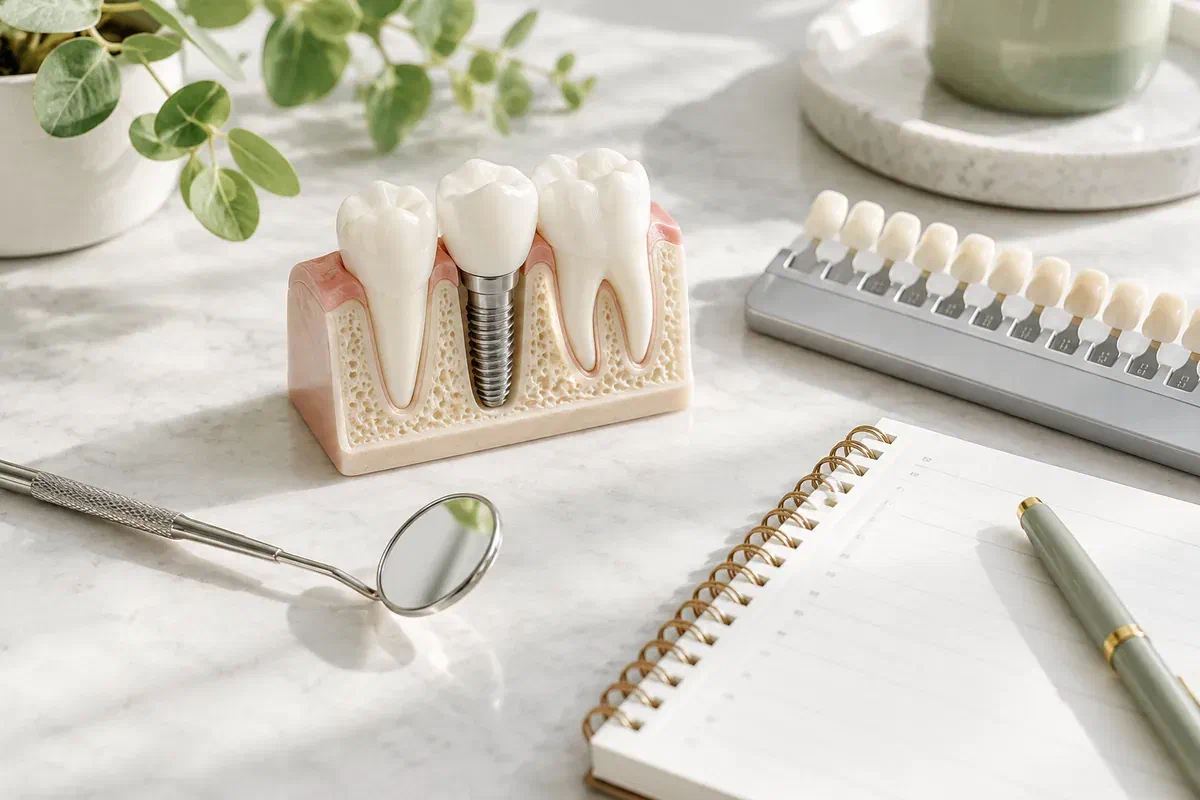
Implant teaching model, shade guide, and blank notebook on a consultation desk
Hidden time in a plan

Where the extra appointments come from

Many delays and added visits trace back to a few predictable areas. A clear outline separates the steps that are settled from those waiting on findings, so a first estimate isn’t read as a promised end date.

Treatment that has to happen first

Decay, gum inflammation, an extraction or the condition of the bone and gum can add stages before an implant is placed. Ask which of these apply to you and what the dentist needs to confirm before booking the next step.

The temporary arrangement

A temporary tooth may need adjustments or its own appointments. Ask whether one suits you, what you can eat with it and how it protects the healing site, so its visits are part of the plan from the start.

Separate offices, separate calendars

If one clinician places the implant and another restores it, ask who keeps the timeline together. Knowing that helps with estimates, referral bookings, after-surgery contacts and the final fitting.

A one-visit implant offer may sound efficient, but it may not fit your situation. Ask which findings decide timing and what could change the plan midway.

Planning that respects your time

Know the commitment before you make it

A clear sequence makes it easier to book time off, line up a ride and avoid scheduling a key procedure in a hectic week. It also puts the expected benefit next to the time, upkeep and possible added procedures, so you can judge the whole commitment.

Planning cannot prevent every surprise or promise a particular healing result. It should name the uncertainties and explain how the plan, estimate and consent would be revisited if treatment needs a different direction.

Patient information: Canadian Dental Association — dental implants

Built around the final tooth

The crown, bridge or appliance you will live with guides where support goes. Considering it first keeps chewing, appearance and daily cleaning tied to every earlier decision.

Recovery days you can see coming

Some visits are quick; others may call for a quieter day afterwards. Knowing which is which helps with work. The team can explain what is flexible and what healing dictates.

An honest look at alternatives

With the full pathway visible, you can set an implant beside a fixed bridge or a removable partial more fairly. Include maintenance and possible repairs, not just the first round of care.

How we build the timeline

Start with the result. Work back to today.

Your outline grows from conversation, examination and the records your case calls for. Expect it to sharpen as details come in, and ask when each decision is likely to be confirmed.

  1. Define the starting point

    We review the gap, any crowns or fillings nearby, your health history and what you want to achieve. The dentist examines the area and works out what further information is required.

  2. Settle on the replacement and its groundwork

    We discuss what the final tooth or appliance would involve and what must come first. That may mean X-rays or a 3D scan, a referral or preparing the site, and it includes being honest about what a temporary can manage.

  3. Sequence the visits and the costs

    You see the order of appointments and who provides each part. A readable estimate distinguishes included care from conditional work and notes what might move the dates.

  4. Confirm at each milestone

    Before every major stage, the treating team checks that current findings still support the plan. A meaningful change is explained so you know how it affects the remaining appointments.

While treatment is underway

One reference, kept current

Keep the most recent plan and contact details somewhere you will find them, such as on your phone. If anything changes between visits, let the team know before the next stage goes ahead.

Know what kind of visit is next

An assessment, a procedure and a review can need different preparation. Ask whether you should book time off or arrange a ride, and follow the instructions for that specific appointment.

Report changes early

A new prescription, a medical procedure, symptoms at the site or a problem with a temporary can affect the order of care. Calling ahead lets the team decide whether the plan needs adjusting.

Keep maintenance booked

Once the final tooth is fitted, cleaning advice and regular reviews continue. Clarify who monitors the implant itself and who services the parts that sit on it. Save a number for problems that come up between scheduled visits, because a loose crown or sore gum is easier to deal with early.

Different sequences

The route changes the schedule

More than one approach may be clinically reasonable. Compare how each handles preparation, surgery, healing, the temporary stage, restoration design and long-term maintenance, not just the end result.

When the site needs preparation or healing time

Treatment in distinct stages

Extraction, preparation, placement and restoration may be spaced apart. Ask what each interval is for and how progress is reviewed before the next booking.

When findings support coordinating steps

Certain stages combined

In a suitable case, some procedures can share an appointment. Ask which ones and what the fallback would be if conditions during treatment make that unsuitable.

When a different balance fits your needs

A bridge or removable option

These involve their own sequence and upkeep. The comparison should reflect your mouth, your priorities and what each approach can reasonably achieve.

Scheduling and planning

Before you book time off

Understanding why visits are spaced as they are helps you plan work around them. These questions help separate clinical requirements from practical choices with some flexibility.

(905) 876-4488
Which implant appointments usually need the most time afterwards?
Surgical stages, such as an extraction or placement, are more likely to call for a quieter day than a review or impression visit. Your clinician will give specific advice for each procedure in your plan, including any limits on exercise, eating or driving that apply.
Are evening appointments available for implant planning visits?
The clinic is open until 7pm Monday to Thursday, which can suit consultations and reviews. Ask the front desk which stages can be booked later in the day and which need a different time.
Can I return to work the day after implant surgery?
Many people can, but it depends on the procedure and how you feel. Ask your clinician what to expect and follow their instructions, rather than planning around someone else’s experience.
How long should I expect the whole process to take?
There is no single answer. Timing depends on preparation, healing and the restoration chosen. Your plan should give a realistic range and explain which findings could lengthen or shorten it. Be cautious of any timeline that ends at surgery, since the restoration and its fitting visits still follow.
If an unexpected issue comes up, will the whole schedule restart?
Not necessarily. You will hear about the issue, the reason it is relevant and its effect on the stages still ahead, including timing, costs, alternatives and consent.
Can planning visits be arranged to limit trips from Mississauga?
Ask when booking. Where the clinical sequence allows, a consultation and records may be grouped. Healing intervals still determine the spacing of the main stages.
Implant planning from Mississauga

A schedule you can see from the start.

Arrange a planning consultation at our Bronte Street clinic. We will review where you are now, list the choices still to make and walk through how preparation, the permanent restoration and maintenance connect, so you can plan the months ahead.

If another office has given you an outline or estimate, bring it so we can build on what has already been proposed.

Visit Milton Dental Clinic
Unit 1, 342 Bronte St. S, Milton, ON L9T 5B7
Get directions Clinic hours
Monday–Thursday
11am–7pm
Friday–Sunday
By appointment only

Areas we serve

  • Milton
  • Oakville
  • Mississauga
  • Georgetown
  • Halton Hills
  • Acton
  • Campbellville
  • Brampton
  • Burlington
  • Puslinch
  • Rockwood
  • Erin
  • Caledon
  • Etobicoke
  • Old Milton
  • Bronte Meadows
  • Timberlea
  • Dorset Park
  • Dempsey
  • Clarke
  • Beaty
  • Coates
  • Harrison
  • Scott
  • Willmott
  • Ford
  • Bowes
  • Cobden
  • Walker
  • Mountain View
  • Milton Heights
  • Hawthorne Village
  • Valley View
  • Fallingbrook
  • Nassagaweya
  • Trafalgar
  • Esquesing
  • Nelson
  • Brookville
  • Moffat
  • Glen Williams
  • Norval
  • Limehouse
  • Stewarttown
  • Ashgrove
  • Hornby
  • Silver Creek
  • Speyside
  • Scotch Block
  • North Oakville
  • River Oaks
  • Glen Abbey
  • West Oak Trails
  • Palermo
  • Bronte Creek
  • College Park
  • Joshua Creek
  • Uptown Core
  • Preserve
  • Iroquois Ridge
  • Lisgar
  • Meadowvale
  • Meadowvale Village
  • Churchill Meadows
  • Erin Mills
  • Central Erin Mills
  • Streetsville
  • East Credit
  • Creditview
  • Heartland
  • Sheridan
  • Mount Pleasant
  • Credit Valley
  • Huttonville
  • Churchville
  • Springbrook
  • Northwest Brampton
  • Bram West
  • Fletcher's Meadow
  • Fletcher's Creek South
  • Alton Village
  • Orchard
  • Millcroft
  • Headon Forest
  • Tansley
  • Brant Hills
  • Tyandaga
  • Kilbride
  • Lowville
  • Aberfoyle
  • Morriston
  • Arkell
  • Hillsburgh
  • Freelton
  • Carlisle
  • Waterdown
  • Flamborough
  • Mountsberg

How can we help?

Milton Dental Clinic

Have a question about your smile? Choose the option that works best for you.

For urgent dental concerns, please call.
Messages are reviewed during clinic hours.