Illustrative dentist and patient discussion of an implant treatment sequence
Restorative Dentistry

Dental Implant Treatment Planning in Oakville

Holding two implant quotes that look nothing alike? Coming from Oakville, you can sit down with us and line them up stage by stage, so you know what each one actually includes.

Comparing implant proposals

Why do two plans for the same tooth look so different?

One outline ends the day the implant goes in. Another runs all the way to a fitted crown and the first maintenance visit. Side by side, they can seem to describe different treatments, when the real difference is where each one stops counting.

A complete plan for an implant usually covers assessment, any groundwork the site needs, placement, healing, the restoration and continuing care. More than one clinician may share those stages. Reading a proposal well means checking each of those pieces is there and seeing how they depend on one another.

If you are weighing options from Oakville, it helps to bring everything you have been given. We can talk through the sequence, point out decisions not yet made and discuss practical concerns such as travel or a visible gap, keeping clinical needs and realistic timing at the centre.

Review an implant proposal with us
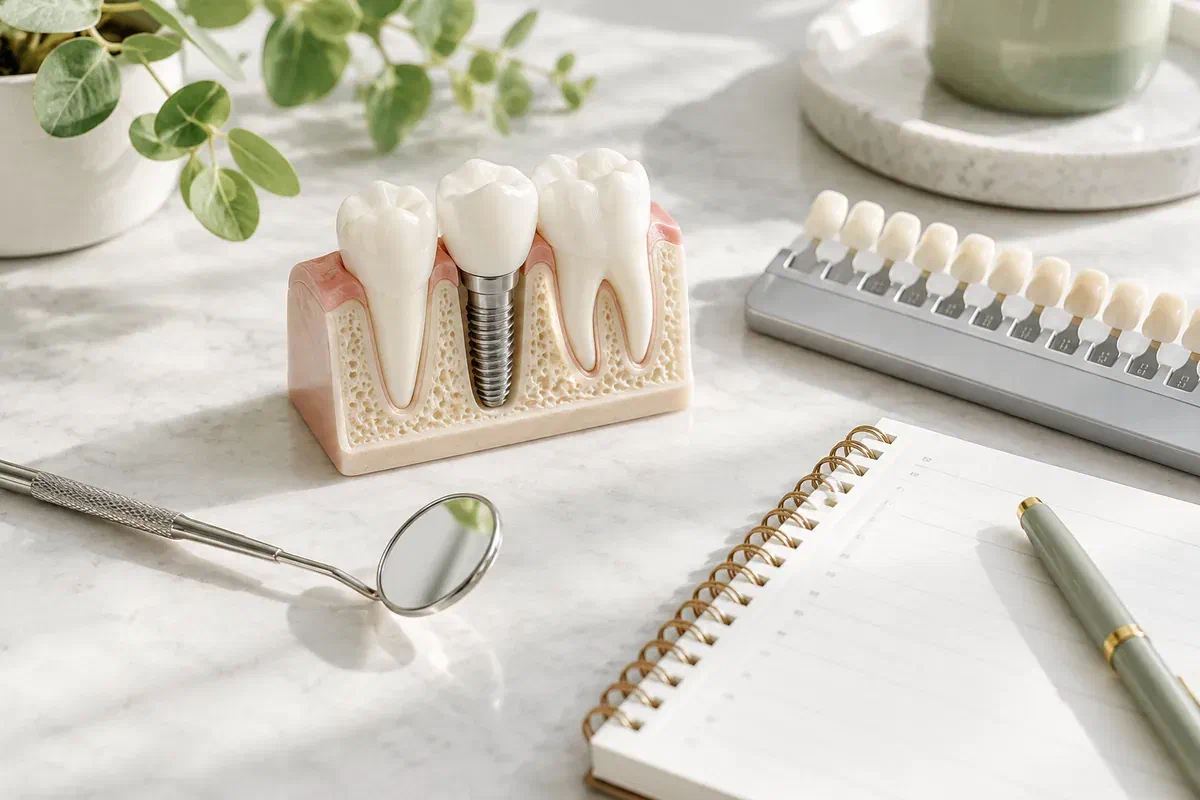
Implant teaching model, shade guide, and blank notebook on a consultation desk
What to look for on paper

Missing pieces are easy to overlook

A proposal should make it obvious which steps depend on others. Look for where it says “to be confirmed”, because an early estimate is a starting point rather than a timetable you can hold anyone to.

Groundwork listed before surgery

Check whether the outline mentions treating decay or gum problems, removing a tooth or preparing the site. If none of that appears, ask whether it has been ruled out or simply left off.


The tooth you wear while healing

Some plans include a temporary replacement and some do not. Ask what yours would look like, what you could eat with it and how it protects the healing area, and whether its cost is included.

Names beside each stage

A good proposal says who places the implant, who makes the crown and who coordinates the two. That clarity matters when you compare estimates, follow referrals or need someone after surgery.

A quote built around a same-day promise may describe a different treatment from a staged one. Ask which findings would decide the timing and what could change it.

The value of a full outline

Comparing like with like

When every stage is written down, two proposals become possible to compare fairly. You can weigh the expected benefit against the time, maintenance and any additional procedures each one assumes.

Planning does not remove the chance of an unexpected finding, and nobody can guarantee how a site heals. A trustworthy outline admits the uncertainties and explains how changes, revised estimates and fresh consent would be handled.

Patient information: Canadian Dental Association — dental implants

The crown shapes the plan

Where the final tooth or appliance sits influences where an implant should go. A proposal that considers the restoration early keeps chewing, appearance and cleaning in the discussion.

Dates you can actually plan around

Seeing when you may need recovery time, a driver or a temporary tooth helps with work and family. Ask which dates are fixed by healing and which can be moved.

Implants against other choices

A full pathway makes it easier to set an implant beside a bridge or a removable option. Count future maintenance and repairs as part of each choice, not just the first visits.

Putting a plan together

From first examination to agreed sequence

An outline comes from conversation, examination and suitable records. Expect it to become more detailed as information is gathered, and ask when each decision is likely to be confirmed.

  1. Find the true starting point

    We go over which teeth are missing, the condition of existing restorations, your health history and what you hope for. The dentist examines the area and decides what further information is needed.

  2. Name the final tooth and any preliminaries

    Together we discuss the restoration you would end up with and what has to happen first, including imaging, referrals, site preparation and the limits of any temporary.

  3. Write out who, when and roughly how much

    The order of visits and the clinician responsible for each should be clear. An estimate you can read separates what is included from work that only applies if certain findings arise.

  4. Confirm before each stage begins

    At every major step, the team checks that current findings still support the plan. If something important changes, it is explained along with its effect on the remaining care.

Once a plan is agreed

Hold on to the version you said yes to

Keep the latest copy of the plan and the contacts that go with it, especially if more than one office is involved. Tell the team about anything new before the next stage.

Check the purpose of the next visit

Is it an assessment, a procedure or a review? Ask whether you need to prepare anything or arrange a ride, and follow that clinician’s instructions rather than assuming every visit is alike.

Flag changes promptly

New medical care, different medicines, symptoms at the site or a broken temporary can all matter. Call before your next procedure so the team can decide whether the plan needs adjusting.

Know who looks after it later

Upkeep continues after the final tooth is fitted. Clarify who monitors the implant, who maintains the crown or attachments and where to go if something feels wrong.

Different routes

Same gap, different journeys

Proposals may differ because more than one approach is clinically reasonable. Compare how each handles preparation, surgery, healing, temporary care, restoration design and long-term maintenance.

When the site needs preparation or healing time

A staged sequence

Extraction, site preparation, placement and the restoration each get their own appointment and interval. Ask what each wait is for and how the team will judge progress before moving ahead.

When findings support coordinating steps

A combined approach

Certain procedures may happen together if the site allows. Find out which steps would be combined and what the plan becomes if conditions on the day are not suitable.

When another option better fits your priorities

A bridge or removable replacement

These follow their own sequence and maintenance. A fair comparison looks at your clinical situation, your preferences and what each option can reasonably deliver over time.

Comparing plans

Questions to ask before choosing a quote

These questions help you see whether two proposals describe the same care, and which parts are clinical requirements rather than scheduling choices.

(905) 876-4488
Is it reasonable to get a second opinion on an implant plan?
Yes. Implant care is a significant commitment and comparing views is common. Bring your current outline, any imaging reports you have been given and your questions, so the discussion can build on what has already been assessed.
Why does one estimate include a temporary tooth and another doesn’t?
The need for a temporary depends on the site and how visible the gap is, and some offices list it separately. Ask whether it is needed in your case and where it appears on each estimate.
How do I compare timelines that start at different points?
Line them up by stage: preparation, placement, healing reviews and fitting of the final tooth. A shorter timeline may simply leave out stages that still have to happen, such as the crown appointment or the healing checks. Once both are laid out on the same terms, the comparison usually becomes much clearer.
Should the plan say what happens if healing takes longer?
It should at least explain that timing depends on healing and review findings. Ask how a delay would be handled and whether it would affect costs or the temporary arrangement.
Does a higher quote always mean more treatment?
Not necessarily. Differences can reflect what is included, how stages are grouped or which components are used. Ask each office to explain what its estimate covers, and what is listed as conditional, before drawing conclusions about value.
Can implant planning work around a commute from Oakville?
Mention your schedule when booking. Some visits are short reviews and others need recovery time, so the team can help you see which ones need more room in your day. Healing still sets the spacing, so plan the busier stretches of your calendar around the procedures rather than the other way round.
Implant planning for Oakville

Bring your proposals. We’ll go through them.

Book a consultation at our Bronte Street clinic to look at a proposed implant replacement in detail. We can confirm your starting point, highlight decisions still open and explain how preparation, the final tooth and upkeep connect.

Bring printed or emailed outlines, estimates and any imaging reports you have been given, so we can compare what each proposal includes.

Visit Milton Dental Clinic
Unit 1, 342 Bronte St. S, Milton, ON L9T 5B7
Get directions Clinic hours
Monday–Thursday
11am–7pm
Friday–Sunday
By appointment only

Areas we serve

  • Milton
  • Oakville
  • Mississauga
  • Georgetown
  • Halton Hills
  • Acton
  • Campbellville
  • Brampton
  • Burlington
  • Puslinch
  • Rockwood
  • Erin
  • Caledon
  • Etobicoke
  • Old Milton
  • Bronte Meadows
  • Timberlea
  • Dorset Park
  • Dempsey
  • Clarke
  • Beaty
  • Coates
  • Harrison
  • Scott
  • Willmott
  • Ford
  • Bowes
  • Cobden
  • Walker
  • Mountain View
  • Milton Heights
  • Hawthorne Village
  • Valley View
  • Fallingbrook
  • Nassagaweya
  • Trafalgar
  • Esquesing
  • Nelson
  • Brookville
  • Moffat
  • Glen Williams
  • Norval
  • Limehouse
  • Stewarttown
  • Ashgrove
  • Hornby
  • Silver Creek
  • Speyside
  • Scotch Block
  • North Oakville
  • River Oaks
  • Glen Abbey
  • West Oak Trails
  • Palermo
  • Bronte Creek
  • College Park
  • Joshua Creek
  • Uptown Core
  • Preserve
  • Iroquois Ridge
  • Lisgar
  • Meadowvale
  • Meadowvale Village
  • Churchill Meadows
  • Erin Mills
  • Central Erin Mills
  • Streetsville
  • East Credit
  • Creditview
  • Heartland
  • Sheridan
  • Mount Pleasant
  • Credit Valley
  • Huttonville
  • Churchville
  • Springbrook
  • Northwest Brampton
  • Bram West
  • Fletcher's Meadow
  • Fletcher's Creek South
  • Alton Village
  • Orchard
  • Millcroft
  • Headon Forest
  • Tansley
  • Brant Hills
  • Tyandaga
  • Kilbride
  • Lowville
  • Aberfoyle
  • Morriston
  • Arkell
  • Hillsburgh
  • Freelton
  • Carlisle
  • Waterdown
  • Flamborough
  • Mountsberg

How can we help?

Milton Dental Clinic

Have a question about your smile? Choose the option that works best for you.

For urgent dental concerns, please call.
Messages are reviewed during clinic hours.