

Illustrative consultation about restoring a damaged back tooth
Restorative Dentistry

Dental Inlays in Burlington

Floss that snags, food that wedges in after every meal, a filling edge your tongue keeps finding. From Burlington, you can have that tooth assessed and learn whether a fitted inlay could rebuild the surface properly.

It often starts at the floss

A small catch between two molars

Plenty of inlay conversations begin with something minor. Floss tears in the same gap. Bits of dinner lodge there each night. When a dentist looks, the cause may be a worn or broken repair that no longer seals the tooth or meets its neighbour cleanly. One way to rebuild it is with an inlay, a restoration crafted outside the mouth to fit a prepared space inside the cusps of a back tooth.

It is not the automatic next step. A dentist raises it when a direct filling is less suited to the shape or size of the defect, but the tooth around it is still strong enough that a crown would cover more than necessary. The tooth’s condition makes that call, not a preference for one type of restoration.

Coming from Burlington, it helps to tell us exactly what you have noticed and when. Mention previous repairs and what you would like the result to look and feel like. We can then explain why a fitted repair is being considered and lay out the alternatives side by side.

Have a snagging tooth checked
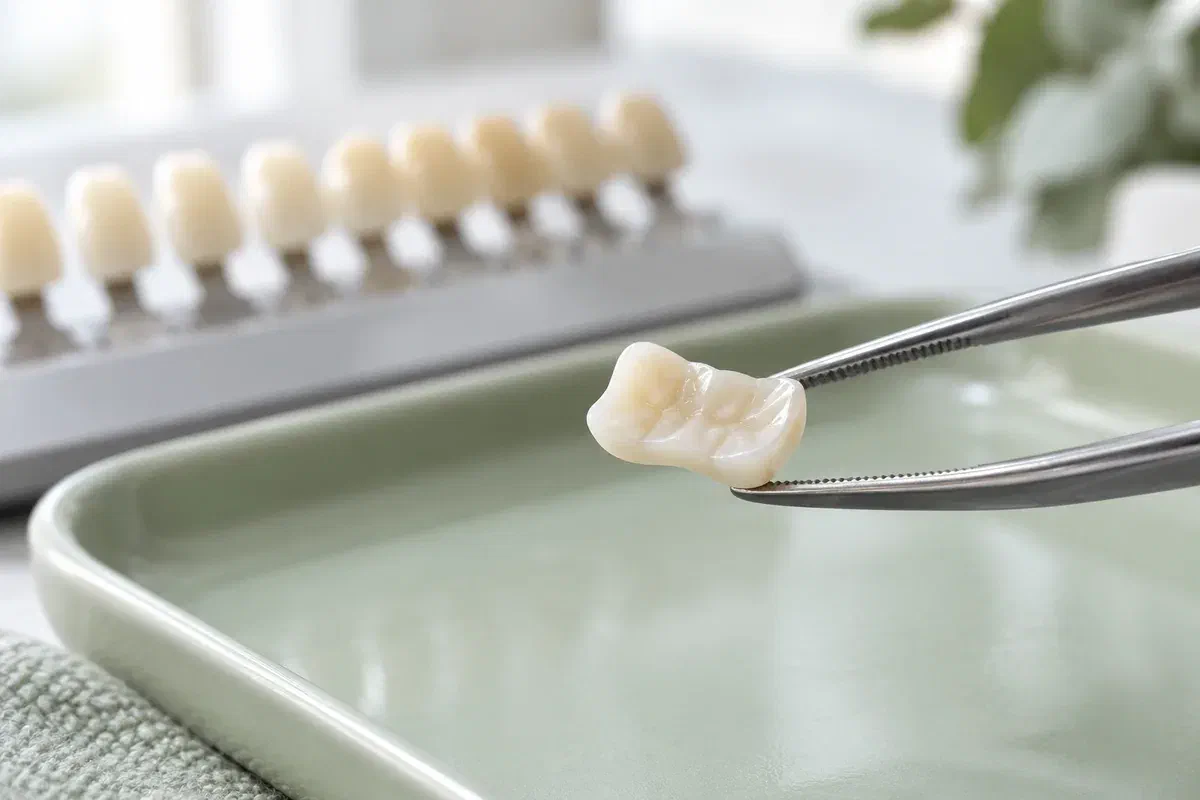
Illustrative ceramic inlay held in dental tweezers beside a shade guide
Clues the tooth may need more

Small irritations, worth a closer look

How large the damaged area is matters, but the dentist pays just as much attention to the tooth surrounding it. Thick, healthy walls may hold an inlay well; thin ones may need a design that offers more support.

An old repair has started to leak or chip

Breakdown at the edge of a filling can let food and bacteria collect. Replacement is planned after the dentist sees what remains once the affected material is cleared away, not simply because the old filling was big.

Food traps at the same contact

A lost contour can open a gap between teeth or change how they meet. Ask which parts of the tooth are healthy, and whether rebuilding the contact can be done within them or needs coverage over a weakened cusp.

You are unsure why an inlay was named

Restoration terms describe how much of the tooth gets rebuilt. A quick look at your tooth on an image or model usually explains the recommendation better than any definition.

Sharp pain, a suspected crack or signs the nerve is involved need diagnosing on their own terms. Picking the shape of a restoration happens afterward and does not replace that step.

What it can restore

A tighter contact and a rebuilt surface

Since an inlay is designed for a single tooth and its fit is confirmed ahead of bonding, it can, in a suitable case, restore the damaged section, including the contact with the next tooth, while leaving unaffected structure alone.

It is still a treatment with preparation and limits. The material, fit, remaining tooth and bite forces all feed into the advice. Ask what benefit an inlay brings in your situation compared with a direct filling, and why you do not need something that covers more.

Patient information: Cleveland Clinic — restorative dentistry and inlays

Contacts and contours rebuilt

The restoration can be designed to recreate the missing area, how it touches the neighbouring tooth and how it meets the opposing one. Your dentist can explain which of these details are key to a good fit.

Less coverage where it is not needed

When the tooth around the space is worth keeping, an inlay may spare it from being covered. That goal is weighed against how much support the tooth will need under daily chewing.

Material choices in plain terms

Location, how visible the tooth is, the room available and the clinical findings all guide the material. Ask which ones are suitable and how their advantages, drawbacks and costs compare.

Step by step

Careful preparation, then a checked fit

How many visits are needed depends on how the inlay is produced and what the tooth requires. Ask whether a temporary is part of the plan and what you should and should not do with the tooth between appointments.

  1. Examine the tooth and the contact

    The dentist looks at the damaged area, existing work, gums and any symptoms you describe. Tests or images may help confirm that an inlay is appropriate and that nothing else needs attention first.

  2. Prepare the space and take a record

    With your consent and comfort measures in place, the tooth is shaped for the planned restoration. An impression or digital scan records it, and the team explains any temporary protection you will wear.

  3. Check contacts, bite and look

    Before fixing it, the dentist checks how the inlay seats, whether floss passes the contact properly and how your bite meets it. Appearance is reviewed where relevant, and refinements are made at this stage.

  4. Bond it and review home care

    The inlay is secured with a method that suits its material. The final result is checked, and you are given instructions on eating, cleaning and the signs that should prompt a call to the clinic.

Once it is in

Keep flossing that gap.

The restoration replaces lost tooth, but the enamel around it still needs daily prevention. Follow the advice from your fitting, and let us know if cleaning that area feels different from what you are used to.

Hold off on chewing until advised

Timing can depend on the material and on whether you are still numb. Ask when ordinary meals are fine, and be careful not to bite your cheek or tongue while the freezing wears off.

Clean the contact every day

Brush with fluoride toothpaste and clean between the teeth as you have been shown. If food still packs in or floss keeps shredding at that contact, book a check so it can be assessed properly.

Speak up about a high or rough spot

A tooth that feels tall when you bite, stays sensitive or has a sharp edge needs to be reviewed. Do not try to file it down or keep chewing hard foods to see whether it settles.

Sizing the repair

Filling, inlay or more coverage?

Whatever is recommended, the reason should connect to the structure that is left. Ask how each option would change preparation, support, the number of appointments and long-term care.

When the defect suits a chairside rebuild

A direct filling

Where the tooth’s size, position and condition allow it, a filling may be entirely suitable. It should be weighed fairly rather than pushed aside because a fitted restoration exists.

When the cusps remain strong

A custom inlay

An inlay may restore an appropriate defect without covering the cusps. The dentist considers whether the surrounding tooth offers a sound base and explains the material and fitting process.

When more of the tooth needs support

An onlay or crown

A thinned cusp or wider damage may need more protection than an inlay can give. Ask which parts need it and why an onlay, another partial-coverage design or a crown is being proposed.

Answers for Burlington visitors

Before you commit to a fitted repair

It is easier to assess an inlay once you can picture what it rebuilds and what it leaves untouched. These questions may help you talk the plan through.

(905) 876-4488
Can an inlay fix a gap where food keeps getting stuck?
If the trapping comes from a worn or broken restoration, rebuilding the contact may help, and an inlay is one possible way to do that. Other causes, such as gum changes or tooth movement, also need considering. The dentist will look for the reason first.
How does the dentist check the contact between teeth?
Floss and other instruments are typically used to judge how tightly the restoration meets its neighbour. The bite is checked too. Mention afterwards if food still packs in, since contacts can be reviewed.
Will flossing feel different around an inlay?
It may feel slightly different at first. Floss should pass through the contact without shredding. If it catches, frays or is hard to get through, let the clinic know so the area can be examined.
Are some inlays made in a lab and others in the clinic?
Inlays can be produced in different ways depending on the material and the equipment used. The method affects how many visits are needed and whether a temporary is placed. Ask how yours will be made.
Is a tooth-coloured inlay possible on a back molar?
Some materials offer a tooth-coloured finish, though suitability depends on the space, the forces on the tooth and other clinical factors. Ask which options fit your case, and avoid assuming an exact match or a guaranteed lifespan.
Is decay still possible next to an inlay?
It is. The natural tooth can develop decay, especially along the margins. Daily brushing with fluoride toothpaste, cleaning between teeth and regular checkups help protect it. Report sensitivity that lingers or food trapping that returns.
Burlington inlay assessments

Bring the tooth that keeps catching.

Arrange a visit to our Bronte Street practice to have a worn filling or damaged back tooth examined. We will see how much healthy tooth surrounds the problem and explain whether an inlay, a filling or broader coverage is the better fit.

When booking, mention any pain, a recent break or a bite that suddenly feels different, so time can be set aside for it.

Visit Milton Dental Clinic
Unit 1, 342 Bronte St. S, Milton, ON L9T 5B7
Get directions Clinic hours
Monday–Thursday
11am–7pm
Friday–Sunday
By appointment only

Areas we serve

  • Milton
  • Oakville
  • Mississauga
  • Georgetown
  • Halton Hills
  • Acton
  • Campbellville
  • Brampton
  • Burlington
  • Puslinch
  • Rockwood
  • Erin
  • Caledon
  • Etobicoke
  • Old Milton
  • Bronte Meadows
  • Timberlea
  • Dorset Park
  • Dempsey
  • Clarke
  • Beaty
  • Coates
  • Harrison
  • Scott
  • Willmott
  • Ford
  • Bowes
  • Cobden
  • Walker
  • Mountain View
  • Milton Heights
  • Hawthorne Village
  • Valley View
  • Fallingbrook
  • Nassagaweya
  • Trafalgar
  • Esquesing
  • Nelson
  • Brookville
  • Moffat
  • Glen Williams
  • Norval
  • Limehouse
  • Stewarttown
  • Ashgrove
  • Hornby
  • Silver Creek
  • Speyside
  • Scotch Block
  • North Oakville
  • River Oaks
  • Glen Abbey
  • West Oak Trails
  • Palermo
  • Bronte Creek
  • College Park
  • Joshua Creek
  • Uptown Core
  • Preserve
  • Iroquois Ridge
  • Lisgar
  • Meadowvale
  • Meadowvale Village
  • Churchill Meadows
  • Erin Mills
  • Central Erin Mills
  • Streetsville
  • East Credit
  • Creditview
  • Heartland
  • Sheridan
  • Mount Pleasant
  • Credit Valley
  • Huttonville
  • Churchville
  • Springbrook
  • Northwest Brampton
  • Bram West
  • Fletcher's Meadow
  • Fletcher's Creek South
  • Alton Village
  • Orchard
  • Millcroft
  • Headon Forest
  • Tansley
  • Brant Hills
  • Tyandaga
  • Kilbride
  • Lowville
  • Aberfoyle
  • Morriston
  • Arkell
  • Hillsburgh
  • Freelton
  • Carlisle
  • Waterdown
  • Flamborough
  • Mountsberg

How can we help?

Milton Dental Clinic

Have a question about your smile? Choose the option that works best for you.

For urgent dental concerns, please call.
Messages are reviewed during clinic hours.