A filling is wearing out
When an existing repair cracks, leaks or chips, its replacement is planned around what will be left after the old material comes out. A big previous filling prompts the question but does not answer it.


Heard the word inlay at a checkup and not sure what it involves? If you are coming from Oakville, we can show you the tooth, explain what a fitted repair would replace, and compare it honestly with the other routes.
Think of it as a piece made to measure. After the damaged part of a back tooth is prepared, its shape is recorded and a restoration is produced to fill that exact space. It is then tried in and secured. Usually it rests in the centre of the chewing surface, inside the cusps, so those raised edges stay natural when they are healthy enough.
Dentists tend to mention it in a particular situation: building a filling directly in the tooth is not the preferred approach, but crowning the whole surface would go further than the tooth requires. That makes it a matter of fit for one tooth, not a step up a ladder where each option outranks the last.
People from Oakville often arrive with a recommendation in hand and a list of questions. Bring them. Tell us what you have felt, what earlier work the tooth has had and what you care about most. We will explain why a fitted restoration is being suggested, what else could work, and what each path asks of you.
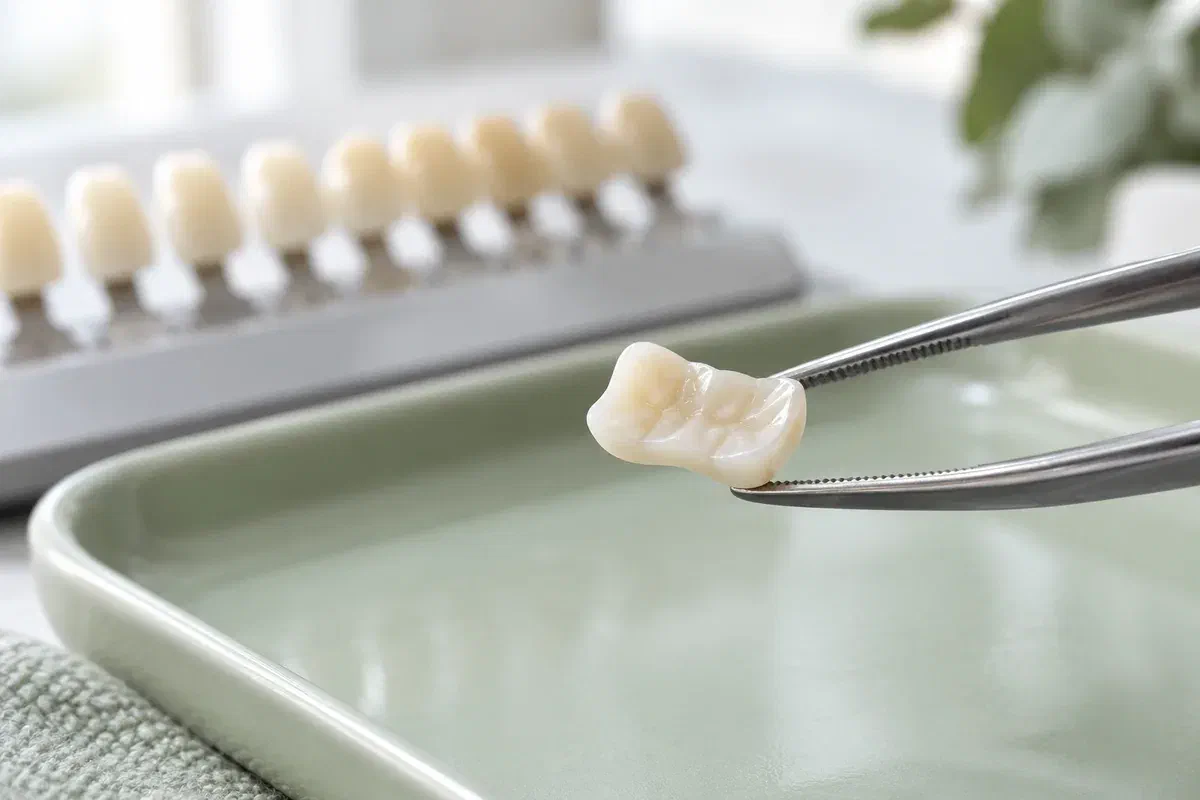
Size alone does not settle it. A dentist weighs how thick and sturdy the remaining tooth is around the damaged area before saying an inlay would work, or that something offering more support would be wiser.
When an existing repair cracks, leaks or chips, its replacement is planned around what will be left after the old material comes out. A big previous filling prompts the question but does not answer it.
A defect in a molar can affect contours, contact with neighbouring teeth and how you chew. Ask which parts remain strong and whether the planned restoration will stay inside them or extend across a cusp that has thinned.
Filling, inlay, onlay, crown: the words describe how much tooth a repair rebuilds. Looking at your own tooth on a model, image or drawing tends to make the logic behind the recommendation much clearer.
A painful tooth, a suspected crack or a possible nerve problem has to be diagnosed properly. Deciding the outline of a restoration comes after that and cannot stand in for it.
Because the inlay is produced for one specific space and tried in before anything is final, it can rebuild a suitable damaged area while sparing surrounding structure that does not need covering.
Preparation is still involved, and limits remain. Material, fit, the strength of the leftover tooth and the forces of your bite all shape what is advised. A fair question to ask is what an inlay achieves here that a direct filling could not, and why a larger restoration has been ruled out.
Patient information: Cleveland Clinic — restorative dentistry and inlays
The planned shape can restore the missing section, its contacts with adjacent teeth and its part in your bite. Your dentist should be able to describe which features matter for a good fit.
Cusps in good condition can be left as nature made them rather than reduced for a cover. Saving tooth this way is balanced against the support needed for everyday chewing.
Visibility, position, available room and the clinical picture all influence which material is used. Ask which are suitable for this tooth and how they differ in strengths, limitations and cost.
The visit count depends on the method used to make the inlay and on what the tooth needs. Ask whether you will have a temporary, how long it may be in place, and how to treat the tooth in the meantime.
The dentist checks the damaged area, any symptoms, existing work and the tissues around the tooth. Testing or imaging may confirm that an inlay suits the tooth and that no separate issue needs care first.
Once you have consented and comfort measures are in place, the tooth is shaped for the chosen restoration. A scan or impression captures the result, and any temporary cover is explained before you head home.
The inlay is seated and assessed for fit, contacts and how your teeth close together. Shade and appearance can be considered where relevant. Adjustments happen now, before anything is made permanent.
A cementing or bonding method suited to the material and tooth is used. The result is checked, and you are given clear guidance on eating, cleaning and which symptoms mean you should call.
The inlay fills what was lost, but the natural tooth around it still needs everyday prevention. Follow the instructions given at your fitting, and tell us if cleaning near the restoration feels unusual.
Advice can vary with the material and whether you are still frozen. Confirm when normal chewing can resume, and take care not to nip your cheek or tongue until feeling comes back.
Stay with fluoride toothpaste and the interdental cleaning method you were shown. If one contact catches food or snags floss again and again, have it checked rather than adapting your routine to cope.
Persistent sensitivity, a raised feel when you close or a rough margin needs a look. Avoid altering the inlay yourself or chewing hard foods repeatedly to test whether it will settle.
A made-to-measure repair is easier to judge when you can see what it replaces and what stays put. Use these questions to steer the conversation about your tooth.
Book a visit at our Bronte Street practice to discuss a damaged back tooth or a filling that is failing. We will look at how much sound tooth is left and tell you whether an inlay, a direct filling or wider coverage is the sensible fit.
Let us know about pain, a recent chip or break, or a change in how the tooth feels when you bite, so we can prepare for your appointment.
