A biting point has broken or is fragile
Damage reaching a cusp can leave the tooth at risk if only the neighbouring space is filled. Your dentist gauges how far it extends and whether coverage would add useful strength.


An onlay can rebuild a weakened back tooth with partial coverage, though it may take more than one visit. Learn what each appointment involves and how to look after the tooth between them.
Work shifts, school pickups and family commitments make it tempting to put off a tooth that feels a little rough. Yet a back tooth with a broken cusp or a crumbling filling rarely improves by waiting, and knowing what the repair involves makes it easier to fit in.
One option is a dental onlay: a fitted restoration that rebuilds the damaged part and covers one or more cusps, the high points of the chewing surface. It sits between a filling and a crown, covering what needs support while leaving sound areas in place where that is suitable.
Coming from Brampton, you can ask us at booking how many visits the tooth is likely to need. Our Milton team will examine it, explain whether partial coverage fits and compare it with other approaches, so you can plan the time with a clear picture.
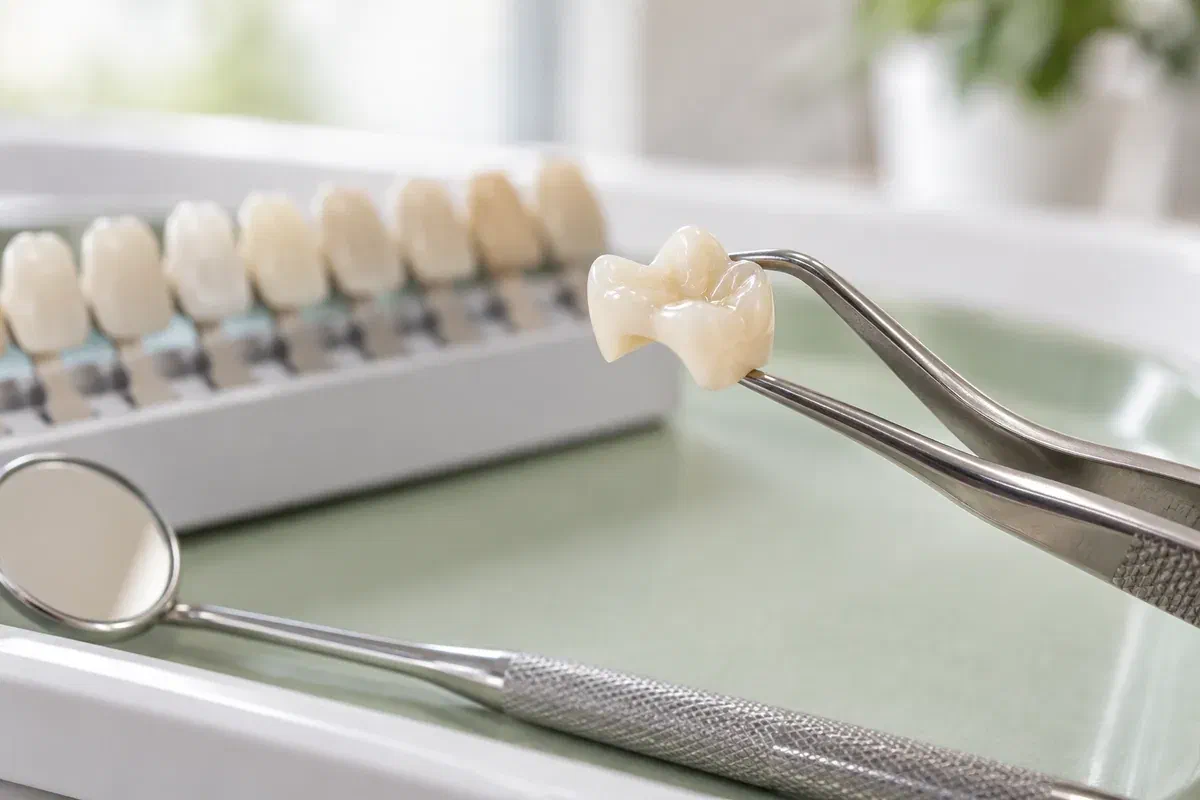
A dentist does not decide on an onlay from the damaged spot alone. The examination looks at the full tooth to see whether a cusp needs support and whether the rest can carry a partial design.
Damage reaching a cusp can leave the tooth at risk if only the neighbouring space is filled. Your dentist gauges how far it extends and whether coverage would add useful strength.
Replacing an old repair means looking at the tooth again once it is removed. An onlay may be suitable, but the choice comes from those findings rather than an assumption about large fillings.
Ask which surfaces could be left as they are. Keeping structure is sensible only if the design also gives the tooth the support it needs for daily chewing.
Pain, a suspected crack or a nerve concern may change the plan. An onlay rebuilds the tooth’s shape; finding the cause of symptoms comes first.
On a suitable tooth, an onlay replaces a lost surface and protects the fragile areas, while other parts stay as they are. The design is planned around the damage and the way that tooth takes pressure when you bite.
Preparation is still involved, and the approach has limits. How well the piece can be bonded or retained, the material chosen and the amount of remaining structure all affect whether it will work well over time. Ask what the onlay is meant to achieve for this particular tooth and why it is suggested over a crown.
Patient information: Cleveland Clinic — inlays and onlays
Unlike a filling that sits inside the tooth, an onlay can extend over particular chewing surfaces. Your dentist should explain which ones are included and how that choice relates to the weakness found during the examination.
Saving sound structure is one aim; not leaving a weak cusp exposed is another. Ask how your planned outline balances the two, and what would happen to the uncovered areas over time.
The restoration is checked against neighbouring and opposing teeth. Mention any food trapping or uneven bite so these can be looked at during planning and fitting.
The number of appointments depends on how the onlay is made and on the tooth. Ask how long each visit may take, how a temporary restoration works between them and what could change the plan.
Your dentist checks the damage, old repairs, symptoms and bite, using appropriate investigations. You hear the planned coverage and the alternatives before any preparation begins.
With suitable comfort measures, the tooth is prepared and its shape recorded by an appropriate method. If a temporary is placed while the onlay is made, the team explains how to care for it.
The onlay is tested for fit, neighbouring contacts and how it meets the opposite teeth. Appearance can be reviewed, and the dentist decides on any adjustments.
Your dentist fixes the onlay in place with a method suited to its material and to the tooth. Bite and surface are checked once more, and before you leave you receive advice on eating, cleaning and when to come back for follow-up.
Once fitted, the onlay becomes part of the chewing surface, while the tooth and its margins still need regular care. Follow the instructions from your appointment and let us know about any lasting or new concern.
Ask when normal eating can resume and whether numbness or the bonding material affects the advice. A tooth that feels firm is not a sign that precautions no longer apply.
Brush with fluoride toothpaste and clean between teeth as you have been shown. If the new contour makes this tricky, ask for a demonstration rather than skipping the area.
Tell the dentist about clenching, grinding or earlier broken restorations, so protection can be considered. A high bite, chipping or discomfort that lingers should be checked.
Comparing restorations is simpler once the dentist explains the design for your own tooth. These questions can help you plan.
Visit our Bronte Street practice in Milton to have a damaged chewing surface or failing repair checked. Our team will explain whether partial coverage suits the tooth, how many visits it may take, and how its preparation and upkeep compare with a filling, inlay or crown.
Call about a recent break, strong pain or swelling so we can talk through the concern and arrange an appropriate time.
