Fractured or thinning cusp
Damage that reaches a chewing point can leave it vulnerable if the space next to it is simply filled. Your dentist judges the depth of the problem and whether coverage is worthwhile.


Choosing an onlay raises practical questions about material, appearance and how the tooth will feel. We can explain how partial coverage works and which choices suit the damaged back tooth in front of us.
A common first question about onlays is what they are made of. It is a fair one, yet it comes second. The first is whether the tooth needs partial coverage at all, because the design has to suit the damage before the material can be chosen.
Picture the chewing surface of a molar, with its raised cusps. An onlay is a custom-made restoration that replaces lost structure and caps one or more of those cusps. It can be an option when a filling would leave a cusp unsupported but a crown would cover more than necessary.
From Georgetown, Acton, Glen Williams or elsewhere in Halton Hills, you can visit our Milton team for an assessment. We explain what the tooth needs, how partial coverage compares with other repairs and which materials would be realistic, with plenty of time for questions.
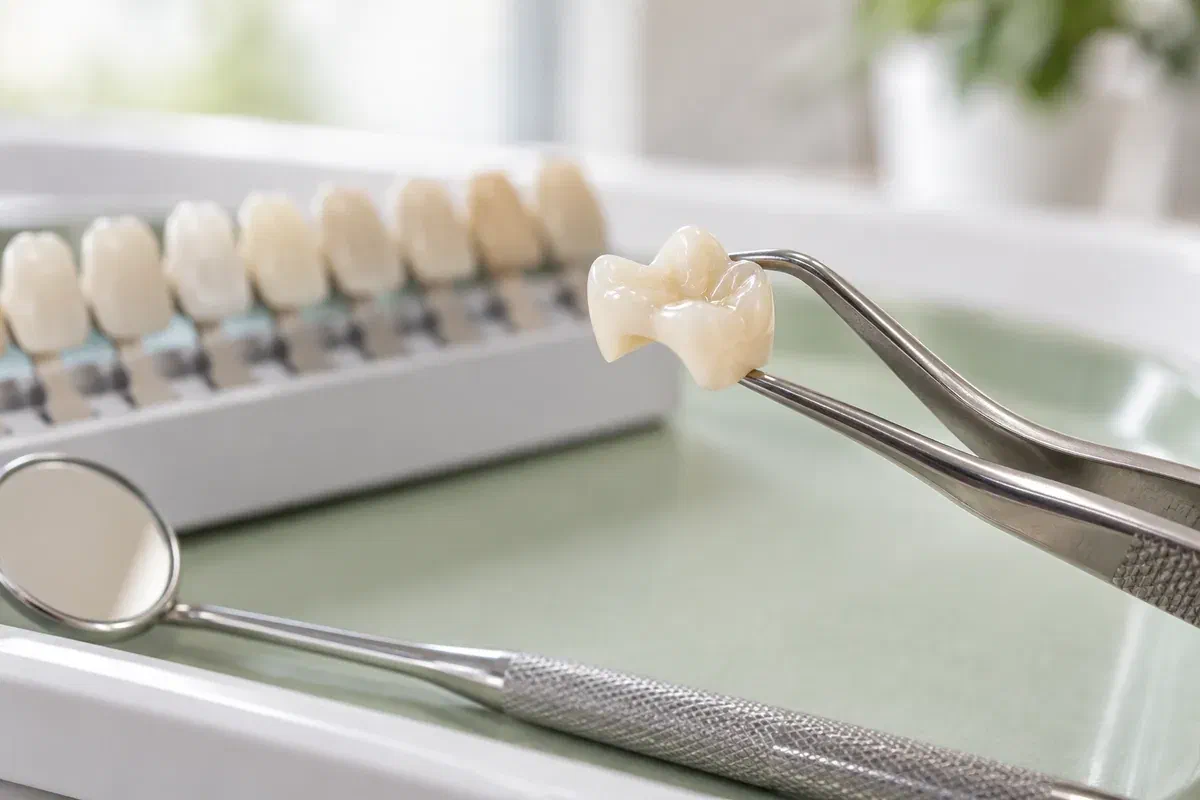
The whole tooth is examined, not only the broken or decayed area. This tells the dentist whether a raised part needs extra strength and whether enough healthy tooth remains to anchor a partial restoration.
Damage that reaches a chewing point can leave it vulnerable if the space next to it is simply filled. Your dentist judges the depth of the problem and whether coverage is worthwhile.
Once a large worn filling is removed, the remaining tooth has to be looked at with fresh eyes. An onlay may follow, or something else may suit better, depending on what is found.
Ask which surfaces could stay untouched and which genuinely need cover. Leaving sound tooth alone is useful when the design still gives that tooth enough strength and chewing function for the years ahead.
Toothache, a suspected crack or nerve involvement can lead to a different recommendation. Diagnosing the reason for symptoms always comes before choosing an onlay.
With the right tooth, an onlay restores a lost surface and shields fragile areas while sound structure is kept. Its outline can be designed around how far the damage spreads and how the tooth meets its opposite number.
Some shaping is still needed, and partial coverage will not suit every tooth. Bonding or retention conditions, the material and the structure that remains all have a say. Ask what the onlay should do and why it is favoured over a crown here.
Patient information: Cleveland Clinic — inlays and onlays
The onlay can extend across particular cusps instead of resting only inside the tooth. Your dentist should be clear about which areas it covers and why.
Retaining healthy tooth is one priority; making sure no weak cusp is left bare is another. Ask how your outline handles both.
Contacts with neighbouring and opposing teeth are checked. If food gets caught or the bite feels awkward, mention it so the team can address it while planning and fitting.
Appointments vary with how the restoration is made and the tooth’s condition. Ask how many visits to expect, how any temporary phase works and what might cause the plan to change.
The dentist examines the damage, previous repairs, symptoms and bite, with suitable investigations. Coverage, alternatives and realistic material choices are discussed before preparation.
With suitable comfort measures in place, the tooth is shaped for the chosen design and its form recorded. You hear about any temporary restoration while the onlay is being made.
Fit, contact with nearby teeth and the way it meets the opposite teeth are reviewed. Shade and appearance can be discussed, and the dentist decides on any adjustment.
Your dentist attaches the onlay using an approach suited to its material. The bite and finished surface are checked again, and you get guidance for the first day, cleaning and follow-up.
The onlay forms part of the biting surface, yet the natural tooth and the junction between them still depend on your routine. Keep to the advice you are given and tell us about any concern that lingers or appears later.
Find out when ordinary eating is fine, and whether a numb cheek or a bonding agent that is still setting means waiting a little longer. A restoration that feels secure is not the cue; the team’s instructions are.
Use a fluoride toothpaste twice daily and the between-teeth method you were shown. If the new contour snags floss, ask for another technique rather than avoiding the area.
If you grind your teeth or have broken restorations before, say so, since protection may be worth considering. A high bite, chipping or discomfort that stays should be reviewed.
Material decisions feel less abstract once you can see the planned outline on your own X-rays or in a mirror. Here are some common questions to bring to that conversation, with short answers to get you started.
Book a visit to our Bronte Street practice to discuss a weakened chewing surface or a repair that needs replacing. We can explain whether an onlay suits the tooth, which materials are realistic and how it compares with other options.
Please phone about a new fracture, sharp pain or swelling. Describing it to us first lets the team advise on how soon to come in.
