

Illustrative conversation about restoring a weakened back tooth
Restorative Dentistry

Dental Onlays in Milton

When a back tooth loses part of its chewing surface, a filling may not give it enough support. Learn what a dental onlay is and whether partial coverage could suit your tooth at our Milton clinic.

Onlays, explained in Milton

The repair that sits between a filling and a crown

Plenty of people first hear the word “onlay” in the dental chair and nod without being sure what it means. Put simply, it is a custom-made piece that rebuilds a damaged part of a back tooth and reaches over one or more cusps, the peaks you chew with. It covers more than a filling, yet less than a crown.

Which of those makes sense depends on what is left of the tooth. A snapped cusp, a wide filling that has begun to fail and a surface worn down over the years each leave different strengths and weak spots. Knowing what the design is meant to shield matters more than its name.

Our team in Milton can examine the tooth, tell you whether partial coverage is a reasonable fit, and set it beside the other choices worth weighing. Bring questions about preparation, looks, comfort and cleaning. The reasoning behind the plan should be clear to you before any work begins.

Ask about a partial-coverage repair
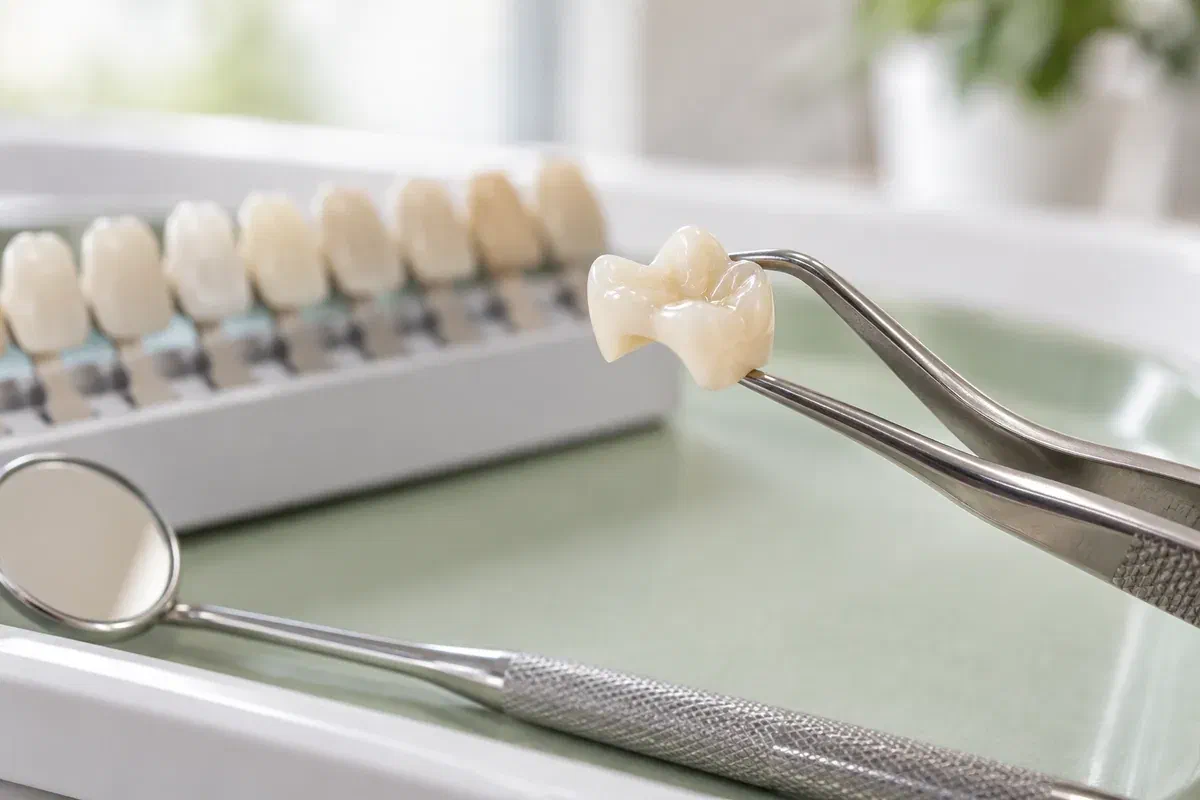
Illustrative ceramic partial-coverage restoration held above a dental tray
Signs a tooth may need more than a filling

The walls around the problem tell the story.

No onlay is planned by looking at the damaged spot alone. The examination considers the whole tooth, so the dentist can judge whether a cusp needs reinforcing and whether enough sound structure remains to hold a partial-coverage design.

One of the chewing peaks has cracked off or looks thin

When the break involves a raised point of the biting surface, simply packing material into the gap beside it may leave the tooth exposed to further damage. Your dentist checks how far the problem extends and explains whether covering that area would help.

An old, wide filling is wearing out

Removing a failing repair often reveals how much tooth is really left. An onlay could be one answer, though it should come from those findings, not from a rule that every big filling is replaced the same way.

You would like to keep as much healthy tooth as is sensible

It is fair to ask which surfaces can stay as they are and which need cover. Saving structure is a worthwhile aim only when the design still gives the tooth the strength and function it needs.

Toothache, a possible crack or trouble with the nerve can change what is recommended. An onlay restores shape and support; it does not replace finding out why a tooth hurts.

What partial coverage is meant to do

Cover the weak parts, keep the sound ones.

On a tooth that suits it, an onlay can replace a lost surface and protect fragile areas while other parts of the tooth stay untouched. Its outline is planned around how much damage there is and how that tooth meets its neighbours when you bite.

It still involves shaping the tooth, and it is not right for every case. How well the piece can be bonded or held in place, the chosen material and the remaining structure all affect suitability. Ask your dentist what the onlay should accomplish and why it is preferred over a crown for you.

Patient information: Cleveland Clinic — inlays and onlays

Protection placed where it is needed

Rather than only filling a hollow inside the tooth, the restoration can extend over chosen chewing surfaces. Your dentist should point out which areas are included and how they relate to the weakness that was found.

A balance between saving and shielding

Keeping healthy structure matters, but so does not leaving a fragile area without support. Ask how the planned outline weighs those two goals for your particular tooth.

A chance to refine contacts and shape

Because the piece is made to fit, it is checked against the teeth beside it and the ones it meets. Mention food catching or an awkward bite so the team can look into it while planning and fitting.

From first exam to finished onlay

Settle the design first, then shape the tooth.

The order of appointments depends on how the onlay is made and what the tooth needs. Ask how many visits to expect, how a temporary piece would work if one is used, and what could alter the plan along the way.

  1. Assess the tooth and talk through the plan

    Your dentist looks at the damage, any earlier repairs, your symptoms and your bite, using suitable tests or images to confirm the diagnosis. The proposed coverage and the alternatives are explained before any preparation.

  2. Shape the tooth and capture its form

    Once the area is comfortable, the tooth is prepared for the restoration that was chosen. Its shape is recorded by a suitable method, and the team tells you about any temporary cover needed while the onlay is made.

  3. Try the onlay in place

    The fit, the contacts with neighbouring teeth and the way it meets the opposite teeth are checked. Appearance can be discussed where it matters. Your dentist decides whether any adjustment is needed before finishing.

  4. Fix it in position and check your bite

    The onlay is secured with a method that suits the material and the tooth. The surface and bite are reviewed once more, and you leave with guidance on eating, cleaning and follow-up.

Living with a restored tooth

Daily care keeps the repair and the tooth around it healthy.

Once fitted, the onlay works as part of your chewing surface, yet the natural tooth and the edges where the two meet still need attention. Follow the advice given at your visit and mention anything that lingers or appears later.

Follow the first-day advice

Ask when normal eating can resume and whether numbness or the bonding material changes what you should do in the meantime. How solid the tooth feels is not a reliable guide until the team has explained the precautions.

Clean carefully along the margins

Brush with a fluoride toothpaste and clean between your teeth in the way you have been shown. If the new shape makes your usual floss or brush awkward to use, ask for a quick demonstration rather than leaving that spot.

Speak up about grinding or repeat problems

Let the dentist know if you clench, grind or have broken restorations before, so protection or another step can be considered. A bite that feels high, fresh chipping or discomfort that does not settle all deserve a check.

How much of the tooth to cover

Your examination sets the edges of the repair.

The goal is a restoration that suits the structure that remains. Ask how each approach deals with the weakened areas and what its preparation, upkeep and any later treatment might involve.

When the cusps around the damage are still sound

A filling or inlay

If no cusp needs covering, a repair inside the tooth may be enough. Your dentist can explain whether a direct filling or a made-to-fit inlay is a sensible way to treat the defect.

When only certain surfaces need protecting

An onlay or similar partial coverage

An onlay can cover the parts that need support and leave other areas as they are. Whether it suits you depends on the real structure, the needs of the material and how well it can be secured.

When the tooth needs a wider approach

A full crown or further care

Wider damage or a different diagnosis may point to a crown or additional treatment. Ask which findings rule out partial coverage and whether the tooth’s longer-term outlook shapes the advice.

Onlay questions we hear in Milton

Common questions before choosing an onlay

Choosing between restorations is easier once the dentist has explained the design for your own tooth. These answers can help you take an active part in that conversation.

(905) 876-4488
Is an onlay just a bigger filling?
Not quite. A filling is usually placed directly into a prepared space, while an onlay is shaped to fit and covers at least one cusp. That extra coverage is what can make it useful for a weakened tooth. Ask which surfaces your onlay would include.
Why might my dentist suggest an onlay instead of a crown?
In a suitable case, partial coverage can protect the weak areas while leaving sound parts of the tooth uncovered. It is not automatically the better choice, though. Ask whether an onlay would give your tooth enough support for the damage that is present.
Will I need a temporary piece while the onlay is being made?
That depends on how the restoration is produced. When there is a gap between appointments, a temporary cover is often placed. Ask how to look after it and what to do if it loosens or comes off.
Do onlays go on front teeth?
Onlays are most often discussed for back teeth, because they cover chewing cusps. Front teeth have a different shape and usually call for other restorations. Your dentist can explain what suits the tooth in question.
Can an onlay be repaired if a small piece chips?
Sometimes a minor chip can be smoothed or repaired, and sometimes replacement is more appropriate. It depends on the material, the size of the damage and the health of the tooth underneath. Book a check rather than waiting to see if it gets worse.
What if my bite feels uneven after the onlay is fitted?
Call the clinic and describe whether the tooth seems to touch first or feels sore when you chew. The bite may need adjusting. Please do not try to grind it down with hard food or file it yourself.
Book in Milton

Find out how much support your tooth needs.

Come to our Bronte Street practice to talk about a broken chewing surface or an older repair that is wearing out. We can tell you whether an onlay is a good fit and compare its coverage, preparation and upkeep with other sensible options.

Please call about a fresh break, severe pain or swelling so the team can talk it through and arrange a suitable appointment.

Visit Milton Dental Clinic
Unit 1, 342 Bronte St. S, Milton, ON L9T 5B7
Get directions Clinic hours
Monday–Thursday
11am–7pm
Friday–Sunday
By appointment only

Areas we serve

  • Milton
  • Oakville
  • Mississauga
  • Georgetown
  • Halton Hills
  • Acton
  • Campbellville
  • Brampton
  • Burlington
  • Puslinch
  • Rockwood
  • Erin
  • Caledon
  • Etobicoke
  • Old Milton
  • Bronte Meadows
  • Timberlea
  • Dorset Park
  • Dempsey
  • Clarke
  • Beaty
  • Coates
  • Harrison
  • Scott
  • Willmott
  • Ford
  • Bowes
  • Cobden
  • Walker
  • Mountain View
  • Milton Heights
  • Hawthorne Village
  • Valley View
  • Fallingbrook
  • Nassagaweya
  • Trafalgar
  • Esquesing
  • Nelson
  • Brookville
  • Moffat
  • Glen Williams
  • Norval
  • Limehouse
  • Stewarttown
  • Ashgrove
  • Hornby
  • Silver Creek
  • Speyside
  • Scotch Block
  • North Oakville
  • River Oaks
  • Glen Abbey
  • West Oak Trails
  • Palermo
  • Bronte Creek
  • College Park
  • Joshua Creek
  • Uptown Core
  • Preserve
  • Iroquois Ridge
  • Lisgar
  • Meadowvale
  • Meadowvale Village
  • Churchill Meadows
  • Erin Mills
  • Central Erin Mills
  • Streetsville
  • East Credit
  • Creditview
  • Heartland
  • Sheridan
  • Mount Pleasant
  • Credit Valley
  • Huttonville
  • Churchville
  • Springbrook
  • Northwest Brampton
  • Bram West
  • Fletcher's Meadow
  • Fletcher's Creek South
  • Alton Village
  • Orchard
  • Millcroft
  • Headon Forest
  • Tansley
  • Brant Hills
  • Tyandaga
  • Kilbride
  • Lowville
  • Aberfoyle
  • Morriston
  • Arkell
  • Hillsburgh
  • Freelton
  • Carlisle
  • Waterdown
  • Flamborough
  • Mountsberg

How can we help?

Milton Dental Clinic

Have a question about your smile? Choose the option that works best for you.

For urgent dental concerns, please call.
Messages are reviewed during clinic hours.