

Illustrative conversation about restoring a weakened back tooth
Restorative Dentistry

Dental Onlays in Puslinch

Clenching, grinding and years of heavy chewing can crack the cusps of back teeth. Learn how an onlay may rebuild and protect a worn or broken molar, and why your bite habits shape the plan.

Puslinch: when bite forces take a toll

Strong jaws, tired teeth

Some people wake with a sore jaw, or notice the flat, shiny look of worn molars in the mirror. Others only learn they clench when a cusp suddenly breaks. Heavy forces, day or night, are one of the common reasons a back tooth needs more than a simple filling.

An onlay can be part of the answer. It is a restoration made to measure for the tooth, replacing what has broken or worn away and spanning one or more cusps, the raised edges that take the brunt of chewing. Where the rest of the tooth is healthy, it may offer support without the full coverage of a crown.

Our Milton team sees people from Puslinch and across the township for this kind of assessment. We look at the damaged tooth, the pattern of wear across your mouth and the way your jaw moves, and then explain the options, including whether added protection at night is worth discussing.

Have worn or cracked molars assessed
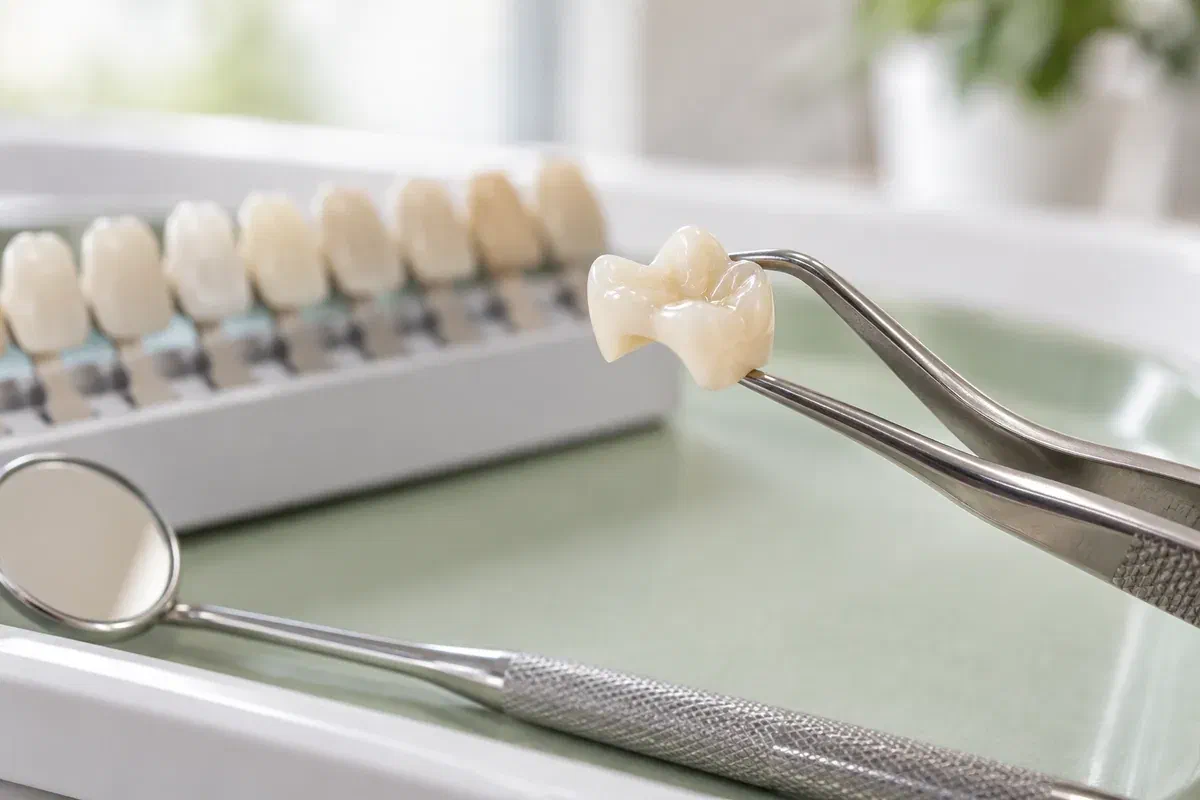
Illustrative ceramic partial-coverage restoration held above a dental tray
Wear, cracks and older repairs

Where heavy biting shows up first

The dentist examines the entire tooth and the bite around it. That shows whether a cusp has been weakened by force or wear, and whether the remaining structure can securely hold a partial restoration.

A cusp has chipped, cracked or worn thin

Repeated pressure can split or flatten the raised points of a molar. Filling only the area next to the damage may leave the cusp exposed to the same forces, so your dentist checks the extent of it before advising coverage.

A large filling keeps failing

Restorations that chip or loosen repeatedly can be a sign of heavy loading. Reassessing the tooth after removing the old filling shows whether an onlay or another approach would cope better.

You want to keep sound tooth

Ask what could stay uncovered. With strong biting forces, keeping structure is helpful only if the design still shields the cusps that are taking the load.

Pain, a crack that may run deeper or nerve symptoms can change the plan. An onlay rebuilds shape and support; it does not tell us why a tooth aches, so that is investigated first.

What partial coverage can offer

Support over the cusps that take the strain

In a suitable tooth, an onlay replaces lost surface and covers fragile cusps, spreading chewing forces over the restoration rather than leaving a thin wall to take them alone. Healthy parts of the tooth can stay as they are.

No restoration is immune to grinding. An onlay still needs preparation, and its suitability depends on bonding or retention, the material and the structure that remains. Ask what the onlay is designed to withstand and why it is preferred to a crown for your tooth.

Patient information: Cleveland Clinic — inlays and onlays

Cusp coverage for heavy bites

Extending over selected chewing surfaces can help support areas weakened by force. Your dentist should show which cusps are covered and why.

Saving structure without leaving gaps in protection

Keeping healthy tooth is valuable, but a cusp left unsupported may break under the same load. Ask how your design balances the two.

A bite checked carefully

The onlay is fitted against neighbouring and opposing teeth, including how they meet when you slide your jaw. Mention any sore spots or food trapping during planning.

Planning around your bite

Why the bite gets extra attention

The number of appointments varies with the fabrication method and the tooth’s needs. Ask how many visits are planned, what a temporary stage would be like and what findings could alter the design.

  1. Review the tooth and your habits

    Your dentist examines the damage, earlier repairs, symptoms and wear, using suitable investigations. You discuss grinding or clenching, the planned coverage and its alternatives before any preparation.

  2. Shape the tooth and record the bite

    With comfort measures that suit you, the tooth is prepared and its shape recorded, together with how your teeth meet. Any temporary restoration is explained, including how to protect it from heavy biting.

  3. Test the fit and movements

    Fit and contacts are checked, and the dentist looks at how the onlay meets the opposite teeth as you close and move side to side. Appearance can be discussed and adjustments made.

  4. Secure and protect

    Your dentist attaches the onlay using the bonding or cementing approach its material calls for. The bite is checked again, and you hear advice on eating, cleaning, follow-up and, where appropriate, night-time protection.

Protecting the result

A restoration lasts better when the forces are managed.

Once fitted, the onlay shares the work of chewing, while the tooth around it and its margins still need care. Keep to the guidance from your visit and get in touch about anything that persists or appears later.

Ease back into chewing

Ask the team when ordinary meals are fine and what to avoid at first. Until the advice is clear, do not judge the tooth’s readiness by how solid it feels.

Keep the margins clean

Brushing twice daily with a fluoride toothpaste, plus cleaning between teeth as shown, protects the seam between onlay and tooth. Ask for a demonstration if the new shape gets in the way.

Take grinding seriously

If a night guard or other protection is recommended, ask how to use and care for it. Report a high bite, new chips, jaw ache or tooth soreness that does not settle.

Options for a heavily loaded tooth

Matching coverage to the forces involved

The right choice depends on how much healthy tooth remains and how hard it works. Ask how each approach would handle the weak areas, and what preparation, upkeep and later care it may involve.

When the cusps are intact and strong

A filling or inlay

If no cusp needs cover, a repair within the tooth may be suitable. Ask whether a filling or a custom inlay would cope with your bite.

When certain cusps need shielding

An onlay

Partial coverage can protect the cusps at risk and keep other structure. It suits teeth where the remaining walls, the material and the bonding conditions allow it.

When damage or cracking is extensive

A crown or added treatment

Wider wear, a crack that runs deep or another problem may make a crown or further care more appropriate. Ask what makes partial coverage unsuitable here.

Grinding, clenching and onlays

Questions about heavy bites and repairs

Bite habits affect which restoration makes sense. These questions can help you raise them with your dentist.

(905) 876-4488
Can I have an onlay if I grind my teeth?
Often, yes, but grinding is part of the planning. The material, the design and whether protection is recommended all take it into account. Tell your dentist about any clenching or grinding you know of.
Will a night guard protect my onlay?
A night guard may help reduce the forces on teeth and restorations for people who grind. Your dentist can explain whether one is appropriate for you and how it would be made.
Why did my old filling keep chipping?
Repeated chipping can happen for several reasons, including heavy biting forces, the size of the filling or weakened tooth around it. An examination helps identify the likely cause.
Is a cracked cusp the same as a cracked tooth?
Not necessarily. A crack confined to a cusp may be treatable with a restoration, while a crack extending deeper can be more complex. Your dentist will assess it before recommending treatment.
Are some onlay materials better for people who clench?
Different materials handle force in different ways. Your dentist will consider your bite, the space available and appearance when suggesting one, and can explain the trade-offs.
What should I do if the onlay feels high after it is fitted?
Call the clinic and describe whether that tooth hits first or aches when you chew. A high spot can add strain for someone who clenches, so it is worth checking soon.
From Puslinch township

Book a look at your bite and your molars.

Visit our Bronte Street practice in Milton to discuss a worn, cracked or failing back tooth. We will explain whether an onlay is suitable, how your bite affects the design and how it compares with other options.

Phone the team about a new break, severe pain or swelling, and we will advise on how soon you should be seen.

Visit Milton Dental Clinic
Unit 1, 342 Bronte St. S, Milton, ON L9T 5B7
Get directions Clinic hours
Monday–Thursday
11am–7pm
Friday–Sunday
By appointment only

Areas we serve

  • Milton
  • Oakville
  • Mississauga
  • Georgetown
  • Halton Hills
  • Acton
  • Campbellville
  • Brampton
  • Burlington
  • Puslinch
  • Rockwood
  • Erin
  • Caledon
  • Etobicoke
  • Old Milton
  • Bronte Meadows
  • Timberlea
  • Dorset Park
  • Dempsey
  • Clarke
  • Beaty
  • Coates
  • Harrison
  • Scott
  • Willmott
  • Ford
  • Bowes
  • Cobden
  • Walker
  • Mountain View
  • Milton Heights
  • Hawthorne Village
  • Valley View
  • Fallingbrook
  • Nassagaweya
  • Trafalgar
  • Esquesing
  • Nelson
  • Brookville
  • Moffat
  • Glen Williams
  • Norval
  • Limehouse
  • Stewarttown
  • Ashgrove
  • Hornby
  • Silver Creek
  • Speyside
  • Scotch Block
  • North Oakville
  • River Oaks
  • Glen Abbey
  • West Oak Trails
  • Palermo
  • Bronte Creek
  • College Park
  • Joshua Creek
  • Uptown Core
  • Preserve
  • Iroquois Ridge
  • Lisgar
  • Meadowvale
  • Meadowvale Village
  • Churchill Meadows
  • Erin Mills
  • Central Erin Mills
  • Streetsville
  • East Credit
  • Creditview
  • Heartland
  • Sheridan
  • Mount Pleasant
  • Credit Valley
  • Huttonville
  • Churchville
  • Springbrook
  • Northwest Brampton
  • Bram West
  • Fletcher's Meadow
  • Fletcher's Creek South
  • Alton Village
  • Orchard
  • Millcroft
  • Headon Forest
  • Tansley
  • Brant Hills
  • Tyandaga
  • Kilbride
  • Lowville
  • Aberfoyle
  • Morriston
  • Arkell
  • Hillsburgh
  • Freelton
  • Carlisle
  • Waterdown
  • Flamborough
  • Mountsberg

How can we help?

Milton Dental Clinic

Have a question about your smile? Choose the option that works best for you.

For urgent dental concerns, please call.
Messages are reviewed during clinic hours.