

Illustrative patient describing denture comfort concerns to a dentist
Restorative Dentistry

Denture Adjustments

A denture that rubs, rocks, or feels uneven deserves a careful review. Discuss denture adjustments in Milton so the appliance, supporting tissues, and bite can be assessed together before changes are made.

A closer look at denture adjustments

Find the cause of the discomfort before changing the appliance.

A denture adjustment is a targeted change made after assessing how an appliance fits and functions in the mouth. It may address a pressure area, an edge, or a contact in the bite. The appropriate change depends on what is causing the concern.

A painful spot does not always mean that material should simply be removed from the denture. The tissues, overall fit, tooth contacts, and condition of the appliance need consideration. Removing the wrong area can create another problem or make a denture less stable.

At Milton Dental Clinic, explain where the denture bothers you and when the discomfort appears. Bring the appliance even if you have stopped wearing it. We can assess whether a limited adjustment is appropriate or whether a reline, repair, replacement, or another form of care needs discussion.

Have an uncomfortable denture checked
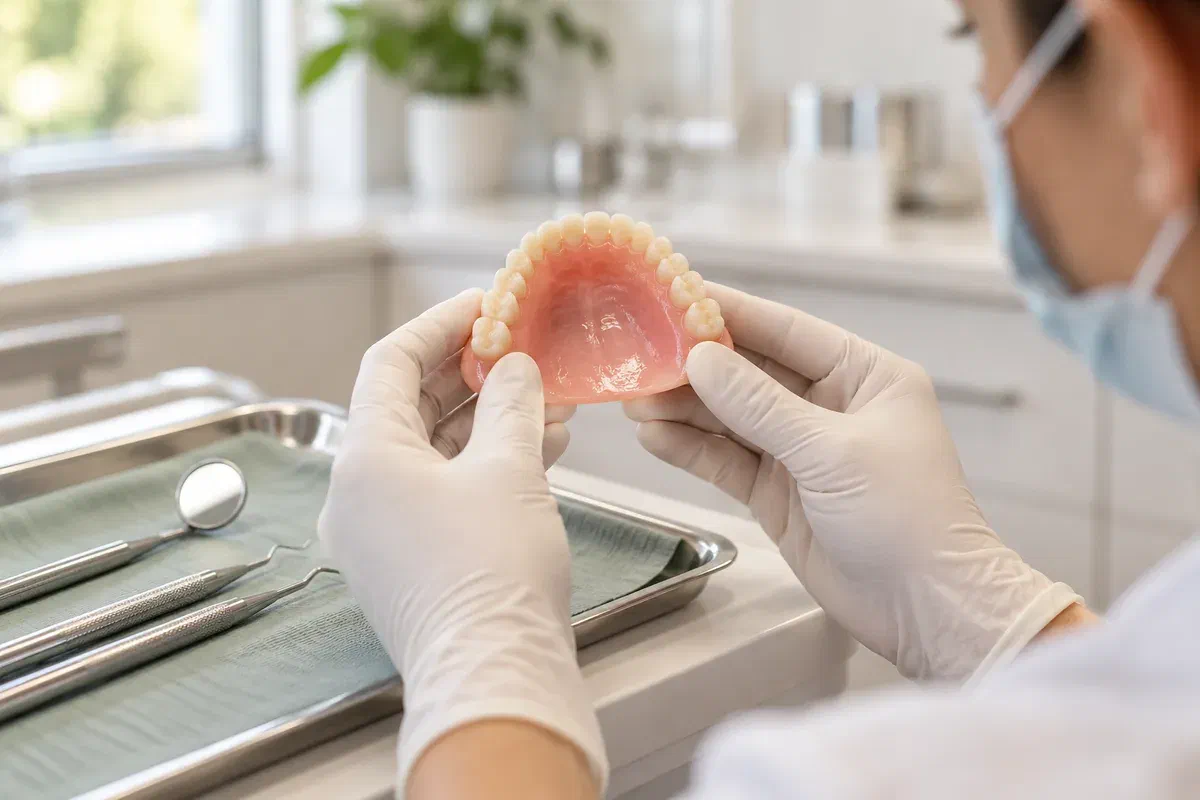
Gloved dental professional examining the fitting surface of an upper denture
What to describe at the appointment

The timing and location help guide the assessment.

Try to explain the experience rather than diagnose the cause. A denture may feel different while speaking, chewing, or resting, and those details can help the clinician understand which checks are useful.

A particular edge rubs

Tell the team where the rubbing occurs and whether it began with a new appliance or developed later. The dentist examines both the area in the mouth and the corresponding part of the denture before deciding whether refinement is suitable.

The teeth meet unevenly

If one side seems to contact first or the denture shifts as you close, describe that pattern. The bite and stability need to be considered together rather than adjusting a tooth surface solely from where the discomfort seems to be.

The appliance moves during ordinary use

Movement may reflect fit, design, the supporting tissues, or other factors. Ask whether a small adjustment can reasonably help or whether the overall relationship between the denture and mouth needs a different approach.

A persistent sore, unusual patch, lump, or unexplained change in the mouth needs examination. Do not assume every symptom beneath a denture is caused by a simple pressure point.

The purpose of a targeted adjustment

Make a measured change with a clear reason.

When the assessment identifies a suitable localized cause, an adjustment may help the appliance sit or function more comfortably. The clinician should explain what is being changed and what response is expected.

An adjustment has limits. It cannot correct every problem with a worn, poorly fitting, or unsuitable denture. If repeated changes have not helped, ask whether the underlying issue has been reconsidered and whether another treatment would offer a more useful result.

Patient information: Cambridge University Hospitals — denture care

Address an identified pressure or contact

A specific finding gives the adjustment a purpose. This is different from repeatedly removing material without understanding the relationship between the appliance and the symptoms.

Protect the parts that still work

The aim is to improve the problem while preserving useful fit, support, and function. Tell the dentist what feels comfortable as well as what does not, particularly if only one area is troublesome.

Clarify the need for further care

The review may show that an adjustment is enough or that the appliance needs broader attention. Understanding that distinction can help you avoid repeated short-term changes to a denture that requires a different plan.

Your denture adjustment visit

Describe, examine, adjust where suitable, and reassess.

An appointment should consider the appliance in the mouth as well as outside it. Ask the clinic whether any specific preparation would help the assessment, especially if wearing the denture has become painful.

  1. Review the history of the discomfort

    Explain when the denture was made, previous adjustments, and any recent changes. Describe the location, timing, and effect on eating or speaking, and mention if there are areas you can no longer tolerate wearing.

  2. Examine the tissues, fit, and bite

    The dentist checks the mouth and appliance together, using appropriate methods to assess pressure, stability, and contacts. This helps distinguish a localized adjustment need from a broader fit or tissue concern.

  3. Make the agreed change if appropriate

    A suitable area may be refined or another targeted modification discussed. The clinician considers the effect on the overall appliance, and any need for laboratory work or a different procedure is explained.

  4. Review the result and follow-up

    The denture is reassessed after the change, and you can describe how it feels. Ask what to expect as an irritated area settles, when to return, and which continuing symptoms mean the plan should be reviewed.

After an adjustment

Notice the response without trying to finish the work yourself.

A change to the denture and recovery of a sore area are related but different matters. Follow the clinician’s advice about wearing the appliance, caring for the tissues, and arranging a review if discomfort continues.

Follow the wearing advice for your situation

Instructions may differ for a new denture, a recently extracted mouth, or an older appliance. Ask what applies to you instead of copying a schedule from someone else’s experience.

Keep a brief record of remaining concerns

Note whether the original problem has improved and whether discomfort now occurs in a different situation. A clear description is useful at review, but do not repeatedly provoke pain to test the adjustment.

Keep the denture and mouth clean

Continue the recommended cleaning routine and handle the appliance carefully. If cleaning or insertion hurts, ask for guidance rather than scraping the fitting surface or altering the edge at home.

Choosing the appropriate correction

Match the scale of the change to the scale of the problem.

A localized pressure point and a denture that no longer fits the mouth need different considerations. Ask what the examination shows and why the proposed option is likely to help.

When a specific area needs refinement

A limited adjustment

A targeted change may be suitable when the overall appliance remains appropriate. The dentist should explain the finding being addressed and how the result will be checked.

When more than a small surface change is needed

Relining, rebasing, or repair

A change in the fitting surface or a damaged component may require another procedure. Ask what each proposed treatment changes and whether the existing teeth and overall design remain suitable.

When the existing denture has important limitations

A new appliance or a broader assessment

Significant wear, repeated problems, or an unsuitable design may make replacement more appropriate. A tissue problem may also need care separately from the denture before a final plan is chosen.

Questions about denture adjustments

Get help with the fit before making your own changes.

The details of the appliance and your mouth guide the advice. These questions can help you prepare for an adjustment visit and understand what follow-up may be needed.

(905) 876-4488
Should I wear a painful denture before an adjustment appointment?
Ask the clinic for instructions specific to your situation. Wearing it may help identify pressure areas in some cases, but you should not force yourself through significant pain without advice. Explain how long you can tolerate it and whether there is a visible sore.
Can one denture adjustment solve every sore spot?
Sometimes one targeted change is enough, but the response depends on the cause and the tissues. More than one review may be needed. Persistent or recurring problems should prompt reassessment of the overall fit and mouth rather than automatic repeated removal of material.
Is it safe to smooth a denture edge with a nail file?
No. It is easy to remove the wrong amount or alter an area important to fit and support. A rough or painful edge should be assessed professionally. Bring the appliance to the visit and explain where it catches or rubs.
Can the bite be checked if my dentures rock while I chew?
Yes, the bite is one part of the assessment. The clinician also considers the supporting tissues, overall fit, and design because movement can have more than one cause. Ask whether an adjustment is appropriate or whether another procedure is needed.
Why might a reline be recommended instead of another adjustment?
An adjustment changes selected areas, while a reline addresses the relationship of a fitting surface to the mouth. If the broader fit has changed, removing a little more material may not solve it. The dentist should explain which finding supports the recommendation.
Can an older denture need adjustment even if it used to fit well?
Yes. The mouth, bite, and appliance can change over time. Bring the history of when the problem began and any recent dental treatment. The current condition determines whether an adjustment is useful or whether the denture needs more extensive attention.
Denture adjustments in Milton

Let’s find out why the appliance is bothering you.

Visit our Bronte Street clinic with the denture and a description of the problem. We can assess the tissues, fit, and bite, then discuss whether a targeted adjustment or another approach is appropriate.

Mention significant pain, a persistent sore, or difficulty wearing the appliance when you contact the clinic so the next step can be discussed.

Visit Milton Dental Clinic
Unit 1, 342 Bronte St. S, Milton, ON L9T 5B7
Get directions Clinic hours
Monday–Thursday
11am–7pm
Friday–Sunday
By appointment only

How can we help?

Milton Dental Clinic

Have a question about your smile? Choose the option that works best for you.

For urgent dental concerns, please call.
Messages are reviewed during clinic hours.