Tender gums along an edge
Show the area and say whether it arrived with a newer denture or developed alongside other changes. The dentist examines the tissue and the overlying part of the appliance before deciding whether a refinement is wise.


Sometimes the denture stays the same and the mouth around it changes: new medication, a dry mouth, an illness or simply time. From Erin or Hillsburgh, book an assessment so the appliance, your gums and your bite are reviewed together before any adjustment.
You may not have changed anything about your denture, yet it suddenly feels less forgiving. A new prescription, a dry mouth or a recent illness can all alter how an appliance feels. One response is an adjustment, meaning the dentist studies how the appliance sits and works in your mouth now, then makes a deliberate change to a tight area, a rim or a tooth contact.
Because the mouth itself may be part of the picture, a sore patch doesn’t automatically mean the appliance should be trimmed. The condition of the gums, the general fit, the bite and the denture’s wear all need weighing. Reducing the wrong area might leave you with a looser plate and the original discomfort.
When you book from Erin, bring a current list of medications and mention any recent health changes, along with where the denture bothers you and when. Bring the appliance even if you’ve stopped wearing it. That lets us explain whether a limited adjustment suits, or whether relining, repair, replacement or coordination with your physician should be considered.
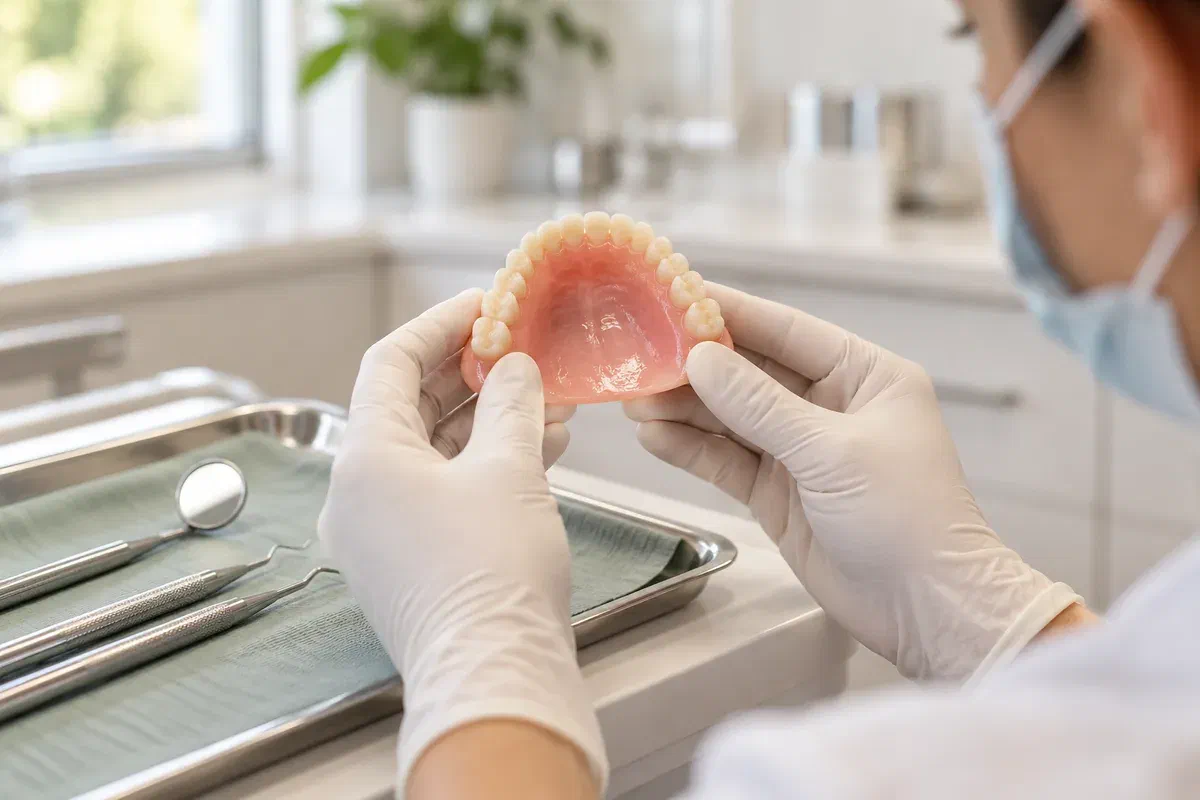
Describe what you’ve noticed and what has happened in your life lately. Mention whether discomfort comes while speaking, eating or resting, and whether your mouth feels drier than it used to.
Show the area and say whether it arrived with a newer denture or developed alongside other changes. The dentist examines the tissue and the overlying part of the appliance before deciding whether a refinement is wise.
If closing feels uneven or the denture slips as your teeth meet, describe it. The bite and the appliance’s stability are assessed together, rather than reducing a tooth simply because the sore is nearby.
A dry mouth, changes in the gums or an aging fit can all reduce how securely a denture sits. It’s fair to ask if a minor refinement will make a real difference, or if a different approach, possibly with medical advice, is the better bet.
A sore that persists, an unusual patch or lump, or a change you can’t explain should be examined. With health changes in the mix, it is especially important not to assume a simple pressure point.
When a localized cause suited to adjustment is identified, refining the appliance may help it feel more comfortable. The dentist should explain what is being altered and how much difference to expect, given what else is going on in your mouth.
An adjustment can’t correct problems that start elsewhere. Dryness, tissue changes or a worn and loose denture may need other care. If refinements haven’t helped, ask whether the wider picture, including your health, has been reconsidered and whether a different treatment would be more useful.
Patient information: Cambridge University Hospitals — denture care
A refinement makes sense when it answers a specific finding. Removing material repeatedly, while the real cause lies in the tissues or the general fit, is unlikely to bring lasting comfort.
Areas that support the denture well should be kept. Tell the dentist what still feels comfortable so the work stays small and focused.
The review may show that a small change is enough, or that the denture needs broader work or your physician’s input. Understanding that helps you avoid repeated short-term fixes.
The denture is examined in your mouth and outside it. If wearing it has become painful, ask the clinic whether anything should be done before the appointment.
Share your medications, recent illnesses, when the denture was made and any previous adjustments. Describe where and when it hurts, the effect on eating or speech, and any area you can no longer tolerate.
With suitable methods, the dentist checks pressure, stability, contacts and the health of your gums. That helps separate a local adjustment need from a tissue or fit issue that needs different care.
When one spot explains the trouble, it can be smoothed there and then. If lab work, a separate procedure or a conversation with your physician would help more, the dentist explains why.
Once it is back in, tell the dentist whether it feels better, worse or simply different. Ask how long tenderness might last, when to return, and which symptoms would mean the plan should be reviewed.
An adjusted appliance and healing tissue improve at different rates. Follow the advice you receive about wearing and cleaning, keep your mouth comfortable as recommended, and book a review if problems continue.
Advice may differ if you have a dry mouth, recent extractions or a long-used denture. Ask what applies to you rather than adopting general tips.
Record whether the original issue eased and whether discomfort comes at particular times, such as when your mouth is driest. Avoid pressing on sore areas to test them.
Continue the recommended cleaning and handle the denture with care. If cleaning or putting it in hurts, ask for help rather than scraping the inner surface or altering a border.
Advice depends on your health, your mouth and your appliance. These answers may help you prepare and understand what follow-up could involve.
Bring the appliance, a medication list and a description of what’s changed to our Bronte Street practice. The dentist examines your gums, the fit and your bite, then explains whether a targeted adjustment or another approach suits you.
If pain is significant, a sore won’t heal or you can’t wear the denture, tell us when you call so the next step can be discussed.
