An edge that bothers you later
Say where it presses and whether it has done so since the denture was new or only recently. The dentist looks at that gum area and the corresponding section of the appliance before deciding on any refinement.


Comfortable at eight in the morning, aching by four. A denture that wears you down as the day goes on is telling you something. From Georgetown, book an adjustment assessment so the appliance, your gums and your bite can be examined before changes are made.
Plenty of denture problems don’t announce themselves first thing. They creep in after lunch and peak by evening, until taking the appliance out feels like relief. A denture adjustment is a deliberate change chosen after the dentist sees how the appliance behaves. Its target may be a pressure area, a flange or a contact between teeth.
An ache that grows over hours could come from several directions at once. Gum tissue, the overall seating, the bite and wear on the denture are each part of it. Trimming without a clear reason risks starting a new sore patch, or making the appliance less steady during the long stretches you wear it.
If you’re coming in from Georgetown, try booking for a time when the discomfort is usually present, and describe how your day unfolds with the denture in. Bring it along even if you’ve given up on wearing it. That way we can say whether a limited change is reasonable or whether relining, repair, replacement or other care should be talked through.
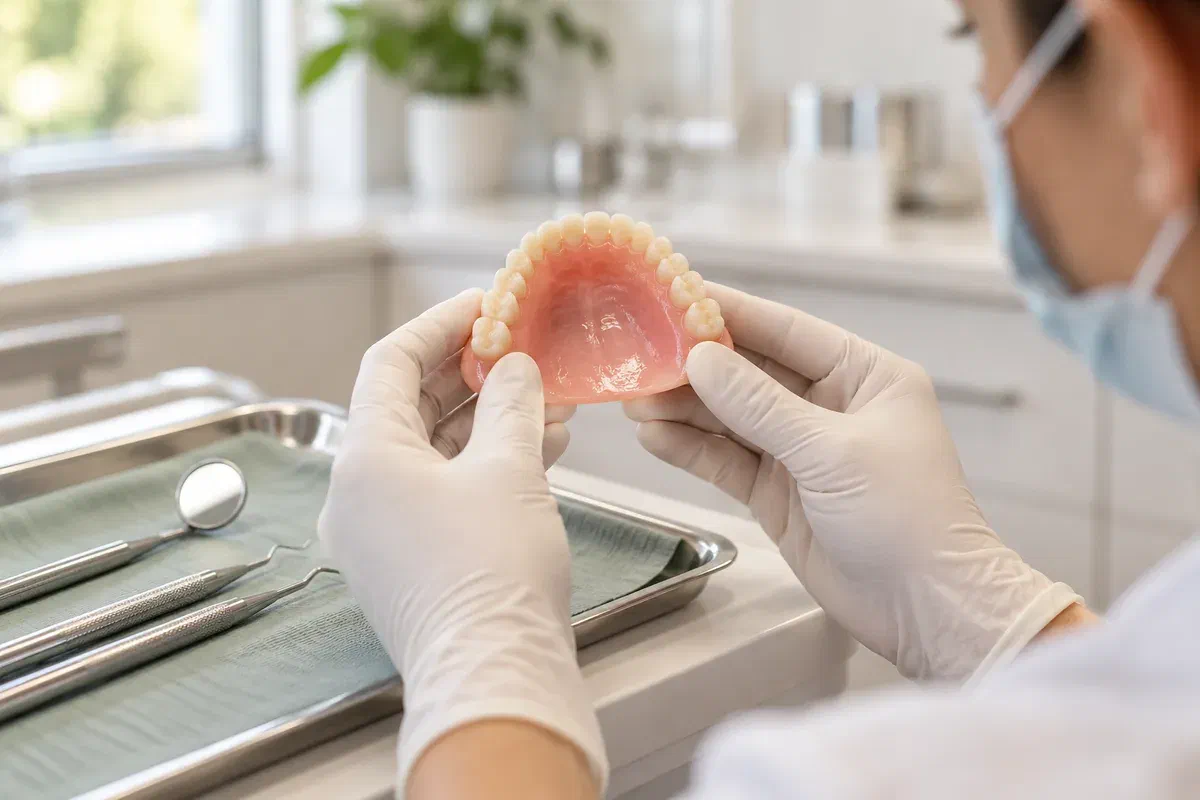
Rather than settling on a cause, describe the pattern. Is the denture fine at rest but tiring to chew with? Does it feel bigger by evening? Those details guide which checks come first.
Say where it presses and whether it has done so since the denture was new or only recently. The dentist looks at that gum area and the corresponding section of the appliance before deciding on any refinement.
Tired jaw muscles or one side touching first can relate to how the teeth meet. Describe what you notice. The contacts and the denture’s stability are considered together, rather than reducing a tooth because it is near the ache.
A denture may start firm and feel looser later. That can reflect fit, design, the supporting gums or several factors combined. Ask whether a small adjustment is likely to help or whether a different approach is better.
Have a lasting sore, a new patch or lump, or any unexplained change in the mouth examined. Discomfort that builds through the day isn’t always caused by a pressure point.
When a localized cause suited to adjustment is found, changing that area may make the denture easier to wear for longer periods. The dentist should describe what is being altered and what difference you might reasonably notice.
Be realistic about limits, though. An adjustment cannot make up for a denture that is worn down, generally loose or not well matched to your mouth. If several attempts haven’t made the afternoons easier, ask whether the cause has been looked at afresh and whether another treatment would help more.
Patient information: Cambridge University Hospitals — denture care
A specific finding is what makes a refinement worthwhile. Taking material off at every visit without linking it to the pattern of discomfort is unlikely to solve a long-day problem.
Parts of the denture that feel fine should stay that way. Tell the dentist which areas are comfortable all day, so the change stays focused on the trouble spot.
Your review may show that an adjustment is enough, or that the appliance needs broader work. Knowing early helps you avoid a string of small fixes that don’t change how evenings feel.
Expect the denture to be looked at while you wear it and once it is out. If keeping it in has become painful, phone ahead and ask whether any preparation would be useful.
Tell the team when the denture was made, about earlier adjustments and recent changes. Explain when discomfort begins, where it sits, how it affects meals or conversation, and which areas you can no longer tolerate.
Using suitable methods, the dentist assesses pressure, stability and how the teeth meet, looking at your mouth and the appliance together. That helps separate a local issue from a wider fit or gum concern.
If the findings point to one area, that spot is smoothed with an eye on the balance of the whole appliance. Should a lab procedure suit your long days better than chairside work, the dentist explains the reasoning.
Wear it for a few minutes in the chair and report whether the pressure has eased. Ask how long an irritated area might take to settle, when to return, and which symptoms later in the day should prompt a call.
An adjusted denture and a recovering gum are two separate things that improve on their own timelines. Wear and clean the appliance as advised, and get back in touch if the ache returns.
Someone with a new denture, recent extractions or a long-used appliance may each receive different guidance, including about rest periods. Ask what suits your situation.
Keep a short note on whether the ache now starts later, earlier or not at all. That pattern is useful at review, but there’s no need to keep wearing it through pain to see what happens.
Clean the denture as advised and avoid dropping it. If cleaning or putting it in hurts, ask the clinic rather than scraping the inner surface or reshaping a border at home.
Answers depend on your mouth and the appliance you wear. These may help you get ready for an appointment and understand what might follow.
Come to our Bronte Street practice with your denture and a note of when it bothers you most. After examining your gums, fit and bite, the dentist will explain whether a small adjustment or a different option is the sensible choice.
Tell us about severe pain, a sore that won’t heal or being unable to wear the denture when you call, so we can talk about what to do next.
