It still feels unnatural
Getting used to a new shape takes practice. The wearer should explain which feelings are just unfamiliar and which hurt or prevent eating and talking, so the dentist can tell adaptation from a problem.


When a parent or partner gets a new denture, the learning often involves the whole household. Denture aftercare for Brampton supports the wearer and the people who help, with clear handling steps, cleaning advice and fit reviews.
In many homes, a son, daughter or spouse ends up helping with a new denture: reminding about cleaning, finding the case, noticing when meals become a struggle. Aftercare can include those helpers so everyone works from the same instructions.
First, be sure which instructions apply. An immediate denture fitted after extractions brings temporary rules that a replacement on healed gums does not. Advice from relatives, friends or the internet may not match the appliance, so check with us when unsure.
The wearer’s voice comes first. We ask what feels manageable and what is hard, then review the fit, demonstrate handling and cleaning, and decide whether more assessment is needed. Ongoing pain is a reason to return, for both wearer and helper to raise.
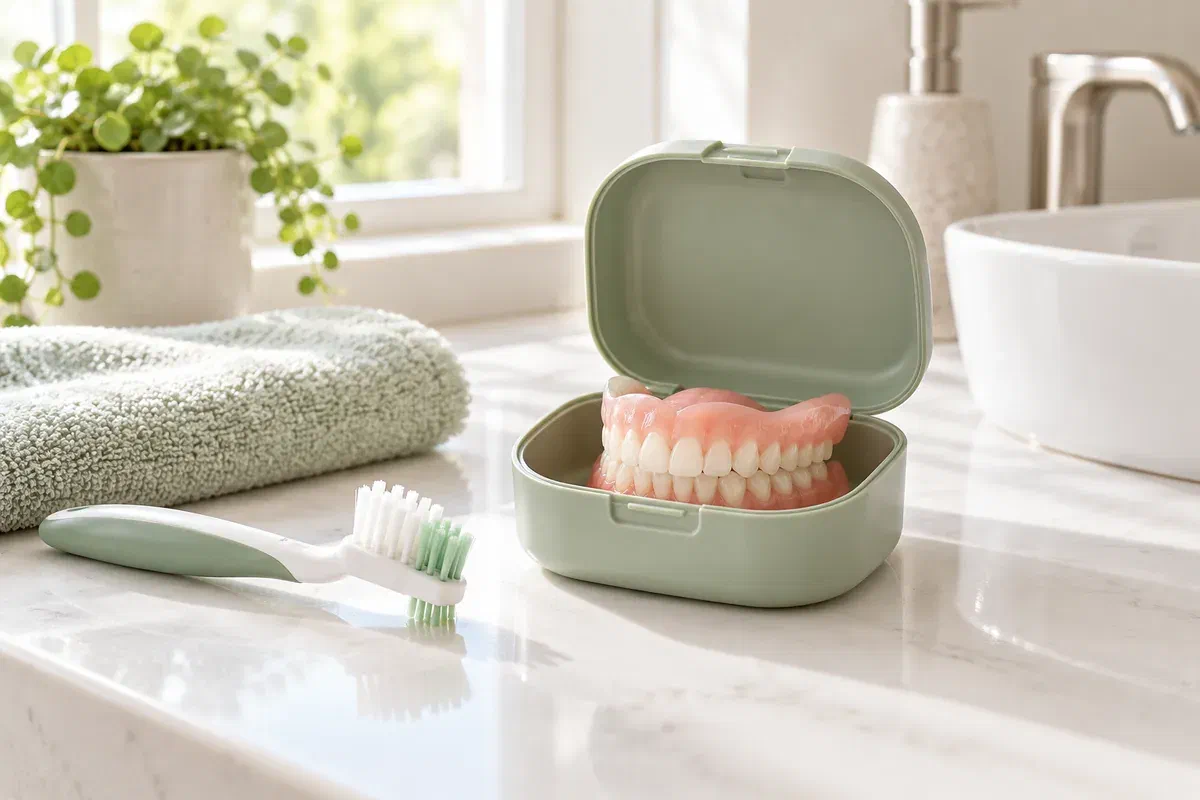
Helpers often spot things the wearer does not mention, such as skipped meals or a denture left out all day. Combine both perspectives into a short list of examples to bring along.
Getting used to a new shape takes practice. The wearer should explain which feelings are just unfamiliar and which hurt or prevent eating and talking, so the dentist can tell adaptation from a problem.
Arthritis, tremor or poor vision can make insertion and cleaning hard. Tell the team early, and bring the person who helps most so the demonstration suits how care actually happens at home.
Confirm when the denture comes out, where it is stored and whether recent extractions change the early plan. Write it down so everyone in the house follows the same steps.
If the denture went in after extractions or another procedure, follow the treating clinician’s postoperative instructions and contact details first. General advice here does not override them.
Questions build up once a denture is part of daily life. A review looks at the mouth and the appliance together, and gives wearer and helper the same answers, so nobody is left guessing whether a problem is just practice.
Comfort arrives at different speeds for different people. Appliance type, previous denture use, healing and general health all count. Ask what realistic progress looks like and which signs should prompt an earlier visit.
Patient information: Guy’s and St Thomas’ — getting used to dentures
Pack the denture, the case and the cleaning products used at home. A helper who watches the demonstration can support handling, cleaning and storage without guesswork.
A rubbing area, uneven bite or loose feel may need a specific response. Review helps the dentist decide whether adjusting the appliance or another step is right.
Healing gums can alter the fit over time. Ask when future reviews may be needed and whether a reline or replacement might be discussed later.
We focus on what has happened since fitting. A helper can add details, but the wearer’s own account and preferences lead the discussion.
Share daily wearing time, foods or words that are difficult, any sore places and changes in health or medication. Mention extractions and instructions that have been hard to follow.
The dentist checks the tissues, the fit and the bite. That helps separate normal adaptation from pressure, a healing issue or another condition needing care.
Depending on findings, this may involve showing handling to both of you, revising advice or making an adjustment. Any further procedure is explained along with how it fits the plan.
Confirm the current instructions, the next review and the warning signs that mean calling. Ask for a written summary so everyone at home can refer to it.
Good care involves the denture and the mouth beneath. Start with any post-surgery directions, then follow the long-term wearing, cleaning and storage routine the dentist recommends.
Begin with simple meals and the chewing technique demonstrated at the visit. Family conversation and reading aloud both help speech. If difficulties continue, let us know so the fit and tooth arrangement can be considered.
Choose one place with a towel or a bowl of water, and keep a labelled case nearby. Avoid wrapping the denture in tissue, and keep it away from pets and small children.
Natural teeth still need fluoride toothpaste, and gums need the care you were advised. Denture cleaning products belong on the appliance only, never inside the mouth.
Caring for a denture can be a shared job. These answers cover questions both wearers and helpers often ask.
Book a review at our Bronte Street clinic for a new or changed denture. Bring the appliance, the products used at home and a family helper if that would be useful.
Call about severe pain, a sore that will not heal, or anything worrying you after an extraction. Together we can talk about whether an earlier visit is needed.
