Illustrative patient receiving practical guidance about a new denture
Restorative Dentistry

Denture Aftercare in Mississauga

A tender patch under a new denture leaves you wondering whether to wait it out or call. Our denture aftercare for Mississauga helps you read those signals, with fit checks, handling advice and adjustments where they are needed.

Comfort checks from Mississauga

Is this soreness part of settling in?

It is one of the most common questions after a fitting. Some awareness of a new denture is expected while the gums and muscles adapt, but a specific spot that rubs, reddens or grows more painful is different. Aftercare is where that distinction gets made properly.

Context matters. A denture placed right after extractions rests on healing tissue and comes with its own early instructions, while a replacement on settled gums is judged differently. Tell us which you have, so advice about soreness matches your stage.

Describe where it hurts, when it started and what makes it worse. A review can look at the fit and bite, reshow handling and cleaning, and decide whether an adjustment or further assessment is needed. Nobody should have to grit their teeth through ongoing pain.

Book a comfort check for your denture
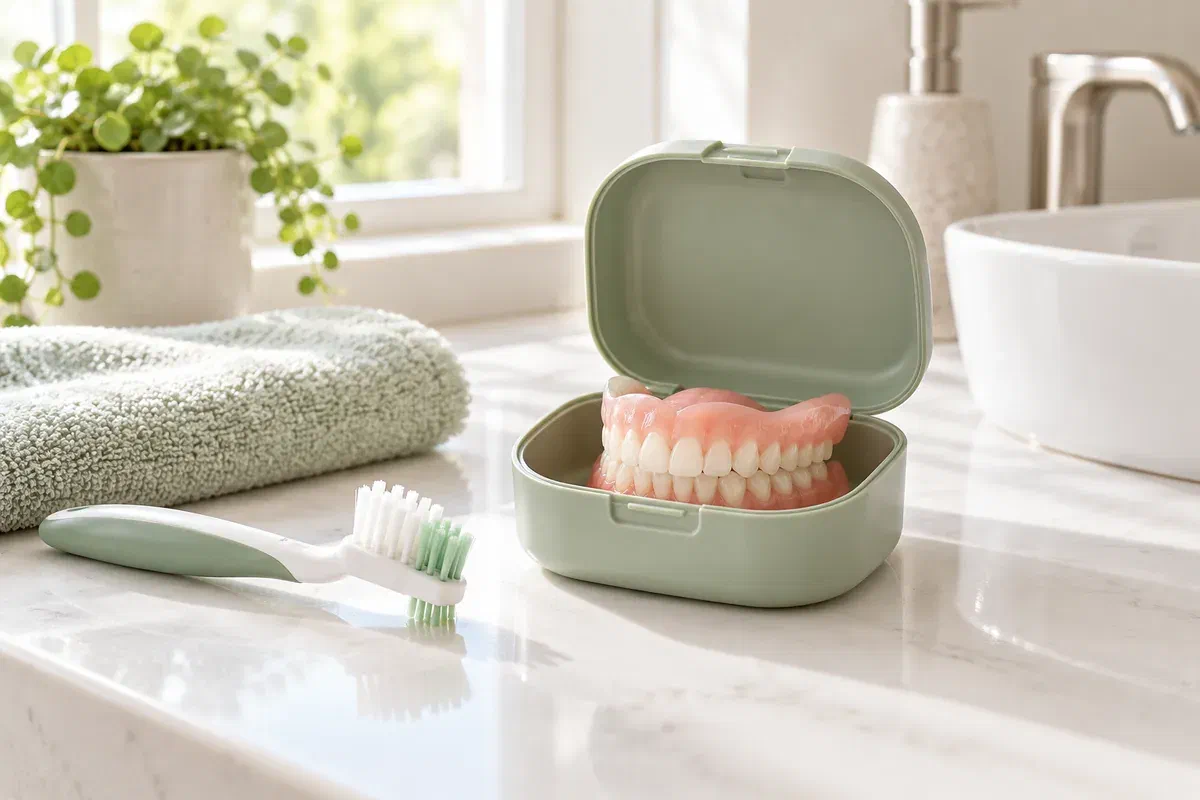
Clean denture set in a storage case beside a brush and towel
Signals worth mentioning

The details you notice point to the answer.

Precise observations help the dentist find the cause quickly. Note which side is sore, whether it happens when chewing or at rest, and whether cleaning or inserting the denture adds to the discomfort.

General awareness versus a sharp spot

A feeling of fullness or pressure across the whole mouth is often part of adapting. A pinpoint ache, ulcer or rubbing area is more likely to need attention, so describe each sensation separately.


Handling seems to make it worse

Forcing a denture in or levering it out can irritate tissues. Ask for a demonstration of gentler technique, and say if your grip, eyesight or coordination makes careful handling harder.

Not sure how long to wear it

Wearing time affects comfort. Ask whether you should build up hours gradually, when to take it out, how to store it, and whether recent extractions mean a different plan at first.

For a denture placed after surgery, rely on the operating clinician’s postoperative guidance and contact arrangements. General comfort advice should never replace those directions.

What you gain from follow-up

Sore spots found early, before they grow.

A rubbing point rarely improves just because you keep wearing the denture. A review examines your gums and the appliance side by side, so a fixable pressure area is not written off as something you must practise through.

How quickly a denture becomes comfortable depends on its type, your gums, any healing still under way and whether you have worn one before. Ask what comfort should look like over the coming weeks and what would warrant a quicker visit.

Patient information: Guy’s and St Thomas’ — getting used to dentures

Handling that protects your gums

Bring the appliance along with the brush and cleaner you use. Watching insertion and removal again can show whether technique is part of the soreness, and storage advice can be tailored to your home.

Pinpoint the cause of discomfort

One tender area, a bite that strikes unevenly or a general loose feel may each need a different fix. Follow-up lets the dentist choose between adjustment and other options.

Expect the fit to evolve

Gums change shape over time, faster after extractions. Ask when checks are likely and whether a reline or replacement could be part of the longer-term picture.

During a comfort review

We trace the soreness back to its source.

The appointment looks at your experience since the denture was fitted. Point to where it hurts and explain when; you are not expected to know why.

  1. Map the discomfort

    Show where the soreness is and describe how long you wear the denture, what you eat and whether talking or cleaning triggers it. Mention extractions, medications or health changes as well.

  2. Examine tissues and fit

    The dentist inspects the gums for redness or ulcers, checks how the denture seats and looks at how the teeth meet. This separates adaptation from a pressure point or another condition.

  3. Relieve or redirect

    Treatment may be a precise adjustment, new handling tips or different wearing advice. If something else is needed, the dentist explains the reason and how it fits your plan.

  4. Set the plan for healing

    Agree on how to wear the denture while the area recovers, when to return and what should make you call earlier. Ask for the key points in writing.

Comfort at home

Small habits that keep your gums happier.

Comfort depends on both the appliance and the tissue under it. Follow any post-surgery instructions first, then keep to the wearing, cleaning and storage plan your dentist set for this denture.

Build up chewing and talking slowly

Soft foods in small pieces put less strain on tender areas. Spread chewing across both sides as you were shown, and read aloud to practise speech. Report any limitation that does not ease so fit and tooth position can be rechecked.

Treat the denture gently

Hold it over a basin of water or a folded towel while cleaning. Store it in a case, not in a tissue, and keep it out of reach of dogs or cats.

Keep gums and natural teeth clean

Brush remaining teeth with fluoride toothpaste and follow any gum care advice. Use denture cleaners only on the appliance; they are not suitable for your mouth.

Choosing the right fix

Reassurance, adjustment or further care.

Some soreness settles with better technique, while some needs treatment. The dentist should explain why the chosen response suits the problem you described.

When adaptation is the main cause

Technique and time

If the fit is good and the gums look healthy, a demonstration and a planned practice period may be right. You will be told which changes should bring you back early.

When the denture is pressing too hard

Easing pressure areas

A localized sore or uneven bite often responds to an adjustment, while a broader fit change may need another method. You will learn what is altered and how to judge the outcome.

When soreness has another cause

Investigating further

A sore that will not heal, an appliance that does not suit your mouth or a healing concern needs proper assessment. This may lead to more treatment, a redesign or referral.

Denture comfort questions

What people wonder about sore spots and fit.

Comfort usually improves with the right support. These answers cover questions that come up as people adjust to a new appliance.

(905) 876-4488
How can I tell a pressure sore from normal adjustment?
General awareness tends to ease gradually. A pressure sore is usually a specific, tender spot that may look red or ulcerated and can get worse with wear. If one area keeps hurting, call so the dentist can look at it.
Should I stop wearing my denture if a spot is sore?
Call the clinic for advice before deciding. Depending on your situation, you may be told to reduce wearing time until you are seen. If the denture was placed after extractions, follow the treating clinician’s instructions about keeping it in.
Can a mouth ulcer under my denture be serious?
Most denture sores are caused by rubbing and heal once the cause is addressed. Any ulcer or patch that does not heal should still be examined, so mention it rather than waiting for it to disappear. Let us know how long it has been there and whether it changes when the denture is left out.
Will a cushion or liner from the pharmacy help?
Check with your dentist first. Over-the-counter products can change how the denture sits, may be hard to clean and can hide a problem that needs adjusting. A professional review is a safer first step, and the dentist can explain whether a liner of any kind would suit your appliance.
Does overnight removal help with soreness?
For regular wear, taking dentures out at night is generally advised to rest the gums, unless your dentist recommends otherwise. After extractions, early instructions may differ, so confirm what applies to you. Keep the denture in its case as advised while it is out.
If I live in Mississauga, how do I decide whether a sore needs a visit?
Call before making the trip and describe the spot, how long it has lasted and how it affects wearing. The team can suggest whether to book an earlier review or manage it until your scheduled one.
Denture comfort in Mississauga

Comfort is worth a conversation.

Arrange a review at our Bronte Street practice if a new or adjusted denture is causing discomfort. Bring the appliance, a note of where it hurts and the products you use.

Call about intense pain, a sore that does not heal, or concerns after an extraction. We can help decide whether you need to be seen sooner.

Visit Milton Dental Clinic
Unit 1, 342 Bronte St. S, Milton, ON L9T 5B7
Get directions Clinic hours
Monday–Thursday
11am–7pm
Friday–Sunday
By appointment only

Areas we serve

  • Milton
  • Oakville
  • Mississauga
  • Georgetown
  • Halton Hills
  • Acton
  • Campbellville
  • Brampton
  • Burlington
  • Puslinch
  • Rockwood
  • Erin
  • Caledon
  • Etobicoke
  • Old Milton
  • Bronte Meadows
  • Timberlea
  • Dorset Park
  • Dempsey
  • Clarke
  • Beaty
  • Coates
  • Harrison
  • Scott
  • Willmott
  • Ford
  • Bowes
  • Cobden
  • Walker
  • Mountain View
  • Milton Heights
  • Hawthorne Village
  • Valley View
  • Fallingbrook
  • Nassagaweya
  • Trafalgar
  • Esquesing
  • Nelson
  • Brookville
  • Moffat
  • Glen Williams
  • Norval
  • Limehouse
  • Stewarttown
  • Ashgrove
  • Hornby
  • Silver Creek
  • Speyside
  • Scotch Block
  • North Oakville
  • River Oaks
  • Glen Abbey
  • West Oak Trails
  • Palermo
  • Bronte Creek
  • College Park
  • Joshua Creek
  • Uptown Core
  • Preserve
  • Iroquois Ridge
  • Lisgar
  • Meadowvale
  • Meadowvale Village
  • Churchill Meadows
  • Erin Mills
  • Central Erin Mills
  • Streetsville
  • East Credit
  • Creditview
  • Heartland
  • Sheridan
  • Mount Pleasant
  • Credit Valley
  • Huttonville
  • Churchville
  • Springbrook
  • Northwest Brampton
  • Bram West
  • Fletcher's Meadow
  • Fletcher's Creek South
  • Alton Village
  • Orchard
  • Millcroft
  • Headon Forest
  • Tansley
  • Brant Hills
  • Tyandaga
  • Kilbride
  • Lowville
  • Aberfoyle
  • Morriston
  • Arkell
  • Hillsburgh
  • Freelton
  • Carlisle
  • Waterdown
  • Flamborough
  • Mountsberg

How can we help?

Milton Dental Clinic

Have a question about your smile? Choose the option that works best for you.

For urgent dental concerns, please call.
Messages are reviewed during clinic hours.