Illustrative patient receiving practical guidance about a new denture
Restorative Dentistry

Denture Aftercare in Puslinch

Standing in the pharmacy aisle, it is hard to know which denture brush, soak or paste is right. Denture aftercare for Puslinch sorts out cleaning for the appliance and the mouth, and checks fit and comfort along the way.

Cleaning and comfort, for Puslinch

What belongs on the denture, and what belongs in your mouth?

Cleaning sounds simple until you face a shelf of tablets, pastes and brushes. Some products are designed only for the appliance, others only for teeth and gums, and mixing them up can scratch the denture or irritate your mouth. Aftercare helps you set up a routine that keeps both clean.

The right approach depends on the denture. Materials and metal parts vary, and an appliance fitted right after extractions may come with special rinsing and wearing rules for the first days. A replacement on healed gums follows a different plan, so confirm which you have.

Share what you are using now and what seems to work. During a review we can assess how it sits, demonstrate handling and cleaning with your own items, and decide whether further assessment is needed. Soreness that does not settle should be mentioned, not accepted.

Book a denture cleaning and fit review
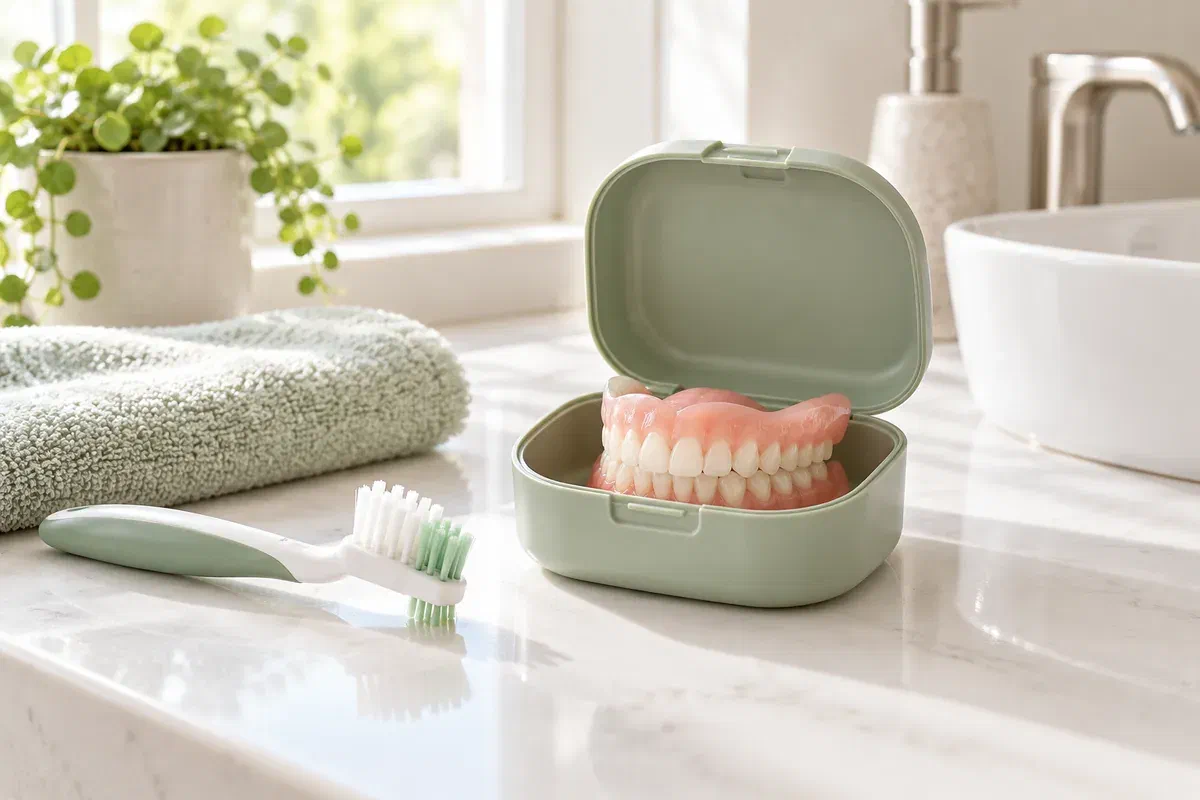
Clean denture set in a storage case beside a brush and towel
Practical concerns in the first weeks

Clean, comfortable and confident takes a little guidance.

It helps to bring examples. Note any marks or staining on the denture, irritation after cleaning, and difficulties with eating, speaking or inserting the appliance, and bring the products you use.

The mouth feels different

A new appliance changes sensation, saliva and taste for a while. Explain which feelings are just unfamiliar and which are painful or limit eating and talking, so the dentist can judge whether to wait or act.


Cleaning is awkward to manage

Brushing a denture thoroughly without dropping it takes practice. Mention any problems with grip, eyesight or steady hands, and ask whether a different brush or a helper attending the demonstration would make it easier.

Unsure which products and timing apply

Ask what to clean the denture with, what to soak it in, when to take it out and whether extractions change the start. Instructions during healing are often different from later care.

Where extractions or surgery were part of treatment, follow the treating clinician’s postoperative directions first, including any rinses. General cleaning advice should not replace them.

What aftercare adds to your cleaning routine

Products that suit your appliance, habits that protect it.

Once you have cleaned the denture for a week or two, you will know what is awkward or unclear. A review examines your mouth and the appliance together, so irritation or a fit problem is properly investigated instead of being blamed on technique.

No two mouths settle at the same pace. Your denture type, previous experience, healing and tissues all influence comfort. Ask what progress is realistic for you and which changes mean phoning before the next planned review.

Patient information: Guy’s and St Thomas’ — getting used to dentures

Match products to the material

Bring the denture with your brush, soak and paste. The team can confirm which suit your appliance, show you how to clean every surface and explain safe storage.

Find the source of irritation

A tender patch may come from pressure, a bite issue or a reaction to how the denture is cleaned. Review helps the dentist decide between an adjustment, new advice or another step.

Plan for later maintenance

As gums reshape, especially after extractions, the fit can change. Ask when your next checks should be and whether a reline or replacement may be discussed in time.

The visit, in four parts

From your bathroom shelf to a clear plan.

We focus on your routine and experience since fitting. Bring your products and a description of what has happened; you are not expected to know what is causing any problem.

  1. Review your cleaning and wearing

    Tell us how long you wear the denture, how and when you clean it, what you soak it in and where any soreness occurs. Mention extractions, health changes and anything you have found difficult.

  2. Examine gums and appliance

    The dentist checks the tissues, the denture surfaces, the fit and the bite. That helps tell adaptation apart from a pressure point, irritation or a healing problem.

  3. Demonstrate and correct

    You may clean the denture in front of the team, receive product advice or have an adjustment made. If something else is needed, the dentist explains it and how it fits your plan.

  4. Agree on the routine and next steps

    Confirm which products and instructions to use from now on, when to return and what should prompt a call. Ask for the routine in writing.

Your cleaning routine

Brush the denture, then care for the mouth.

Good care treats the appliance and your tissues as separate jobs. Follow any surgical instructions first, then the regular cleaning, wearing and storage plan your dentist recommends.

Return to normal meals gradually

Food left under the denture can irritate gums, so rinse after eating if advised. Start with manageable textures and the chewing method shown. If eating or speaking stays hard, mention it so fit and tooth position can be reviewed.

Clean safely, store properly

Work over a towel or a basin of water, brushing the denture using the product recommended for it. Keep it in a closed case when it is out, never wrapped in tissue, and well away from pets.

Do not forget your gums and teeth

Natural teeth still need fluoride toothpaste, and gums need the care you were shown. Denture cleaners, soaks and pastes are meant for the appliance only and should not be used in your mouth.

Possible next steps

From product advice to an adjustment.

Some visits end with a simpler cleaning routine; others reveal something that needs treatment. Ask why a recommended step fits what you described.

When cleaning technique is the focus

Routine and product guidance

With a good fit and healthy tissues, clearer cleaning steps and a period of practice may be all that is needed. You will also know which signs should bring you back sooner.

When the appliance is rubbing or loose

Adjusting or refitting

A pressure spot or bite issue may be relieved by an adjustment, while a wider fit change could need another solution. You will hear what is being done and how to judge the result.

When irritation or soreness persists

Investigating further

A sore that keeps returning, tissue changes or healing that is off track deserves proper assessment. The team may discuss more treatment, a change of design or a referral.

Cleaning and care questions

Brushes, soaks and the gums underneath.

A clean denture and a healthy mouth go together. These answers cover questions people commonly ask about cleaning and everyday care.

(905) 876-4488
Can I use regular toothpaste on my denture?
Many regular toothpastes are too abrasive for denture materials and can leave scratches where stains and bacteria collect. Ask the team which product to use for the appliance, and keep your fluoride toothpaste for natural teeth.
How often should a denture be cleaned?
Most people are advised to clean it at least daily and rinse it after meals, but follow the routine your dentist gives you. After extractions, early instructions may be different, so confirm when the regular routine starts.
Is it safe to soak my denture in bleach or very hot water?
No. Household bleach and very hot or boiling water can damage or discolour denture materials and harm metal parts. Use only the products recommended for your appliance and lukewarm or cool water unless told otherwise.
Do I need to clean my gums if I have no natural teeth?
Yes. Gums, tongue and the roof of the mouth benefit from gentle cleaning while the denture is out. Ask the team what method suits you, especially if any areas are still healing.
Does a partial denture need special care around my own teeth?
It usually does, because food can collect where the appliance meets natural teeth. Ask for a demonstration of cleaning both the denture and the teeth it touches, and keep up regular dental checks.
How can I pick up the right denture products when shopping near Puslinch?
Ask the team to write down the names or types of products that suit your denture, or take a photo of what they recommend. That way you can choose confidently wherever you shop, and check with us before switching.
Puslinch denture reviews

Bring your products along and we will sort the routine.

Visit our Bronte Street practice for a review of a new or adjusted denture. Bring the appliance, your brush and the soaks or pastes you use so the advice is specific to you.

Phone about intense pain, a sore that persists or problems after an extraction. The team will help you decide whether to be seen earlier.

Visit Milton Dental Clinic
Unit 1, 342 Bronte St. S, Milton, ON L9T 5B7
Get directions Clinic hours
Monday–Thursday
11am–7pm
Friday–Sunday
By appointment only

Areas we serve

  • Milton
  • Oakville
  • Mississauga
  • Georgetown
  • Halton Hills
  • Acton
  • Campbellville
  • Brampton
  • Burlington
  • Puslinch
  • Rockwood
  • Erin
  • Caledon
  • Etobicoke
  • Old Milton
  • Bronte Meadows
  • Timberlea
  • Dorset Park
  • Dempsey
  • Clarke
  • Beaty
  • Coates
  • Harrison
  • Scott
  • Willmott
  • Ford
  • Bowes
  • Cobden
  • Walker
  • Mountain View
  • Milton Heights
  • Hawthorne Village
  • Valley View
  • Fallingbrook
  • Nassagaweya
  • Trafalgar
  • Esquesing
  • Nelson
  • Brookville
  • Moffat
  • Glen Williams
  • Norval
  • Limehouse
  • Stewarttown
  • Ashgrove
  • Hornby
  • Silver Creek
  • Speyside
  • Scotch Block
  • North Oakville
  • River Oaks
  • Glen Abbey
  • West Oak Trails
  • Palermo
  • Bronte Creek
  • College Park
  • Joshua Creek
  • Uptown Core
  • Preserve
  • Iroquois Ridge
  • Lisgar
  • Meadowvale
  • Meadowvale Village
  • Churchill Meadows
  • Erin Mills
  • Central Erin Mills
  • Streetsville
  • East Credit
  • Creditview
  • Heartland
  • Sheridan
  • Mount Pleasant
  • Credit Valley
  • Huttonville
  • Churchville
  • Springbrook
  • Northwest Brampton
  • Bram West
  • Fletcher's Meadow
  • Fletcher's Creek South
  • Alton Village
  • Orchard
  • Millcroft
  • Headon Forest
  • Tansley
  • Brant Hills
  • Tyandaga
  • Kilbride
  • Lowville
  • Aberfoyle
  • Morriston
  • Arkell
  • Hillsburgh
  • Freelton
  • Carlisle
  • Waterdown
  • Flamborough
  • Mountsberg

How can we help?

Milton Dental Clinic

Have a question about your smile? Choose the option that works best for you.

For urgent dental concerns, please call.
Messages are reviewed during clinic hours.