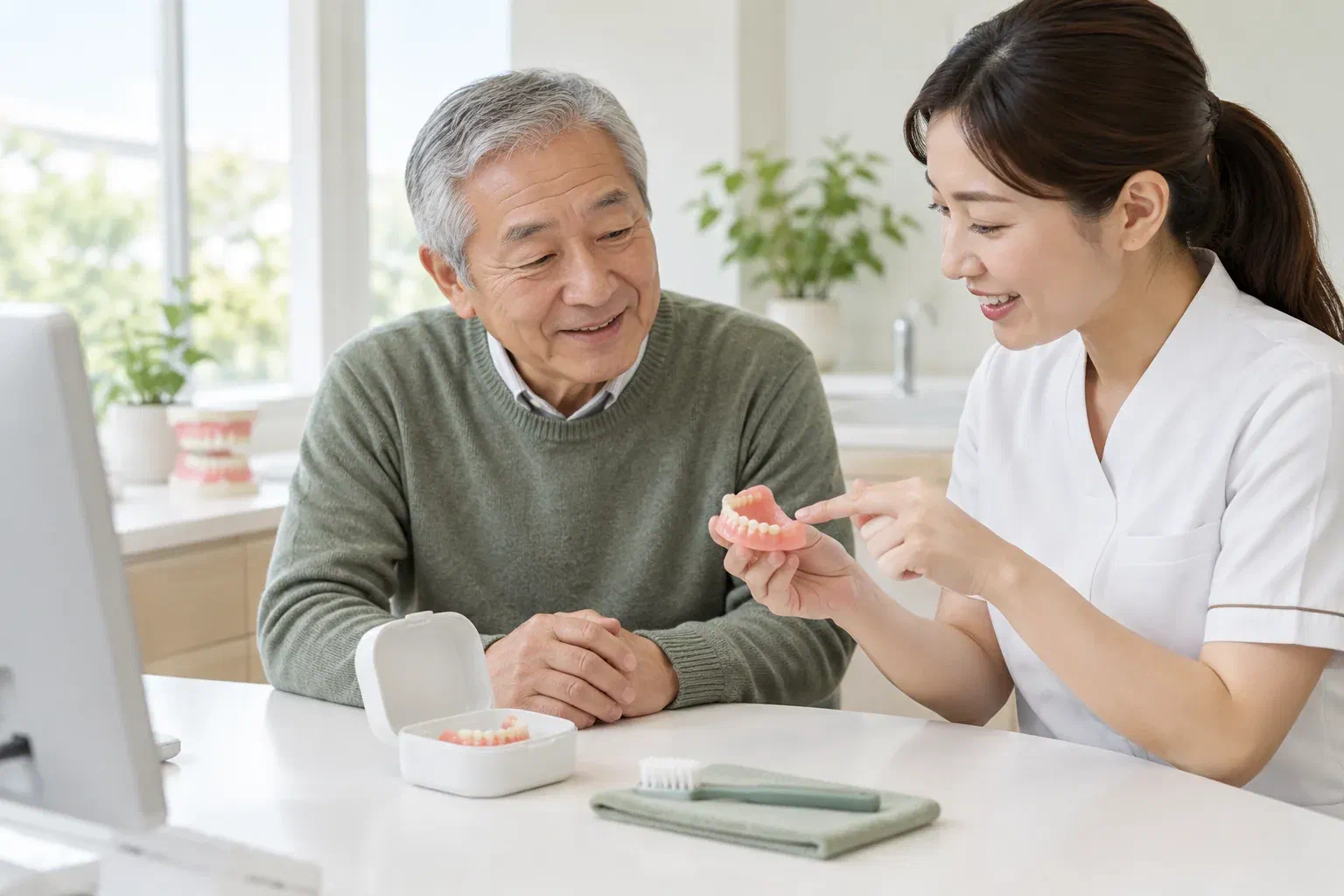
Illustrative patient receiving practical guidance about a new denture
Restorative Dentistry

Denture Aftercare in Rockwood

Chewing with a new denture is a skill that comes back in stages, from soft foods to a proper meal. Denture aftercare for Rockwood helps you progress, checks the bite and fit when food causes trouble, and keeps cleaning simple.

Eating well again, from Rockwood

Bite by bite, back to the dinner table.

Food is usually where a new denture is tested hardest. Biting with the front teeth can tip it, sticky foods can lift it and small seeds can slip underneath. Knowing which of these are part of learning and which point to a fit issue is a big part of aftercare.

Your stage of treatment shapes what you should eat. Someone who has just had extractions may be limited to soft foods for a time, while a person with a replacement on healed gums can usually build up sooner. Check what applies to you before trying tougher meals.

Let us know which foods are going well and which still defeat you. At the appointment we can examine the bite and fit, go over handling and cleaning once more, and judge whether anything needs further care. Pain while chewing that does not ease is worth reporting.

Arrange a chewing and fit review
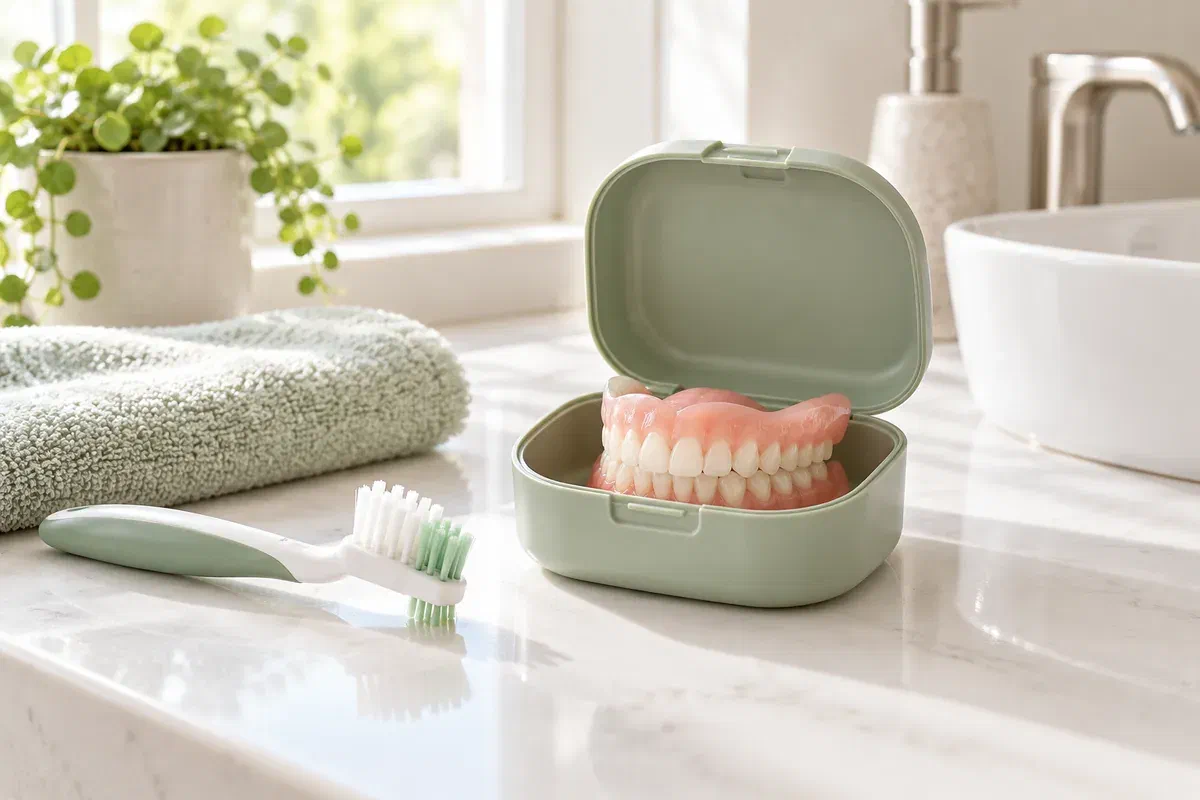
Clean denture set in a storage case beside a brush and towel
Mealtime difficulties to mention

Each kind of food tells us something.

A short food diary can be surprisingly useful. Note what you ate, whether the denture moved, where it rubbed and whether cleaning afterward was difficult, then bring those notes along.

Chewing feels clumsy

New teeth change how food is held and broken down. Explain which foods feel awkward and which cause pain or make the denture drop, so the dentist can tell a learning curve from a problem.

Rinsing after meals is a chore

Taking the denture out to clear food can be fiddly, especially away from home. Ask for a demonstration, and mention any grip, vision or coordination challenges so the team can suggest practical options.

Unsure what to eat and when

Confirm which textures are sensible now, when to remove the denture and whether extractions change the early weeks. Diet guidance during healing is often stricter than it will be later.

After extractions, the clinician who treated you will give specific advice about eating, wearing and rinsing. Follow those directions before any general tips.

How follow-up helps at mealtimes

Practice helps, and so does a well-balanced bite.

After a few weeks of meals, you will know exactly which foods cause trouble. The dentist reviews the appliance and your mouth together, so a bite that lands unevenly or a loose fit is caught rather than mistaken for inexperience.

Eating comfortably with a denture takes longer for some people than others. Appliance type, previous experience, healing and your gums all play a part. Ask what progress to expect and which signs mean coming in before your next appointment.

Patient information: Guy’s and St Thomas’ — getting used to dentures

Refine your eating technique

Bring the denture and your cleaning products. The team can go through chewing strategies, handling after meals and storage, using your own appliance and routine.

Check the bite and the fit

A sore spot after chewing, teeth that meet unevenly or a denture that lifts may each need a particular response. Follow-up lets the dentist decide on an adjustment or another approach.

Prepare for later changes

As gums settle, especially after extractions, the bite and fit can shift. Ask when the next checks are due and whether a reline or replacement may be raised later.

What we do at the review

Start with your meals, finish with a plan.

We begin with how eating, speaking and cleaning have gone since fitting. Your food notes are enough; there is no need to figure out the cause yourself.

  1. Discuss what you have been eating

    Describe the foods you manage, the ones you avoid and where any soreness appears. Mention extractions, changes in health and any instructions that have been hard to stick to.

  2. Examine your bite and gums

    The dentist checks how the teeth come together, how the denture seats and the condition of the tissues. This helps separate normal adjustment from pressure, imbalance or a healing problem.

  3. Adjust or advise

    You may get chewing tips, a handling refresher or an adjustment to ease a sore point or balance the bite. If something more is needed, the reasons and its place in your plan are explained.

  4. Set the next stage

    Agree on which foods to try next, when to return and what should prompt a call. Ask for the advice in writing to keep in the kitchen.

Meals and maintenance at home

Progress at the pace your mouth allows.

Care covers the denture and the gums under it. Follow any surgical instructions first, then settle into the everyday routine for wearing, cleaning and storing your appliance.

Build up textures gradually

Start with soft foods cut into small pieces and chew on both sides at once if you were shown how. Add firmer textures as confidence grows. If certain foods remain impossible, mention them so the bite and set-up of the teeth can be reviewed.

Keep the denture safe after meals

Rinse and clean over a towel or a basin of water. Carry a case if you eat away from home, never wrap the denture in a napkin and keep it out of reach of dogs.

Clean around your gums and teeth

Natural teeth still need brushing with fluoride toothpaste, and gums benefit from the care you were shown. Denture products are made for the appliance and do not belong in the mouth.

After the review

Tips, a bite adjustment or more care.

Some reviews end with chewing advice and encouragement, while others find something that needs treatment. Ask why a recommended response suits the difficulty you described.

When technique is what needs work

Eating coaching

If the fit and gums look good, chewing guidance and time to practise may be enough. You will be told which developments should bring you back before the planned date.

When the bite or fit is off

Balancing or adjusting

A pressure point or uneven bite can often be helped by an adjustment, while a broader loss of fit may need another method. The dentist describes the work and what improvement to look for.

When eating problems have another cause

Further evaluation

A lasting sore, a design that does not suit your mouth or healing that is not on track needs proper assessment. That might lead to more treatment, a remake or another clinician’s advice.

Eating with new dentures

Food questions people ask most.

Getting back to favourite meals is a common goal. These answers cover questions that arise as people learn to eat with a denture.

(905) 876-4488
Which foods are easiest when I first start eating with dentures?
Soft, moist foods cut into small pieces are usually simplest, such as eggs, fish, cooked vegetables and pasta. Follow any specific diet advice you were given, especially after extractions, and add firmer foods gradually.
Why does my denture tip when I bite into something?
Biting with the front teeth can lever a new denture out of place. Many people find it easier to cut food small and chew with the back teeth. If tipping continues, mention it so the fit and bite can be checked.
Will hot drinks feel different with a denture?
A denture covering the palate can make it harder to judge temperature, so take extra care with hot drinks and soups. Test a small sip first and let very hot foods cool a little.
Can I chew gum or eat sticky foods with dentures?
Sticky foods and gum can pull at a denture or stick to it. Ask your dentist whether they suit your appliance, and be cautious until you feel confident with eating in general.
Should I take my denture out at night once healing is complete?
For routine wear, dentures are generally removed at night to rest the gums, unless your dentist advises otherwise. If you had extractions, keep following the early instructions until you are told the routine changes.
If I live in Rockwood, should I call before coming in about a chewing problem?
Calling first is a good idea. Describe what happens when you eat and whether anything is sore, and the team can advise whether to come in soon or note it for your planned review.
Rockwood denture aftercare

Let’s get mealtimes feeling normal again.

Book an appointment at our Bronte Street practice to review how eating with your new or adjusted denture is going. Bring the appliance, your food notes and your cleaning products.

Phone about severe pain, a sore spot that will not heal or trouble after an extraction. The team can help decide whether you need an earlier visit.

Visit Milton Dental Clinic
Unit 1, 342 Bronte St. S, Milton, ON L9T 5B7
Get directions Clinic hours
Monday–Thursday
11am–7pm
Friday–Sunday
By appointment only

Areas we serve

  • Milton
  • Oakville
  • Mississauga
  • Georgetown
  • Halton Hills
  • Acton
  • Campbellville
  • Brampton
  • Burlington
  • Puslinch
  • Rockwood
  • Erin
  • Caledon
  • Etobicoke
  • Old Milton
  • Bronte Meadows
  • Timberlea
  • Dorset Park
  • Dempsey
  • Clarke
  • Beaty
  • Coates
  • Harrison
  • Scott
  • Willmott
  • Ford
  • Bowes
  • Cobden
  • Walker
  • Mountain View
  • Milton Heights
  • Hawthorne Village
  • Valley View
  • Fallingbrook
  • Nassagaweya
  • Trafalgar
  • Esquesing
  • Nelson
  • Brookville
  • Moffat
  • Glen Williams
  • Norval
  • Limehouse
  • Stewarttown
  • Ashgrove
  • Hornby
  • Silver Creek
  • Speyside
  • Scotch Block
  • North Oakville
  • River Oaks
  • Glen Abbey
  • West Oak Trails
  • Palermo
  • Bronte Creek
  • College Park
  • Joshua Creek
  • Uptown Core
  • Preserve
  • Iroquois Ridge
  • Lisgar
  • Meadowvale
  • Meadowvale Village
  • Churchill Meadows
  • Erin Mills
  • Central Erin Mills
  • Streetsville
  • East Credit
  • Creditview
  • Heartland
  • Sheridan
  • Mount Pleasant
  • Credit Valley
  • Huttonville
  • Churchville
  • Springbrook
  • Northwest Brampton
  • Bram West
  • Fletcher's Meadow
  • Fletcher's Creek South
  • Alton Village
  • Orchard
  • Millcroft
  • Headon Forest
  • Tansley
  • Brant Hills
  • Tyandaga
  • Kilbride
  • Lowville
  • Aberfoyle
  • Morriston
  • Arkell
  • Hillsburgh
  • Freelton
  • Carlisle
  • Waterdown
  • Flamborough
  • Mountsberg

How can we help?

Milton Dental Clinic

Have a question about your smile? Choose the option that works best for you.

For urgent dental concerns, please call.
Messages are reviewed during clinic hours.