Crust that stays put
Hardened deposits may need professional removal. Prising them off with a sharp edge can scar the surface and change areas that matter for how the denture grips, so leave them for us to look at.


Is the denture dirty, or is it simply worn? The answer changes what you should do next. For households in Caledon, our team can tell surface residue from wear, check snap-on attachments, and help you decide between cleaning, repair or replacement.
An older denture can look tired for two very different reasons. Residue sits on top of the surface and may come off with the right care. Wear changes the material itself, through scratches, a hardening liner or teeth that have flattened, and no cleaner reverses that. Which one you have, and whether the appliance has acrylic, metal, a liner or implant snaps, shapes what is safe to try.
Your mouth weighs in on the decision too. Gums that are often sore, a palate that feels irritated or remaining teeth with problems may mean the appliance needs attention for reasons beyond cleanliness, and those signs are worth mentioning.
From Bolton or any of Caledon's villages, bring the denture with your brush, cleaners and adhesive if you use it. We can examine the surface and your mouth, explain whether it is residue or wear, and lay out cleaning, repair or replacement options honestly.
Before buying a stronger cleanser, it is worth knowing whether the problem is on the surface or in it. Harsh products used on worn material may only make it rougher.
Hardened deposits may need professional removal. Prising them off with a sharp edge can scar the surface and change areas that matter for how the denture grips, so leave them for us to look at.
Colour can come from staining that may lift, or from ageing material that will not. Telling us when it started and what changed around then helps us judge which it is.
A worn or loose appliance can irritate the gums however clean it is. Mention soreness, redness or odour so the tissues and fit can be examined before more cleaning is tried.
Use cleansers for dentures only on the appliance, outside the mouth, and as the label says. Soaking liquid is not for gargling, and tablets are never meant to be dissolved on the tongue.
If the problem is residue, a gentle routine suited to the material can keep it under control without wearing the surface further. That means a soft brush, any soak we recommend, a good rinse and appropriate storage, repeated every day.
If it is wear, more cleaning will not solve it. A hardened liner, a cracked base or an appliance that has lost its fit may need repair, relining or replacement, and soreness that persists should be treated as its own concern.
Patient information: American Dental Association — denture care and maintenance
Bring your cleansers and adhesive. We can tell you which suit the denture and whether its liner, clasps or implant attachments limit your choices.
If your hands, eyesight or schedule make part of the routine hard, say so. We can show you each step and suggest simpler ways to reach the fitting side.
You should know whether cleaning is worthwhile or whether the appliance has reached the point where repair or a new denture makes more sense. Ask for the reasoning behind the advice.
We compare the state of the appliance with its history and your routine. If staining or irritation followed a change of product, bring that product along.
We ask how old the denture is, whether it has a liner, clasps or implant attachments, how it has been repaired, and how you clean it day to day. Exposure to heat or household cleaners is worth mentioning.
The clinician looks for residue, scratches, cracks and liner changes, then checks your gums, palate and any natural teeth. This shows whether cleaning, wear, fit or tissue health is the main issue.
Where professional cleaning is suitable, you hear what it can and cannot change. If wear or fit is the issue, repair, relining or replacement can be discussed, along with home care in the meantime.
Try the recommended routine with guidance. We confirm rinsing and storage and agree on next steps, whether that is a recheck, a repair appointment or a replacement discussion.
Follow the guidance for your appliance and the instructions on each product. Keep mouth care separate, and ask before trying new cleaners on a denture with a liner, clasps or implant snaps.
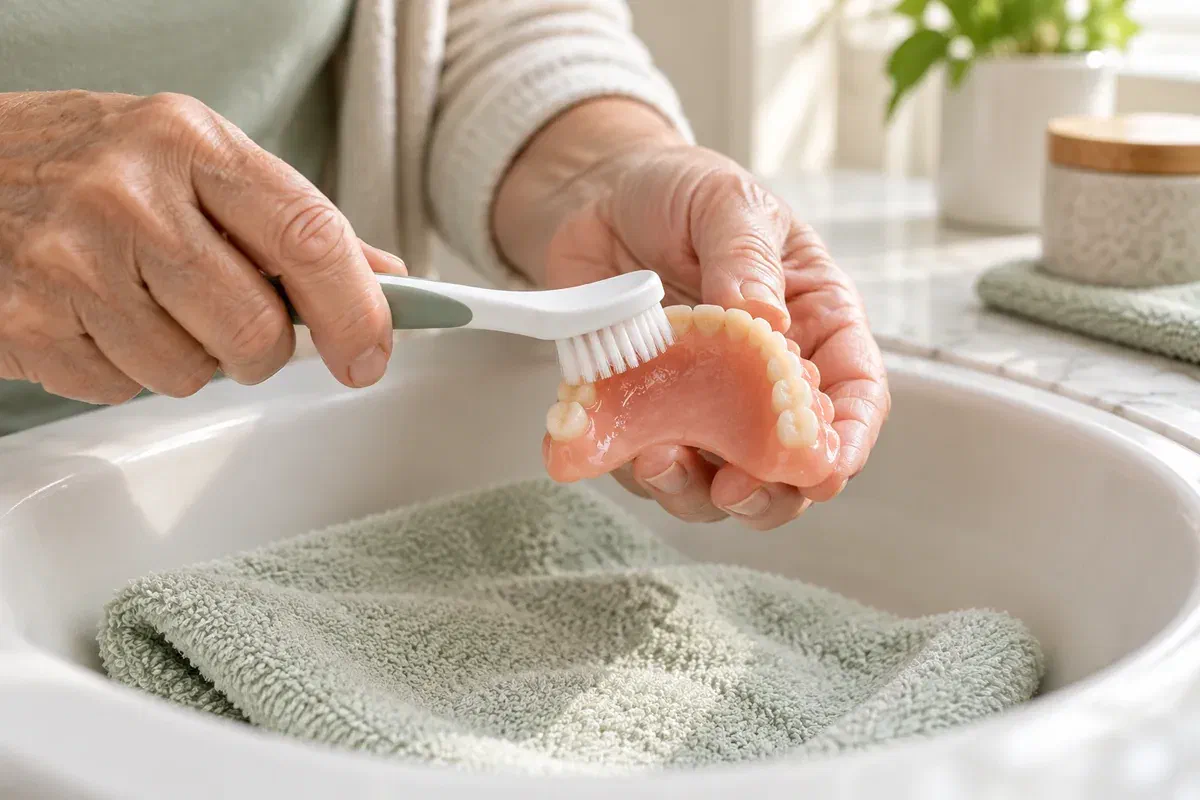
Worn or repaired dentures can be more fragile. Clean them over a towel or a basin with water in it, and avoid flexing them at thin or previously repaired spots.
Stiff bristles and gritty pastes can make a worn surface rougher. Use the brush and cleanser you were advised, skip household products, and rinse properly before wearing.
Your gums and any natural teeth need daily care, and implant attachments may need specific cleaning advice. Ask which products and tools are meant for each area.
Patient information: Mayo Clinic — denture cleaning
It is not always obvious whether a denture needs cleaning, repair or replacing. Bring the appliance and your questions so the advice reflects its actual condition.
Bring your denture to our Bronte Street clinic, and we can look at deposits, staining, wear, product choices and the hard-to-reach corners. A few notes on its age and your routine will help us give clear, honest advice.
If the appliance is cracked, rubbing or fitting differently, mention it when you call so the clinician can check it and your mouth at the same appointment.
