Residue on the fitting side
Deposits on the surface that touches your gums can be hard to see and harder to remove safely. Scraping them can roughen that surface, which may make irritation worse, so have them assessed.


A spotless denture can still sit on gums that feel raw or dry. From Erin or Hillsburgh, you can have our team check the tissues under the appliance as well as its surface, review your products, and explain which mouth changes need care beyond cleaning.
It is easy to judge a denture by how it looks in your hand. The gums and palate it covers tell a fuller story. Redness in the shape of the plate, a tender ridge or a dry, sticky feeling can all appear even when the appliance seems clean, and they deserve attention alongside the surface.
The appliance still matters, of course. Film on the fitting side can irritate the tissues it touches, and how you clean it depends on what it is made of. Acrylic, metal clasps, cushioned liners and attachments each limit which products and how much pressure are safe.
Households in Erin often plan dental trips carefully, so it helps to bring everything at once: the denture, its case, your brush and cleaners, and a list of medications if your mouth feels dry. We can examine the tissues and the appliance together and recommend a routine, professional cleaning or other care.
When the mouth feels uncomfortable, it is natural to clean the denture harder or soak it longer. That rarely helps the tissues and can damage the appliance. A look at both is a better first step.
Deposits on the surface that touches your gums can be hard to see and harder to remove safely. Scraping them can roughen that surface, which may make irritation worse, so have them assessed.
Tell us whether the appliance has darkened, the gums look redder, or both, and when it began. That helps the clinician judge whether cleaning, a material change or the tissues are involved.
These may relate to fit, wear time, dry mouth, medications or another condition. Describe them at your visit so the tissues can be examined rather than covered up with a stronger cleanser.
Denture cleansers can irritate the mouth and are meant only for the appliance, outside the mouth, used as directed. Do not rinse with soaking solution or put a tablet in your mouth.
When the denture is cleaned gently and regularly, the surface that touches your gums is less likely to carry film that irritates them. Pairing that with care for the tissues, and a sensible break from wearing it, gives the mouth a chance to stay comfortable.
A review can also uncover reasons for soreness that cleaning cannot reach. An ill-fitting base, a rough patch or a worn liner may need adjustment or repair, and tissue changes that persist should be examined and, where needed, treated.
Patient information: American Dental Association — denture care and maintenance
Bring your cleaners and any mouth rinses. We can confirm what suits the denture and flag anything that might be irritating your gums or unsuitable for its liner or clasps.
We can show you how to clean your gums and palate gently, and how to reach the fitting side of the denture, adapting the method if your hands or eyesight make it tricky.
Some irritation settles with better care; some does not. Ask which signs, such as a sore that will not heal, mean you should call promptly.
We connect what we see in your mouth with the condition of the appliance and the way it is cleaned. If soreness began after a new product, bring the product or its name.
We ask how the gums feel, how long you wear the denture each day, how you clean it and what it sits in overnight. Mention its age, any liners or attachments and any medications.
The clinician checks your gums, palate and any natural teeth, then the denture surface and fit. This shows whether residue, fit, damage or a tissue condition is behind the discomfort.
Should a professional clean be worthwhile, we describe what it can and cannot change on the fitting side. You also get advice on compatible products, gum care and wear time, with any limits explained.
Try cleaning the fitting side and your gums with guidance. We settle on a storage method and a follow-up time in case soreness, dryness or deposits persist.
Use the method advised for your denture and the directions on each product. Treat mouth care and appliance cleaning as separate jobs, and ask before switching products if the denture includes clasps, a liner or an attachment.
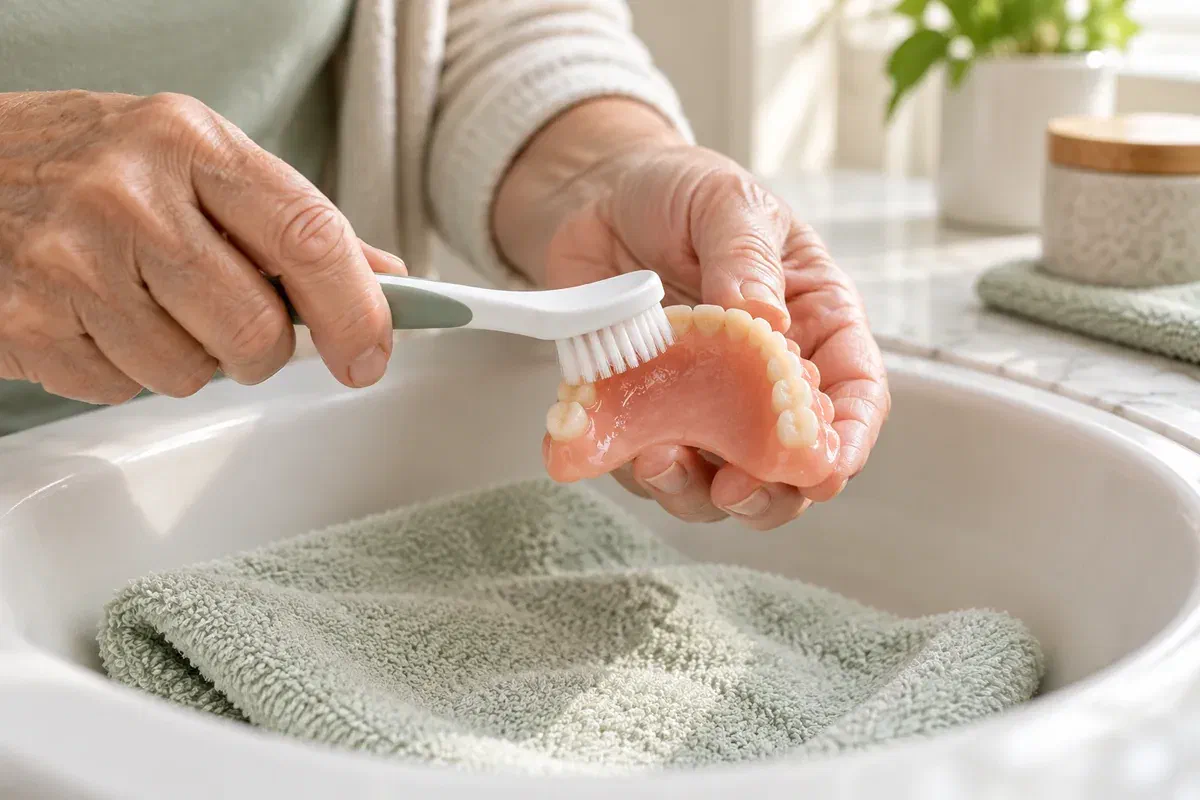
Clean over a towel-lined sink or a basin of water so a slip is less likely to cause a crack. A steady, relaxed grip is enough; there is no need to squeeze.
A soft brush and a non-gritty cleanser are usually recommended. Avoid stiff bristles, scraping and household products, and rinse thoroughly so no cleanser reaches your gums.
Clean your gums and palate as advised and brush any remaining teeth with fluoride toothpaste. If the gums stay sore, call rather than waiting.
Patient information: Mayo Clinic — denture cleaning
Discomfort can have more than one cause. These answers cover common questions, and an examination gives advice specific to your mouth and appliance.
Our Bronte Street clinic can examine the tissues under your appliance and talk through deposits, staining, product choices and the trickier surfaces of the plate. Bring the denture and describe your routine and any discomfort so we can recommend suitable care.
If you have a sore that will not heal, swelling, or a sudden change in fit, mention it when booking so it can be assessed promptly.
