A ridge that resists the brush
Hardened deposits often form in the same places each time. Working at them with a knife tip or pick can gouge the surface or alter edges that help the denture seat properly.


That chalky, rough crust along the inside of your denture is not something to chip away with a pin. If you are coming from Georgetown, let our team identify the deposit, explain how it may be removed safely, and help you stop it returning.
Run a finger along the inner surface or behind the lower front teeth and you may feel a gritty ridge that no brush seems to touch. These mineral deposits can build up slowly, and they are tempting to flick off with a fingernail or a sharp point. How to deal with them safely depends on the denture's make-up, whether plain acrylic, a metal framework, a cushioned liner or an attachment.
Hard build-up also tells us something about the routine and the mouth. The gums and any remaining teeth may be collecting plaque too, and soreness or odour near a deposit can mean the tissues need care of their own.
Bring the appliance in from Georgetown as it is, without trying to remove the crust first. We can examine it, tell you what the deposit seems to be, carry out or plan suitable professional cleaning, and show you how to keep it from building up again.
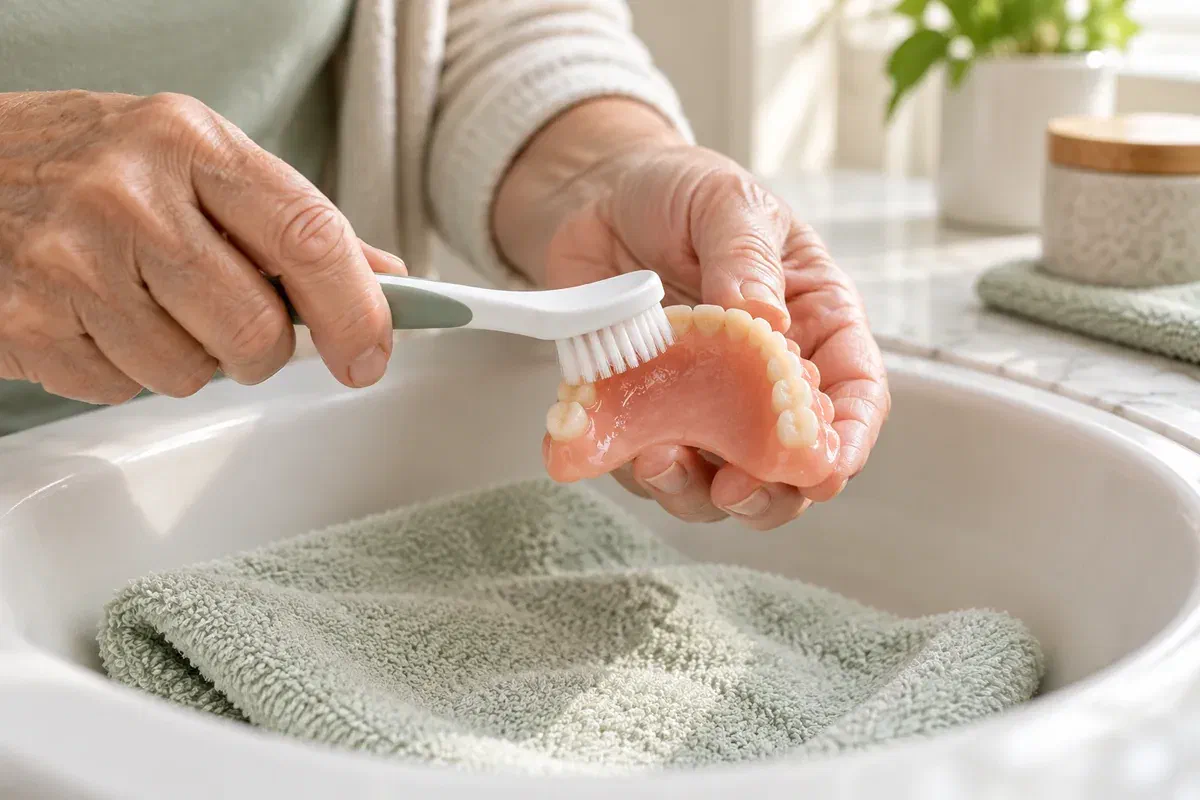
Once a deposit hardens, scrubbing and scraping are more likely to damage the denture than remove it cleanly. The safest first step is learning what you are looking at and what the appliance can tolerate.
Hardened deposits often form in the same places each time. Working at them with a knife tip or pick can gouge the surface or alter edges that help the denture seat properly.
Build-up can absorb colour from food and drink. Tell us when you first noticed it so we can judge how much might lift with cleaning and whether the material underneath has changed.
A rough area can rub, and residue can irritate the tissues. Mention soreness, redness or odour so the clinician can examine your mouth and check the fit, instead of you scrubbing harder.
Never put a denture cleanser or tablet in your mouth, and do not use a soaking solution as a rinse. These products are designed for the appliance only, used as the label directs.
Regular, gentle care helps stop soft film from hardening in the first place, and it treats the surface kindly while doing so. What works is a routine you will actually follow every day: a soft brush, any soak we advise, a careful rinse and proper storage.
An assessment may also reveal why deposits keep forming in one spot. A rough or worn area, a damaged liner or a denture that has shifted can trap residue, and those problems need attention in their own right.
Patient information: American Dental Association — denture care and maintenance
Bring what you use. Some products may help control build-up, while others may not suit liners or metal; we can sort out which belong in your routine.
Most people have one or two problem areas. We can show you how to reach them, and adjust the method if grip or eyesight make it difficult.
Knowing when a deposit is beyond home care stops accidental damage. Ask what texture, colour or sensation means it is time to book.
We look at where the build-up is forming and connect that to your daily routine. If the problem appeared after you changed products, bring them along.
Its age, whether it has a liner or attachments, how you brush it and what it sits in overnight all help. Mention any repairs and any contact with heat, scouring pastes or household cleaners.
The clinician examines the build-up, the surrounding surface and the tissues beneath the denture, to judge whether deposits are the main concern or whether fit or a tissue problem is involved.
Where professional cleaning suits the appliance, we explain what it can achieve and any limits. You also get advice on home products that are compatible with your materials.
Practise brushing the spots where crust tends to form, with guidance on grip and angle. Confirm rinsing and storage, and set a time to return if deposits come back quickly.
Follow the advice for your appliance and each product. Brush the denture separately from your mouth, and call before trying a new cleaner if your denture includes clasps, a liner or an implant fitting.
A cushioned surface makes a dropped denture less likely to crack. Hold it firmly but gently, without bending any thin areas, and tell us if handling it has become difficult.
A soft brush and a non-abrasive cleanser are typically recommended. Avoid scraping tools, stiff scrubbing and household products, and rinse as instructed before wearing.
Plaque on natural teeth and gums contributes to build-up in the mouth. Use fluoride toothpaste on any remaining teeth and the gum care you were shown, separately from the denture product.
Patient information: Mayo Clinic — denture cleaning
Deposits vary in what they are made of and how firmly they attach. Bring the denture and tell us how long the build-up has been there so we can advise properly.
Our Bronte Street clinic can examine build-up, staining, the products you use and the corners that are hard to reach. Bring the appliance and a few notes about your routine, and we will explain what we find and suggest a sensible next step.
Mention any soreness, redness or change in fit when you call, and the clinician can check your mouth during the same appointment.
