Hardened residue after busy days
Film left through the day can harden into deposits. Scraping them off with something sharp may roughen the surface or affect the areas that keep the denture secure, so ask us to assess them.


Food under the plate at lunch, adhesive left on the gums at night: daily denture care has more moments than the evening brush. From Rockwood, you can plan a full-day routine with our team and learn which deposits, stains or symptoms deserve a closer look.
A seed caught under the plate during lunch. Adhesive that clings to the gums at night. A quick rinse at work with no brush nearby. Each of these moments affects how clean the appliance stays, and how you handle them should match its materials, because acrylic, metal frameworks, soft liners and attachments each have different limits.
Your mouth is part of the same day. Gums and palate benefit from a break and a gentle clean, any natural teeth still need fluoride toothpaste, and soreness or odour that keeps returning may be a sign of fit or tissue trouble rather than a missed rinse.
When you visit from Rockwood, bring the appliance along with whatever you use through the day, including adhesive, brush and cleanser. We can look at the surface, talk through each moment of your routine, and say whether a professional clean or another kind of care is worth considering.
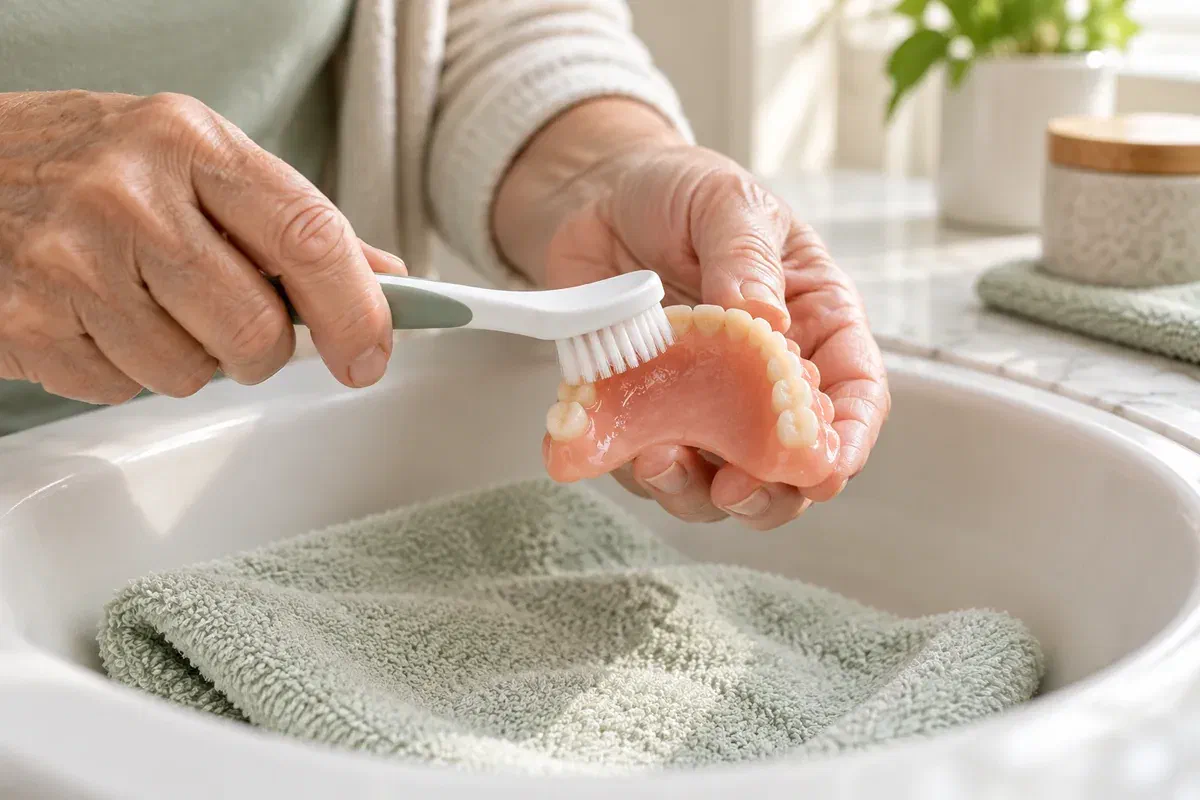
When daily care gets patchy, residue builds and it is tempting to make up for it with harsher cleaning at night. That can wear the appliance. Understanding the material and what is collecting on it is a better place to start.
Film left through the day can harden into deposits. Scraping them off with something sharp may roughen the surface or affect the areas that keep the denture secure, so ask us to assess them.
Note when the change started and whether a new adhesive, drink or cleaner coincided with it. The team can judge whether cleaning is likely to help or whether the material has changed.
Food trapped under a denture can rub, and odour or redness that keeps returning may need an examination and a look at fit and wear time, not a stronger cleaner.
Cleaning tablets and soaks are made for use on the appliance, outside your mouth, as the label instructs. Never rinse with the solution or place a tablet in your mouth.
Small habits during the day, such as rinsing after meals when you can, mean less residue to deal with later and less need to scrub. The evening routine can then stay gentle: brush, soak if recommended, rinse and store appropriately.
A review can also show when the daily trouble is really about fit. A denture that traps food, a worn liner or a rough patch may need adjustment, repair or replacement, and persistent soreness deserves an exam rather than more cleaning.
Patient information: American Dental Association — denture care and maintenance
Bring your adhesive as well as your cleaning products. We can confirm which suit the appliance and suggest how to remove adhesive from both the denture and your gums.
Some steps happen at home, some on the go. We can suggest a simple plan for each and adjust it if grip, eyesight or time make a step hard to keep up.
Trapped food every day, new soreness or a looser fit are worth reporting. Ask which changes should prompt a call rather than another product.
We match what we see on the appliance with what happens to it from morning to night. If you changed adhesive or cleaner before a stain or irritation appeared, bring the product.
Tell us when the denture goes in and comes out, what adhesive you use, how you clean it and where it rests overnight. Mention its age, any liners or attachments, and past repairs or exposure to heat.
The clinician looks at the surface, the fitting side and the gums and palate beneath. Residue may explain everything, or the exam may show the plate rocking, a crack forming or gums that are inflamed.
If professional cleaning is suitable, we explain what it can address. You also get advice on daytime rinsing, adhesive removal and compatible evening products, with any limits made clear.
Try removing adhesive and brushing the fitting side with guidance. Before you go, we settle the overnight storage step and a sensible time to come back if food trapping, deposits or soreness carry on.
Follow the advice for your appliance and each product used with it. Care for your mouth separately from the denture, and ask before trying a new adhesive or cleaner on a denture with clasps, a liner or an attachment.
Running water over the denture after meals, where practical, helps clear loose food. When cleaning properly, work over a towel or basin of water so a slip does not cause damage.
Use the method you were shown to clear adhesive from the denture and your gums. Soft bristles and a low-grit cleanser usually do the job; keep sharp tools and household sprays out of it.
While the plate is out, wipe or softly brush your gums and palate, and give any teeth you still have a fluoride toothpaste clean. Denture cleansers are for the appliance only.
Patient information: Mayo Clinic — denture cleaning
Adhesives and cleaners vary in how they are used and removed. Bring your questions and the products you rely on so the advice fits your appliance.
Your appointment on Bronte Street can cover trapped food, adhesive, build-up, staining and product choices, along with any areas of the appliance that are hard to reach. Bring it with your adhesive and cleaners, and describe your day so we can suggest a routine that works.
If food trapping, soreness, redness or a change in fit has come with the cleaning concern, mention it when booking so the mouth can be checked too.
