

Illustrative dentist and patient discussing denture options at a consultation
Restorative Dentistry

Denture Consultations in Acton

Gave up on a denture because it hurt, gagged you or simply never felt right? A consultation for people in Acton starts with what went wrong last time, then looks at whether a refit, a new design or another approach could work.

Trying again

Why did the last denture end up in a drawer?

It happens more than people admit. A partial that pinched, a full denture that slid when you spoke, a plate that made you gag. After a while it stays in the bathroom cabinet and you learn to chew around the gaps. Coming back to the subject can feel like admitting defeat. It is not.

Understanding the earlier problem is the most useful place to begin. The dentist will ask what bothered you, look at the old appliance if you still have it, and examine your mouth as it is today. Gums, ridges and remaining teeth may have changed since that denture was made.

From Acton, you may be weighing whether another attempt is worth the appointments. That is a reasonable question. The consultation can show whether the old problem has a fix, what a different design might do better, and what would remain a limitation however carefully it is planned.

Revisit dentures with us
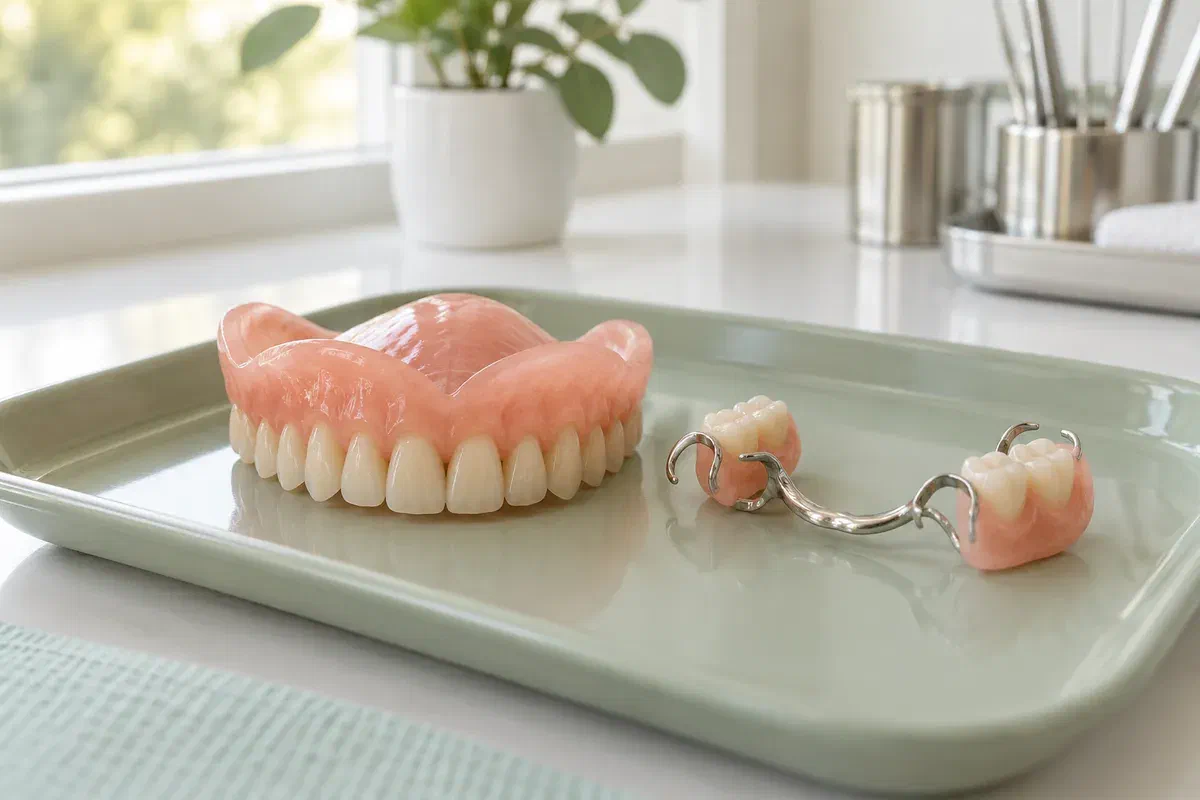
Complete and partial removable dentures displayed as illustrative examples
Where people pick up again

Different reasons for stopping, different starting points

Be candid about what made you give up and what you have been managing without. Those details help the dentist judge which changes might help.

Gaps you have been chewing around

Missing teeth affect how the others share the work of chewing. The dentist can explain whether a partial makes sense now or whether another replacement deserves a look, and what it would rest on given your current teeth.

An appliance that never worked

Bring it, even if it has been unused for years. Looseness, sore spots, bulk or a poor bite can sometimes be traced to design or to changes in the mouth. Whether it can be adjusted, refitted, repaired or should be replaced becomes clearer once it is examined.

Teeth that have become a problem since

If remaining teeth have weakened while the denture sat unused, ask which can reasonably be kept. Discuss how any extractions and replacement would be sequenced, and the checks you would need while healing.

Let us know about pain, swelling, a sore that keeps coming back or broken teeth when you book. Those may need attention ahead of a planning conversation.

What the review can show

A second attempt, planned with the first one in mind

Knowing why the earlier appliance failed helps set realistic expectations. Some issues, such as a worn base or a poor fit, can often be improved. Others, such as a sensitive gag reflex or very little ridge support, may need a different design or approach, and the limits should be explained plainly.

You may need X-rays, impressions, treatment of other teeth or a specialist view before a confident plan is possible. Ask what is still unknown and how the next step addresses it.

Patient information: Canadian Dental Association — dentures

Advice based on your mouth now

Teeth, gums, ridges and the bite are assessed together, as they are today rather than years ago. That explains whether an appliance is likely to suit you, or whether something else should come first.

Comfort and handling discussed openly

Say exactly what you found difficult: putting it in, the feel on your palate, speaking or cleaning. The team can explain which of those a different design might ease, and which may still take getting used to.

The path forward in writing

Ask which stages to expect, what the estimate includes and how adjustments after delivery are handled. A clear outline helps you judge whether the effort is worth it this time.

At your appointment

We start with the denture you stopped wearing.

No question is too basic, and there is no judgment about time away from dental care. Tell us ahead of time about any accessibility or communication needs.

  1. Talk about what went wrong

    We go over the old appliance, how long you wore it, why you stopped and what you have been doing since. Share your health history and medications, including anything that causes dry mouth.

  2. Look at the mouth as it is now

    The dentist examines the remaining teeth, gums and ridges, and checks the old denture against them. Records may be suggested to understand changes since it was made.

  3. Consider what could be different

    Options such as a refit, a new partial or complete design, or a non-denture approach are discussed where relevant. Ask what each would change and what limits would remain.

  4. Choose a manageable next step

    You might arrange records, take an estimate home or begin planning. Before leaving, make sure you know the agreed next appointment, and whether any tooth needs care sooner than the main plan.

Before you decide

Weigh the effort against what you would gain.

After a disappointing experience, it is natural to be cautious. Keep the written plan with your questions, and ask before assuming what an estimate covers or what a new design would feel like.

Check it solves the old problem

Does the proposal deal with the issue that made you stop? Note any doubts about fit, the feel against your palate, cleaning or temporary teeth so they can be talked through first.

Be realistic about scheduling

Ask how many visits are likely and whether the old appliance would be used for records. Mention work and family plans while keeping in mind that some steps follow a clinical order.

Look after the teeth you have

Keep brushing and cleaning between teeth. If you are wearing any appliance, follow the advice for it. Call about new pain, swelling or breakage rather than leaving it until a decision is made.

What might work this time

Options shaped by what you already know

Expect clear reasons why an option fits you. Compare preparation, comfort, chewing, handling, upkeep and cost, especially in light of what went wrong before.

If natural teeth remain

A redesigned partial

A partial replaces chosen teeth with support from the gums and teeth nearby. Ask how this design would differ from the old one, how it would stay in and how you would keep it clean.

If a full arch needs replacing

A new complete denture

A full denture replaces every tooth in one jaw. Discuss ridge support, appearance and the adjustment period, and how any remaining extractions would be timed alongside it.

If removable has not worked

A fixed or implant-assisted option

A bridge or implants, including implants that help hold a denture, may suit some people. These call for their own assessment and are best compared as whole plans, with surgery and upkeep counted.

Questions about trying again

Starting over without starting from scratch

People returning to dentures often ask these. The answers may help you decide whether another attempt is right for you.

(905) 876-4488
Why do some people stop wearing their dentures?
Common reasons include soreness, looseness, gagging, difficulty speaking or simply not getting used to the feel. Some of those can be improved with adjustments or a different design, so it is worth describing exactly what happened.
Does going without a denture for years cause problems?
It can. Teeth next to gaps may shift and chewing can put more load on the remaining teeth. The dentist can check for these changes and explain what they mean for your options.
Could my unused denture simply be refitted?
Sometimes, if the base and teeth are in reasonable condition and the mouth has not changed too much. After a long gap, though, it may no longer suit. The examination will show which applies.
What can be done if a denture makes me gag?
Mention it at the consultation. Design changes, gradual wear time or other approaches may help some people. The dentist can explain what might be worth trying and what is unlikely to change.
Will a new denture feel different from my old one?
It may. A new appliance can differ in fit, thickness and tooth position, and even a better-fitting denture usually takes some getting used to. Ask what adjustments to expect in the first weeks.
How long might it take to get used to a denture again?
It varies from person to person. Speaking and chewing often improve with practice over the first weeks, and follow-up visits help with sore spots. Ask what is typical for the design suggested to you.
When you are ready, Acton

Bring the old denture, even if it is dusty.

Plenty of people from Acton return to dentures after a false start, and a frank conversation is the best way back in. Bring the appliance you stopped wearing, any past records and your honest thoughts on what went wrong.

If you would like someone with you for support, or need help with mobility or communication, let the team know when booking.

Visit Milton Dental Clinic
Unit 1, 342 Bronte St. S, Milton, ON L9T 5B7
Get directions Clinic hours
Monday–Thursday
11am–7pm
Friday–Sunday
By appointment only

Areas we serve

  • Milton
  • Oakville
  • Mississauga
  • Georgetown
  • Halton Hills
  • Acton
  • Campbellville
  • Brampton
  • Burlington
  • Puslinch
  • Rockwood
  • Erin
  • Caledon
  • Etobicoke
  • Old Milton
  • Bronte Meadows
  • Timberlea
  • Dorset Park
  • Dempsey
  • Clarke
  • Beaty
  • Coates
  • Harrison
  • Scott
  • Willmott
  • Ford
  • Bowes
  • Cobden
  • Walker
  • Mountain View
  • Milton Heights
  • Hawthorne Village
  • Valley View
  • Fallingbrook
  • Nassagaweya
  • Trafalgar
  • Esquesing
  • Nelson
  • Brookville
  • Moffat
  • Glen Williams
  • Norval
  • Limehouse
  • Stewarttown
  • Ashgrove
  • Hornby
  • Silver Creek
  • Speyside
  • Scotch Block
  • North Oakville
  • River Oaks
  • Glen Abbey
  • West Oak Trails
  • Palermo
  • Bronte Creek
  • College Park
  • Joshua Creek
  • Uptown Core
  • Preserve
  • Iroquois Ridge
  • Lisgar
  • Meadowvale
  • Meadowvale Village
  • Churchill Meadows
  • Erin Mills
  • Central Erin Mills
  • Streetsville
  • East Credit
  • Creditview
  • Heartland
  • Sheridan
  • Mount Pleasant
  • Credit Valley
  • Huttonville
  • Churchville
  • Springbrook
  • Northwest Brampton
  • Bram West
  • Fletcher's Meadow
  • Fletcher's Creek South
  • Alton Village
  • Orchard
  • Millcroft
  • Headon Forest
  • Tansley
  • Brant Hills
  • Tyandaga
  • Kilbride
  • Lowville
  • Aberfoyle
  • Morriston
  • Arkell
  • Hillsburgh
  • Freelton
  • Carlisle
  • Waterdown
  • Flamborough
  • Mountsberg

How can we help?

Milton Dental Clinic

Have a question about your smile? Choose the option that works best for you.

For urgent dental concerns, please call.
Messages are reviewed during clinic hours.