Teeth missing in awkward places
The location of each gap and the health of the teeth beside it guide the advice. You can learn whether a partial is realistic, whether another replacement should be compared, and what support each would depend on.


Before choosing a denture, it helps to picture an ordinary day wearing one. A consultation for Campbellville households covers the examination and options, and also the routines of cleaning, storing and caring for an appliance.
Picture it from breakfast onward. Rinsing the appliance after meals, brushing it and your own teeth, taking it out before bed and keeping it somewhere safe. These small routines are part of any removable replacement, and they deserve as much attention at a consultation as the design itself.
The clinical side still comes first. The dentist examines your remaining teeth, gums and ridges, checks the bite, and reviews any appliance you already wear. Your health history and medications are part of the picture too, especially anything that leaves your mouth dry.
Campbellville sits within Milton’s boundaries, but a rural household still plans its trips into town. Tell us about work, animals, school runs or whatever shapes your week. We can explain how many visits a plan might take and where grouping them could make sense.
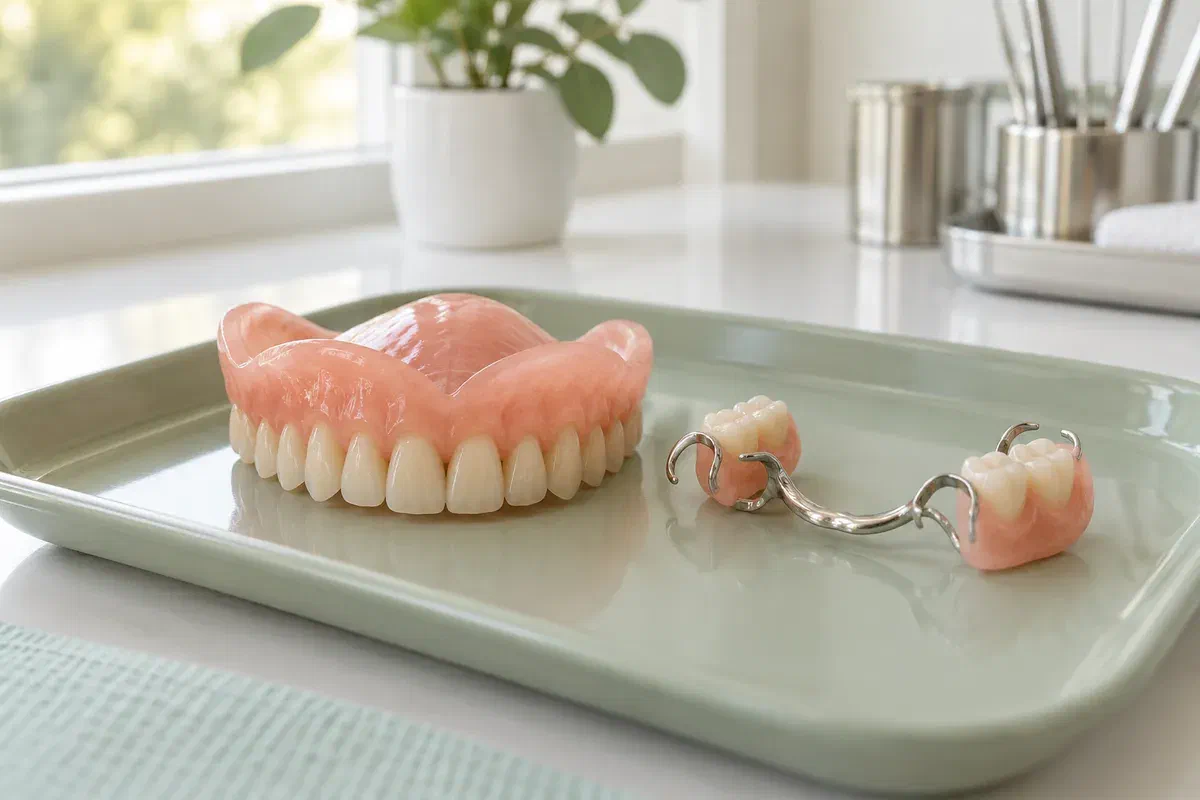
Describe what is hard right now, whether chewing, speaking or cleaning. The dentist can connect those everyday problems with what the examination finds.
The location of each gap and the health of the teeth beside it guide the advice. You can learn whether a partial is realistic, whether another replacement should be compared, and what support each would depend on.
If an appliance is hard to clean, sore by evening or loose at meals, bring it in. Adjustment, a new fitting surface, repair or replacement are possible answers, and the review helps you see which applies.
Once extractions are mentioned, the useful questions are which teeth are worth saving and when replacement teeth would go in. Talk about temporary teeth, how long healing tends to take, and how the follow-up visits during that stretch could fit around your commitments.
For severe pain, swelling, a sore spot lasting more than a week or two, or a cracked appliance, mention it when calling. Those may need their own, earlier appointment.
Every removable appliance asks something of you: daily cleaning, time to adapt, and periodic checks as the mouth changes. A fixed bridge or implant asks different things. Understanding those commitments early makes it easier to pick something you will actually keep wearing.
A firm recommendation may depend on X-rays, impressions, other treatment or a specialist opinion. Ask what is still uncertain, and which next step helps answer it. If more than one visit is needed before a plan is ready, ask whether any of them can be combined with records or other care you already need.
Patient information: Canadian Dental Association — dentures
Teeth, gums, ridges and bite are reviewed together. That explains why one appliance suits you, or why another issue should be dealt with first.
Mention outdoor work, sports, stiff hands or anything that affects how you would handle an appliance. The team can explain which designs and routines are realistic for you.
Ask how many stages to expect, what the estimate covers and how adjustments after delivery are arranged. That helps you plan trips into town and compare ongoing care.
Ask whatever comes to mind. If you need extra time, a support person or help with communication or mobility, let us know ahead of the visit.
We talk about missing teeth, any appliance, previous treatment and why you booked. Tell us about daily routines and any limits on travel or handling that the plan should respect.
The dentist checks remaining teeth, soft tissues and how a current denture fits and functions. Records may be suggested where the condition of teeth or bone needs clarifying.
Denture designs and relevant alternatives are compared, including what each means for daily care. Ask about limits, and whether preliminary treatment or a specialist is needed.
That could be more records, an estimate to think over or the start of planning. Make sure you know which appointment comes next and whether anything needs earlier attention.
Details are easy to lose after a busy day. Keep the plan and a list of questions together, and ask the clinic before assuming what an estimate covers.
Would the proposed appliance fit the way you live? Note anything to clarify, perhaps cleaning at work, what to wear during healing or how sore spots are handled, before treatment begins.
Ask roughly how many visits are needed, whether your current denture must stay for records and if you might go without it. Share seasonal or family commitments while respecting the clinical order of steps.
Keep up brushing and appliance cleaning as advised. If something breaks, swells or starts to hurt, phone us for guidance instead of waiting until the plan is settled.
These practical questions come up often, from first-time wearers and from people who have had an appliance for years. They may help you picture what wearing a denture would involve.
Arrange a denture consultation at our Milton clinic and bring along any appliance you wear, a list of medications and notes on your routine. That way the conversation can cover both your mouth and how care would fit your days.
Tell us if a relative will come with you, or if you need help with hearing, vision or mobility during the visit.
