

Illustrative dentist and patient discussing denture options at a consultation
Restorative Dentistry

Denture Consultations in Old Milton

A denture you have worn for years can drift out of fit so gradually that you barely notice. A consultation near Old Milton looks at the appliance and your mouth together, then explains whether to adjust, reline or replace.

When a familiar denture changes

Has your denture quietly stopped fitting?

Long-time wearers often adapt without realising it. A little more adhesive each morning, softer foods at lunch, a hand raised to the mouth when laughing. These habits creep in slowly, and they are often the clearest sign that the appliance and the mouth beneath it no longer match.

The ridges that hold a denture reshape over the years, while the plastic and teeth on the appliance wear down. A consultation looks at both sides of that equation: how the denture sits, how the bite comes together, and the health of the gums and any remaining teeth.

Many people in Old Milton have had the same denture for a long stretch, and some feel attached to how it looks. You can say so. The dentist can explain what could be kept, what would need to change, and why, before you agree to anything.

Have an existing denture reviewed
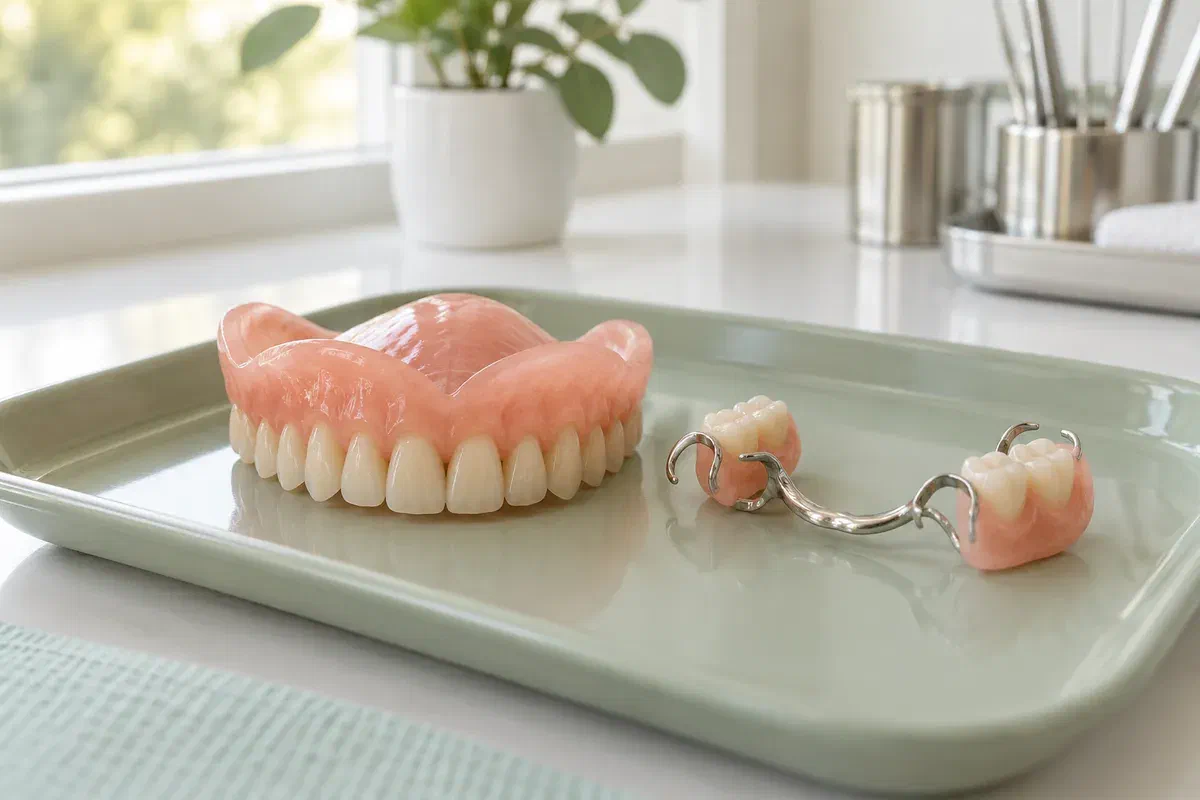
Complete and partial removable dentures displayed as illustrative examples
Signs worth mentioning

Small workarounds can tell a big story.

Describe the habits you have built around your teeth or appliance. Those details help the dentist connect the examination findings with the change you want.

Spaces where teeth used to be

Gaps behave differently depending on where they sit and how sturdy the teeth around them are. The dentist can tell you whether a partial appliance is worth considering or whether another way of filling the space suits you better, and what it would rely on.

An appliance that has lost its grip

Bring the denture and tell us when you first noticed looseness, clicking, sore patches or worn-down teeth. Some problems respond to adjustment or a new fitting surface; others point toward repair or a fresh appliance. Sorting that out comes first.

Natural teeth that may not last

If a tooth that anchors a partial is failing, or several teeth have been flagged for removal, ask how the plan would unfold. Talk about keeping what is healthy, what would bridge the gap during healing, and how often you would be seen.

A cracked denture, a sore spot that lingers, swelling or real pain should be mentioned when you book. Those issues can need prompt care on their own schedule.

Why a review helps

Knowing the cause before choosing the fix

Replacing a denture is not always the answer, and relining is not always enough. The consultation should explain what the current appliance can and cannot do for you now, and what a new one would realistically improve, including the handling and cleaning it would involve.

You may hear that records, treatment of a remaining tooth, or a second opinion would help before a firm plan is possible. That is part of a careful process. Ask which questions are still open and how the next step answers them.

Patient information: Canadian Dental Association — dentures

Findings from the whole mouth

The dentist considers ridges, gums, remaining teeth and how the jaws meet, not only the appliance on the tray. That view explains why a particular route is offered or why something else should be handled first.

Keeping what you like about your smile

Say what you would like to preserve from your current teeth, and bring an older photograph if it helps. The team can explain which features of appearance can reasonably be carried into an adjusted or new design.

Visits and fees laid out in advance

Ask which appointments are expected, what the estimate includes and how adjustments are handled after delivery. Seeing the full sequence makes it easier to compare a reline against a replacement.

What happens at the appointment

History first, then the mouth, then the options

There is time for questions throughout. Let us know beforehand about any hearing, vision or mobility needs, or if you would like someone with you.

  1. Tell the story of your current denture

    We ask how old it is, who made it, what has changed and what led you to book now. Your medical history and medications matter too, as do any limits on how often you can come in.

  2. Check the fit and the tissues beneath

    The dentist looks at the appliance in your mouth and out of it, along with the gums, ridges and any natural teeth. Records such as X-rays may be suggested where support needs a closer look.

  3. Weigh adjustment, reline, repair or replacement

    Each choice is explained in terms of what it would change and what would stay the same. You can ask whether other treatment, or a specialist’s input, is needed first.

  4. Settle on a next step together

    You might take an estimate home, book records or begin planning. Confirm what was decided, when the next visit is and whether any current problem should be treated sooner.

Between visits

Read the plan over a cup of tea.

Comparing a reline, a repair and a new appliance is easier on paper than from memory. Keep the plan with your questions, and ask us rather than guessing what a quoted item covers.

Check it answers your original concern

If you came in because of looseness or sore spots, make sure the proposal addresses them directly. Write down anything you are unsure about, such as appearance, cleaning, or temporary teeth, before work starts.

Plan for time without your denture

Some steps may need your current appliance for records or a short stay at the lab. Ask how long that might be, and mention social or family events coming up so they can be considered alongside clinical timing.

Keep looking after what you have

Go on cleaning the denture and any natural teeth as advised, and take it out overnight if that has been recommended. Get in touch about a new sore, swelling or breakage instead of waiting for the next planned visit.

Routes you might compare

Old appliance, new appliance or something else

The right fit depends on what your mouth can support and what you want from it. Look at preparation, comfort, chewing, upkeep and cost side by side.

Natural teeth still in place

A partial appliance

A partial fills particular gaps and leans on the teeth and gums nearby. Ask how it clips or rests in position, how it affects those teeth over time, and what daily cleaning around it involves.

Every tooth in an arch replaced

A full denture

A complete denture takes the place of all the teeth in one jaw. Discuss the condition of the ridges, the look you want, the time it may take to adapt, and how extractions would be sequenced if any remain.

A different approach may fit

Fixed or implant-based choices

A bridge, or implants that hold a denture more firmly, can suit some mouths. They call for separate assessment and should be weighed as full plans, with any surgery and ongoing maintenance included.

Questions from long-time wearers

Ask about the denture you already have.

Experienced wearers around Old Milton often have different questions from first-timers. These may help you get the most from a review.

(905) 876-4488
How can I tell if my denture needs relining or replacing?
Looseness and sore spots can come from either. The dentist looks at how the base fits your ridges and how worn the teeth are. A reline refreshes the fitting surface, while heavy wear or damage may make a new appliance more sensible. The examination guides that choice.
My denture is over ten years old. Is that too old?
Age alone does not decide it. Some older appliances still fit acceptably, while others have worn or stopped matching the mouth. Bring it in and describe how it feels, and the dentist can explain what the examination shows.
Can I keep wearing my denture while a new one is being made?
Often you can, though some steps may need it for a short time. Ask about the sequence when the plan is outlined so you know whether you will spend any time without teeth and can plan around it.
Why do my gums feel sore under the denture lately?
Changes in the ridge, a worn fitting surface, a rough edge or an infection under the base are among the possible reasons. A sore that does not settle should be checked rather than padded with adhesive. Call if it persists or worsens.
Could a new denture look like my old one?
Many features can often be carried over if you want them. Tell the dentist what you like about the current appearance and what you would change. A trial setup is usually part of the process so you can see the look before it is finished.
Should I stop using adhesive before the appointment?
Ask when you book. Arriving without adhesive can make it easier to judge how the appliance fits, but follow the clinic’s guidance and wear the denture as usual unless you are told otherwise.
A short trip from Old Milton

Your familiar denture is the best starting point.

Arrange a denture review at our Bronte Street practice, close to Milton’s historic downtown. Bring the appliance, any older records and a list of what has changed so the visit can focus on a sensible next step.

Let us know if you would like a family member to join you, or if stairs, hearing or vision need to be considered during the visit.

Visit Milton Dental Clinic
Unit 1, 342 Bronte St. S, Milton, ON L9T 5B7
Get directions Clinic hours
Monday–Thursday
11am–7pm
Friday–Sunday
By appointment only

Areas we serve

  • Milton
  • Oakville
  • Mississauga
  • Georgetown
  • Halton Hills
  • Acton
  • Campbellville
  • Brampton
  • Burlington
  • Puslinch
  • Rockwood
  • Erin
  • Caledon
  • Etobicoke
  • Old Milton
  • Bronte Meadows
  • Timberlea
  • Dorset Park
  • Dempsey
  • Clarke
  • Beaty
  • Coates
  • Harrison
  • Scott
  • Willmott
  • Ford
  • Bowes
  • Cobden
  • Walker
  • Mountain View
  • Milton Heights
  • Hawthorne Village
  • Valley View
  • Fallingbrook
  • Nassagaweya
  • Trafalgar
  • Esquesing
  • Nelson
  • Brookville
  • Moffat
  • Glen Williams
  • Norval
  • Limehouse
  • Stewarttown
  • Ashgrove
  • Hornby
  • Silver Creek
  • Speyside
  • Scotch Block
  • North Oakville
  • River Oaks
  • Glen Abbey
  • West Oak Trails
  • Palermo
  • Bronte Creek
  • College Park
  • Joshua Creek
  • Uptown Core
  • Preserve
  • Iroquois Ridge
  • Lisgar
  • Meadowvale
  • Meadowvale Village
  • Churchill Meadows
  • Erin Mills
  • Central Erin Mills
  • Streetsville
  • East Credit
  • Creditview
  • Heartland
  • Sheridan
  • Mount Pleasant
  • Credit Valley
  • Huttonville
  • Churchville
  • Springbrook
  • Northwest Brampton
  • Bram West
  • Fletcher's Meadow
  • Fletcher's Creek South
  • Alton Village
  • Orchard
  • Millcroft
  • Headon Forest
  • Tansley
  • Brant Hills
  • Tyandaga
  • Kilbride
  • Lowville
  • Aberfoyle
  • Morriston
  • Arkell
  • Hillsburgh
  • Freelton
  • Carlisle
  • Waterdown
  • Flamborough
  • Mountsberg

How can we help?

Milton Dental Clinic

Have a question about your smile? Choose the option that works best for you.

For urgent dental concerns, please call.
Messages are reviewed during clinic hours.