

Illustrative dentist and patient discussing denture options at a consultation
Restorative Dentistry

Denture Consultations in Puslinch

A denture that clicks, whistles or shifts mid-sentence can make you dread talking. From Puslinch, a consultation looks at how your teeth and any appliance affect speech and chewing, then explains which changes could help.

Speaking with confidence

Words first, then food

For some people the hardest part of missing teeth is not eating but talking. An S that whistles, a denture that drops on certain words, a tongue that keeps finding a gap. If your work or social life involves a lot of conversation, those moments can wear on you quickly.

Speech depends on where teeth sit, how the upper and lower jaws meet and how much room the tongue has. A consultation therefore looks closely at your remaining teeth, gums and bite, and at how any existing appliance behaves when you speak as well as when you chew.

Many people we see from Puslinch juggle long working days, so tell us what a typical day of talking looks like for you. That helps the dentist explain which adjustments or designs might ease speech, and what will simply take practice.

Discuss speech and fit
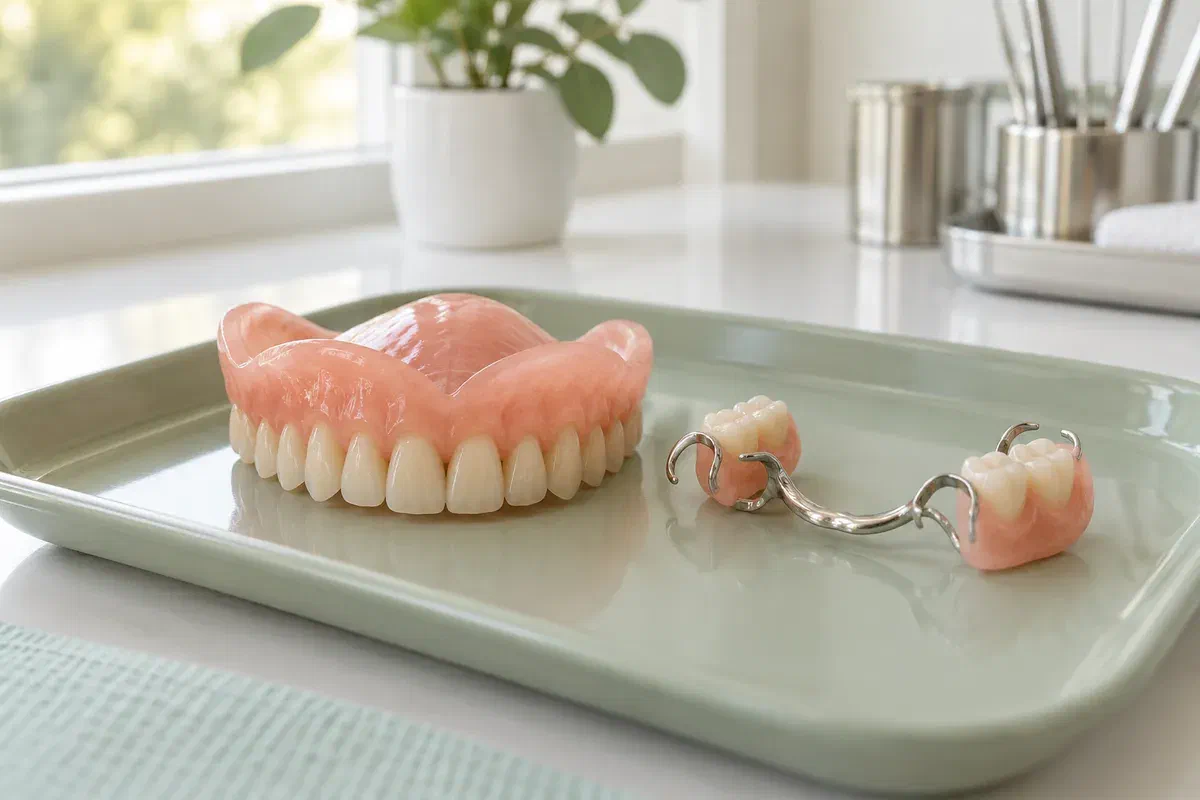
Complete and partial removable dentures displayed as illustrative examples
What people describe

Clicks, lisps and slipping

Try to note when the problem happens: certain sounds, long conversations, or meals. Those details help the dentist link what you hear and feel with the examination.

Gaps that change your speech

Missing front or side teeth can alter how air and the tongue move. You will hear whether filling the space with a partial is likely to help, whether a different replacement is worth considering, and what each would rely on for support.

An appliance that moves when you talk

Bring the denture and describe the words or situations that cause trouble. A worn base, changed ridges or tooth position may be involved. Adjustment, refitting, repair or replacement may be options, and the review helps decide.

Teeth that may be removed

If you are facing extractions, ask which teeth are worth keeping and how the change might affect your speech for a while. Discuss an immediate appliance, how the fit shifts during healing and how often you would be reviewed.

Severe pain, swelling, a sore that does not settle or a cracked appliance should be mentioned when booking. Those may need prompt care of their own.

What the visit can explain

Why the sounds change, and what might help

A new or refitted denture may improve stability, but most people still need a period of practice for speech to feel natural. The consultation should explain what an appliance can realistically change, the handling it involves, and how it compares with a fixed option.

You may hear that records, other treatment or a specialist view would help before a firm recommendation. Ask what remains uncertain and how the next appointment would clarify it.

Patient information: Canadian Dental Association — dentures

A plan rooted in your mouth

Teeth, gums, ridges and bite are assessed together. That is how the dentist can explain whether a particular design is likely to suit you, or why another problem should be addressed first.

Speech and comfort on the agenda

Mention specific sounds, how long you speak each day and any discomfort. The team can say which of those concerns a design change may help and which usually improve with time.

Stages and costs set out

Ask which visits are expected, what the estimate covers and how follow-up adjustments are arranged. A full outline helps you compare care over time, not only the appliance.

What we do at the appointment

We listen to how you speak, as well as look.

Ask anything along the way. If you have hearing or communication needs, or would like someone with you, let the team know when you book.

  1. Hear what is bothering you

    We cover missing teeth, any appliance, past treatment and the speech or chewing problems that prompted your visit. Share your health history and medications too.

  2. Examine the mouth and the appliance

    The dentist checks remaining teeth, soft tissues and how a current denture fits, both at rest and in movement. Records may be recommended where support needs a closer look.

  3. Explain the possible changes

    Denture designs and other replacements are compared where relevant. Ask what each might do for speech and chewing, its limitations, and whether other care should come first.

  4. Agree on the next step

    You might book records, review an estimate or begin planning. Confirm the next appointment and whether any current problem needs attention sooner.

Afterwards

Read it aloud, if that helps.

A plan with several parts is hard to remember. Keep it with your questions, and check with us before assuming what an estimate includes.

Match the plan to your main concern

If speech was the reason you came, check the proposal addresses it. Write down questions about fit, practice, temporary teeth or follow-up to raise before treatment.

Fit the visits around work

Ask how many appointments are expected, whether your current denture is needed for records and if you might be without it for a time. The clinic is open Monday to Thursday until 7 p.m., with weekend times by appointment.

Keep your current care steady

Go on cleaning your appliance and natural teeth as advised. Get in touch about new sore spots, swelling or a break instead of waiting until the plan is decided.

Designs to weigh up

Each option affects speech a little differently.

You should hear why an option suits your mouth. Think about what each needs beforehand, how it performs when you talk and eat, how you would handle and maintain it, and what it costs over time.

Working with your own teeth

Partial denture

A partial fills gaps using support from nearby teeth and gums. Ask how it is retained, how its shape might affect your tongue and speech, and how to clean around it.

Replacing an entire arch

Complete denture

A full denture replaces every tooth in one jaw. Tooth position, palate coverage, ridge support and the adjustment period all affect speech and deserve discussion, especially if extractions come first.

Fixed or more stable support

Bridge or implant-based option

A bridge or implants may suit some situations and reduce movement. These require separate assessment, and the comparison should include surgery, healing time and upkeep.

Questions about speaking

Talking with dentures, honestly answered

These are common questions when speech is the main concern. They may help you prepare for the consultation.

(905) 876-4488
Why does my denture click when I talk?
Clicking can happen when a denture is loose, when the teeth meet too soon, or when the base no longer fits the ridges well. The dentist can check which applies and whether adjustment or refitting may help.
Will a new denture change how I say certain sounds?
It may for a while. Sounds like S, F and T depend on tooth position, and the tongue needs time to adapt to a new shape. Most people find speech settles with practice, and the dentist can check fit if it does not.
Is there anything I can practise to speak more clearly with a denture?
Reading aloud and repeating difficult words is commonly suggested while you adapt. If speech does not improve, or the appliance moves, book a review rather than relying on practice alone.
Why does a new denture feel bulky to my tongue?
The tongue is very sensitive to changes in the mouth, and a new appliance takes up space it is not used to. This often eases with time. If it does not, ask the dentist whether the design can be adjusted.
Is adhesive a good answer to a loose denture?
Adhesive can help some people feel more secure, but it does not correct a poor fit. If you are using more and more of it, the appliance and your gums should be checked.
How can visits from Puslinch fit a full working week?
Ask for the expected sequence at the consultation, and book later-day appointments where they suit you. Some steps can be planned close together, while others need healing or lab time in between.
Visiting from Puslinch

Let your next conversation go uninterrupted.

Come and see us on Bronte Street with any appliance you wear and a short note of the words, phone calls or meetings where it lets you down. With that in hand, the time can go toward changes that would genuinely make a difference to how you speak.

A partner or friend is welcome to join you. Mention any hearing, communication or mobility needs ahead of the appointment so we can plan for them.

Visit Milton Dental Clinic
Unit 1, 342 Bronte St. S, Milton, ON L9T 5B7
Get directions Clinic hours
Monday–Thursday
11am–7pm
Friday–Sunday
By appointment only

Areas we serve

  • Milton
  • Oakville
  • Mississauga
  • Georgetown
  • Halton Hills
  • Acton
  • Campbellville
  • Brampton
  • Burlington
  • Puslinch
  • Rockwood
  • Erin
  • Caledon
  • Etobicoke
  • Old Milton
  • Bronte Meadows
  • Timberlea
  • Dorset Park
  • Dempsey
  • Clarke
  • Beaty
  • Coates
  • Harrison
  • Scott
  • Willmott
  • Ford
  • Bowes
  • Cobden
  • Walker
  • Mountain View
  • Milton Heights
  • Hawthorne Village
  • Valley View
  • Fallingbrook
  • Nassagaweya
  • Trafalgar
  • Esquesing
  • Nelson
  • Brookville
  • Moffat
  • Glen Williams
  • Norval
  • Limehouse
  • Stewarttown
  • Ashgrove
  • Hornby
  • Silver Creek
  • Speyside
  • Scotch Block
  • North Oakville
  • River Oaks
  • Glen Abbey
  • West Oak Trails
  • Palermo
  • Bronte Creek
  • College Park
  • Joshua Creek
  • Uptown Core
  • Preserve
  • Iroquois Ridge
  • Lisgar
  • Meadowvale
  • Meadowvale Village
  • Churchill Meadows
  • Erin Mills
  • Central Erin Mills
  • Streetsville
  • East Credit
  • Creditview
  • Heartland
  • Sheridan
  • Mount Pleasant
  • Credit Valley
  • Huttonville
  • Churchville
  • Springbrook
  • Northwest Brampton
  • Bram West
  • Fletcher's Meadow
  • Fletcher's Creek South
  • Alton Village
  • Orchard
  • Millcroft
  • Headon Forest
  • Tansley
  • Brant Hills
  • Tyandaga
  • Kilbride
  • Lowville
  • Aberfoyle
  • Morriston
  • Arkell
  • Hillsburgh
  • Freelton
  • Carlisle
  • Waterdown
  • Flamborough
  • Mountsberg

How can we help?

Milton Dental Clinic

Have a question about your smile? Choose the option that works best for you.

For urgent dental concerns, please call.
Messages are reviewed during clinic hours.