

Illustrative hygienist reviewing denture care with a patient
Restorative Dentistry

Denture Hygiene and Maintenance in Burlington

Helping a parent or partner with their denture raises practical questions about cleaning, fit and when to worry. Our maintenance reviews welcome wearers and caregivers from Burlington and look after the appliance and mouth together.

When care is shared

Two sets of hands, one clear routine

Plenty of denture wearers manage everything on their own. Others get help from a spouse, an adult child or a support worker, and that help works best when everyone knows the same steps. A maintenance visit is a good moment to agree on them, with the wearer’s wishes leading.

Keeping an appliance clean is only part of the job. The gums, any natural teeth and the denture itself shift over the years, and a spotless surface won’t reveal a loosening fit or a tissue change. Reviews cover wear, past repairs, supporting teeth and how practical the routine has become.

You’re welcome to come from Burlington together. Bring the denture to our Bronte Street practice and describe what each of you has noticed. Dr. Zoha Anjum can examine the appliance and the mouth, then explain a follow-up plan and home routine that suit the person wearing it.

Book a review for you or a family member
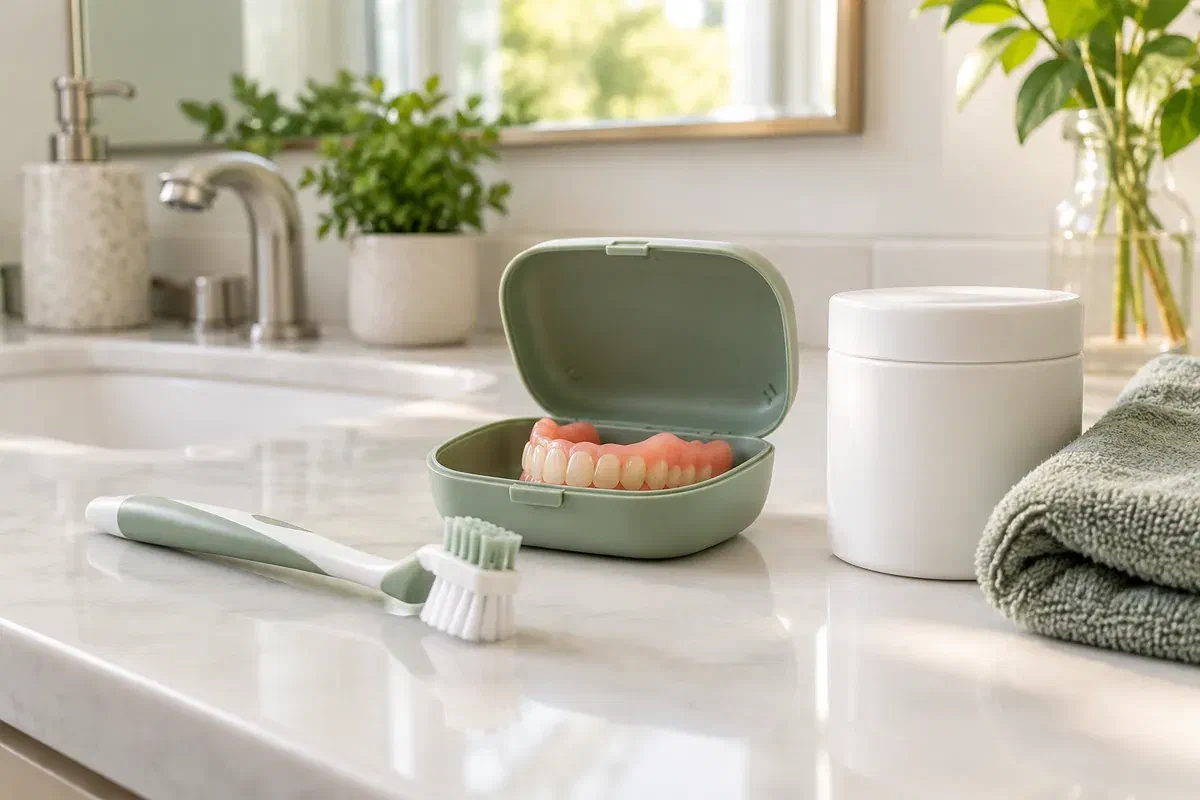
Denture storage case, soft brush, and unlabelled cleanser container
Things a helper might notice

Changes you can spot from the outside

Caregivers sometimes see shifts before the wearer mentions them, such as a change in eating or speech. Share what you’ve observed, and let the wearer describe how it feels.

Avoiding certain foods or slipping while eating

Choosing softer foods, leaving meals unfinished or a denture that drops while chewing can suggest a change in fit or bite. The appliance, the gums, remaining teeth or several factors together may be involved.

Redness or tenderness under the denture

A sore area seen during cleaning, or one that comes back, should be examined. Cleaning and wearing habits may contribute, but the tissue needs to be assessed before the denture is assumed to be the cause.

Reluctance to take it out or clean it

If handling the denture has become tiring, painful or confusing, the routine may need simplifying. Tell the team what’s difficult so methods and follow-up can be adjusted to the help that’s actually available.

A mouth sore that won’t heal, a lump or an unexplained change should be checked soon, however secure the denture seems. Please call the clinic rather than waiting for a scheduled recall.

Why reviews help everyone

Shared understanding, fewer surprises

Regular maintenance looks at the mouth, the denture and the daily routine in one go. That helps the wearer and any helper understand whether a problem is about cleaning, wear, fit or something else that needs separate care.

How often to return isn’t fixed. It depends on oral health, any natural teeth, the appliance design and the support at home. It’s fair to ask what each review checks and what would justify coming back earlier.

Patient information: Ontario Dental Association — denture care

The mouth gets examined, not just the denture

Teeth that hold a partial denture and the gums under a complete one both need attention. A review keeps those in view alongside the removable appliance.

Early notice of wear or damage

Where relevant, the dentist checks worn teeth, cracks, attachments and older repairs. Knowing their condition makes it easier to judge whether upkeep, repair or replacement comes next.

Instructions both of you can follow

The team can demonstrate cleaning and handling, then let the wearer or helper try it. Guidance is shaped around the wearer’s preferences and the practical assistance they want.

During the appointment

What happens in the chair

Every visit reflects the denture and its past. Records of repairs, liners, implant attachments or treatment at another clinic are useful, so bring them if you have them.

  1. Review health, medicines and routine

    We ask about health updates, medications, daily wearing time and cleaning. A helper can add observations, and recent soreness, movement or breakage is worth mentioning even if it has passed.

  2. Examine the tissues and teeth

    The dentist checks the gums, soft tissues and any remaining teeth, with further assessment if needed. Persistent changes are evaluated properly instead of being put down to normal denture wear.

  3. Inspect the denture

    Fit, bite, wear and soundness are looked at together. We explain whether a clean or small adjustment will do, or whether another procedure should be discussed.

  4. Agree on next steps at home

    We confirm products, handling, storage and wearing time, and make sure whoever helps understands them. You’ll know the recall timing and which signs mean calling earlier.

Everyday care

Simple enough to share

Follow the steps recommended for this particular denture. Metal frameworks, liners and attachments can rule out some products, so check before switching cleaners.

Clean the denture, then care for the mouth

The appliance is cleaned on its own, and the gums and any natural teeth need their own gentle care. Soaking products are for dentures only and shouldn’t be used as a rinse or assumed safe for the mouth.

Set up a safe cleaning spot

A towel in the sink or a basin of water softens any drop. Keep a labelled case nearby for when the denture is out, follow the storage advice given, and keep it away from heat and household tools.

Check in before changing anything

If the fit gets worse or deposits keep building, book a review before trying a stronger cleaner or more adhesive. The change may need a different solution than extra scrubbing.

After the review

Next steps depend on what we see.

A visit might confirm that the current routine is fine, or it might show a need for treatment. Ask which problem each recommendation targets and how its effect will be reviewed.

When things are on track

Ongoing hygiene and checks

Professional reviews and home-care coaching continue on a personal schedule. The plan includes the denture and the oral tissues around it.

When fit, wear or a component is the problem

Treat an appliance issue

Adjustment, a reline, a rebase or repair may come up, depending on the finding. You’ll hear the purpose of each one and whether the remaining parts of the denture is still sound enough to keep.

When maintenance can’t fix it

Explore a broader approach

A tissue concern, an unhealthy support tooth or a denture that no longer suits the wearer may call for a fuller plan. Ask about further assessment, a replacement and other reasonable options.

Questions from Burlington households

Helping someone with their denture

Needs change as the wearer and the appliance age. These answers explain why ongoing reviews matter and how a helper fits in.

(905) 876-4488
Can I come into the appointment with my parent?
Yes, if your parent agrees. You can share what you’ve noticed and learn how to help, while the wearer remains central to decisions. Let us know ahead of time if extra time or support would be useful.
How do I clean someone else’s denture safely?
Work over a towel or basin of water, use the cleaner and brush recommended for that appliance, and handle it gently. Ask for a demonstration at the review, since metal parts and liners can change the method.
Should a denture be labelled before a hospital stay or move into care?
Dentures can go missing in shared settings, so ask the team whether labelling is an option. Keeping the case clearly marked with the owner’s name also helps.
My mother says her denture is fine, but she’s eating less. Should we book a visit?
It’s reasonable to arrange a review. Changes in eating can have many causes, and a dentist can check whether fit, soreness or the mouth itself is involved, then discuss the findings with her.
Do people with full dentures and no natural teeth still need checkups?
Yes. The gums and soft tissues still need examination, and feeling comfortable isn’t proof that everything is healthy. The dentist can advise on a return interval for that mouth and appliance.
Could dry mouth be making the denture uncomfortable?
It might. Mention when the dryness happens, how it affects wear or cleaning, and any medication changes. The team can assess it and suggest next steps. Medicines shouldn’t be stopped without advice from the prescriber.
Denture support for Burlington families

Bring the denture, and bring your questions.

Book a maintenance review at our Bronte Street practice to talk through cleaning, a change in fit or the condition of an existing denture. We’ll look at the appliance and the mouth together and agree on a plan everyone can follow.

Call about a sore that lasts, swelling, a broken denture or major movement, so the team can discuss whether an earlier assessment is needed.

Visit Milton Dental Clinic
Unit 1, 342 Bronte St. S, Milton, ON L9T 5B7
Get directions Clinic hours
Monday–Thursday
11am–7pm
Friday–Sunday
By appointment only

Areas we serve

  • Milton
  • Oakville
  • Mississauga
  • Georgetown
  • Halton Hills
  • Acton
  • Campbellville
  • Brampton
  • Burlington
  • Puslinch
  • Rockwood
  • Erin
  • Caledon
  • Etobicoke
  • Old Milton
  • Bronte Meadows
  • Timberlea
  • Dorset Park
  • Dempsey
  • Clarke
  • Beaty
  • Coates
  • Harrison
  • Scott
  • Willmott
  • Ford
  • Bowes
  • Cobden
  • Walker
  • Mountain View
  • Milton Heights
  • Hawthorne Village
  • Valley View
  • Fallingbrook
  • Nassagaweya
  • Trafalgar
  • Esquesing
  • Nelson
  • Brookville
  • Moffat
  • Glen Williams
  • Norval
  • Limehouse
  • Stewarttown
  • Ashgrove
  • Hornby
  • Silver Creek
  • Speyside
  • Scotch Block
  • North Oakville
  • River Oaks
  • Glen Abbey
  • West Oak Trails
  • Palermo
  • Bronte Creek
  • College Park
  • Joshua Creek
  • Uptown Core
  • Preserve
  • Iroquois Ridge
  • Lisgar
  • Meadowvale
  • Meadowvale Village
  • Churchill Meadows
  • Erin Mills
  • Central Erin Mills
  • Streetsville
  • East Credit
  • Creditview
  • Heartland
  • Sheridan
  • Mount Pleasant
  • Credit Valley
  • Huttonville
  • Churchville
  • Springbrook
  • Northwest Brampton
  • Bram West
  • Fletcher's Meadow
  • Fletcher's Creek South
  • Alton Village
  • Orchard
  • Millcroft
  • Headon Forest
  • Tansley
  • Brant Hills
  • Tyandaga
  • Kilbride
  • Lowville
  • Aberfoyle
  • Morriston
  • Arkell
  • Hillsburgh
  • Freelton
  • Carlisle
  • Waterdown
  • Flamborough
  • Mountsberg

How can we help?

Milton Dental Clinic

Have a question about your smile? Choose the option that works best for you.

For urgent dental concerns, please call.
Messages are reviewed during clinic hours.