Cracks, roughness or old repairs
Breakdown of the acrylic, worn edges or several past fixes can all lead to an assessment. The dentist judges whether one repair could solve it or whether the base should be renewed.


The base of a denture does quiet work: it holds the teeth, spreads chewing pressure and rests on your gums. When that part wears out before the teeth do, a rebase may let you keep the teeth in a new foundation.
Teeth get the attention, yet the base is what keeps a denture working. It anchors each tooth, carries the force of every bite to your gums and shapes how the appliance sits. Rebasing replaces this foundation and transfers the existing teeth into it, provided those teeth and their positions are still right for your mouth.
Relining is the lighter option, renewing only the fitting surface against your gums while the original base remains. A new denture is the heavier one, replacing every component. Knowing which suits you takes an assessment of the whole appliance: how it fits and bites, how worn the teeth are, how it looks and the state of the supporting tissues.
Coming in from Acton, you can expect us to start with a simple question at our Bronte Street practice: would a rebase deal with the real problem? Share past repairs, fit changes and the features you want to keep. We should then be able to show you why the teeth are worth keeping, and what a new base can and cannot be expected to fix.
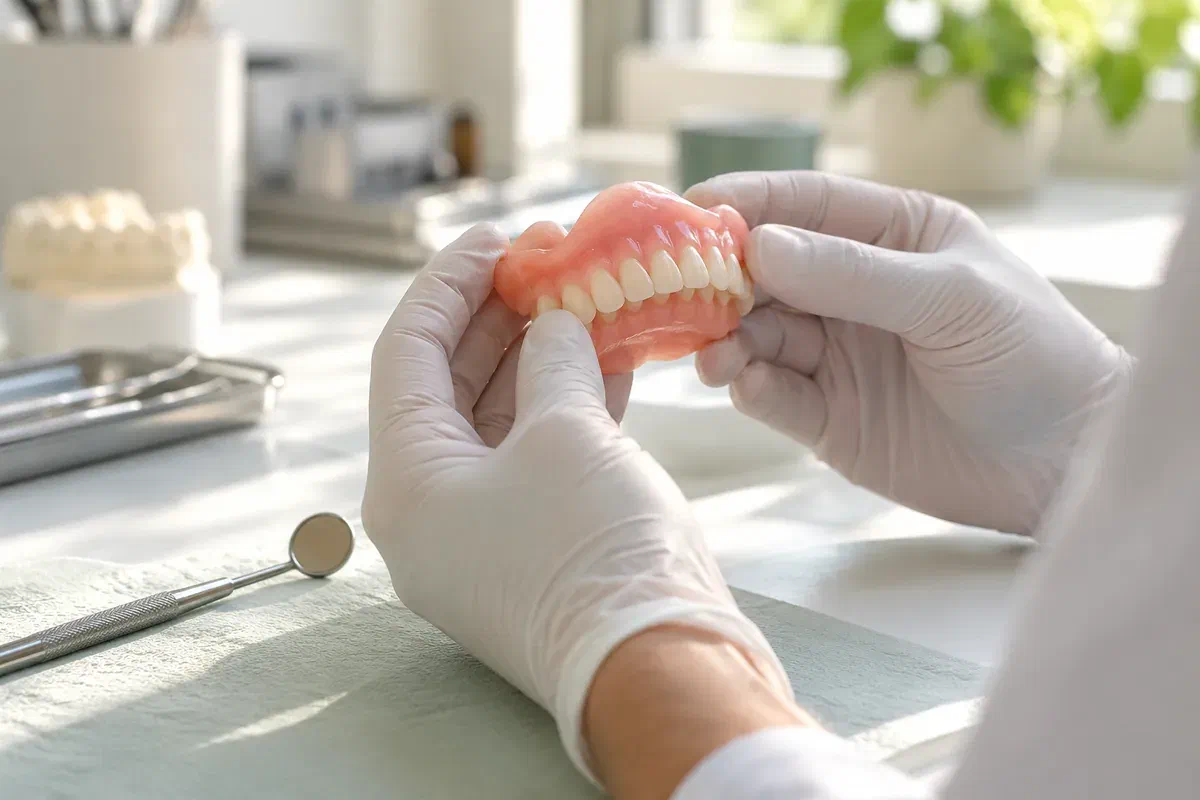
Because the base, teeth and fit wear differently, each is judged separately before they are judged together. A rebase is considered when the base needs replacing and keeping the teeth is still clinically reasonable.
Breakdown of the acrylic, worn edges or several past fixes can all lead to an assessment. The dentist judges whether one repair could solve it or whether the base should be renewed.
The teeth may still look good and chew well. Their wear and positioning are checked, though, because how they look is not enough to confirm that a rebase is appropriate.
As your gums and bone change, a once-stable denture may move. Ask which part needs to change and whether the plan addresses support and bite, not just the base material itself.
If the base keeps cracking or causing sore spots, the reason needs to be understood first. Otherwise a new base could simply repeat a layout that does not suit you.
When your denture suits it, rebasing renews the base while keeping a tooth arrangement that is still appropriate. It is a more limited job than a whole new denture, and it is worthwhile only if the parts you keep are in good condition.
A rebase leaves the teeth as they are, so worn biting surfaces stay worn, an unsuitable bite is not automatically corrected and appearance concerns linked to tooth position remain. Ask what will not change, and what limits remain, before picking it instead of a new denture.
Patient information: American Dental Association — dental terms
Where the current teeth are still suitable, keeping them may preserve features you already like. Ask how their condition and placement were assessed.
A foundation that is worn through cannot be patched forever. If full replacement is advised, the dentist should connect that advice to what the exam found.
The assessment lets you compare benefits, limits, number of visits and cost for each approach. Choose a rebase for a specific reason, not as a way of putting off a discussion about a denture that may be past its best.
No two dentures follow quite the same course. Ask about records, lab involvement, the time you will spend without the denture and the fitting and review appointments before you agree.
We examine your gums and the ridges beneath the denture, then the appliance itself for fit, bite, tooth wear and the condition of its base. Your history adds context, and today’s condition decides suitability.
Talk through whether a repair, reline or new denture might fit the findings better. Confirm what a rebase would change and keep, and whether the retained teeth are still appropriately arranged.
Records may be taken so the new foundation suits your mouth as it is now. The team explains how the denture is handled and what to plan while it is away.
The rebased denture is tried in and checked for how it seats, touches and functions. You get care and wearing guidance, and a review to address anything you notice in everyday use.
Your teeth may feel familiar while the base feels new against your gums. Follow the instructions you receive and tell us about any change in comfort or chewing, so the result can be properly evaluated.
We will explain how soon to wear it again and whether anything should be avoided at first. Sore spots are not something you need to get used to, so let us know if one appears.
Different material can mean different product advice. Check which brush, cleanser and storage suit the new base, especially if your denture includes liners or other parts.
Tell us about movement, pressure or a bite that feels different. The review shows whether a small adjustment is enough or whether something else needs attention.
Rebasing focuses on one part of the denture. These answers explain what that part does and how rebasing differs from relining, repair and replacement.
An appointment on Bronte Street is the simplest way to learn what your denture still has to give. Expect a careful check of its foundation, its teeth and the gums it sits on, followed by a straight answer on whether a rebase is the sensible fix.
Please bring the denture and whatever you know about past repairs or relines, so we can see how it has changed over the years.
