One base worn, cracked or patched
Wear or past repairs on the upper or lower may justify a closer look. The dentist judges whether a contained repair could do the job or the base should be replaced.


Upper and lower dentures work as a pair, so a worn base on one can affect how the other behaves. We can assess one or both, and explain whether rebasing would keep their teeth working together.
People who wear a full upper and lower set often notice trouble in just one of them. Yet the two meet every time you chew, so a change to one base can be felt in the other. Rebasing renews a worn base and keeps its existing teeth, which is reasonable only when those teeth, and how they meet their opposite numbers, still suit you.
Relining is the lighter alternative, adding new material to the gum side of the existing base. A new denture, or a new pair, replaces everything. To choose sensibly, the dentist considers both appliances: how each fits, how they bite together, how worn the teeth are, how they look and the condition of the gums and bone beneath.
If you are coming from Bolton or one of the other Caledon villages, bring both dentures to our Bronte Street practice even if only one is a problem. We check whether a rebase would solve the actual concern without upsetting the bite. Share past repairs, fit changes and what you want to keep, and we will explain the case for keeping the teeth and the limits of a renewed base.
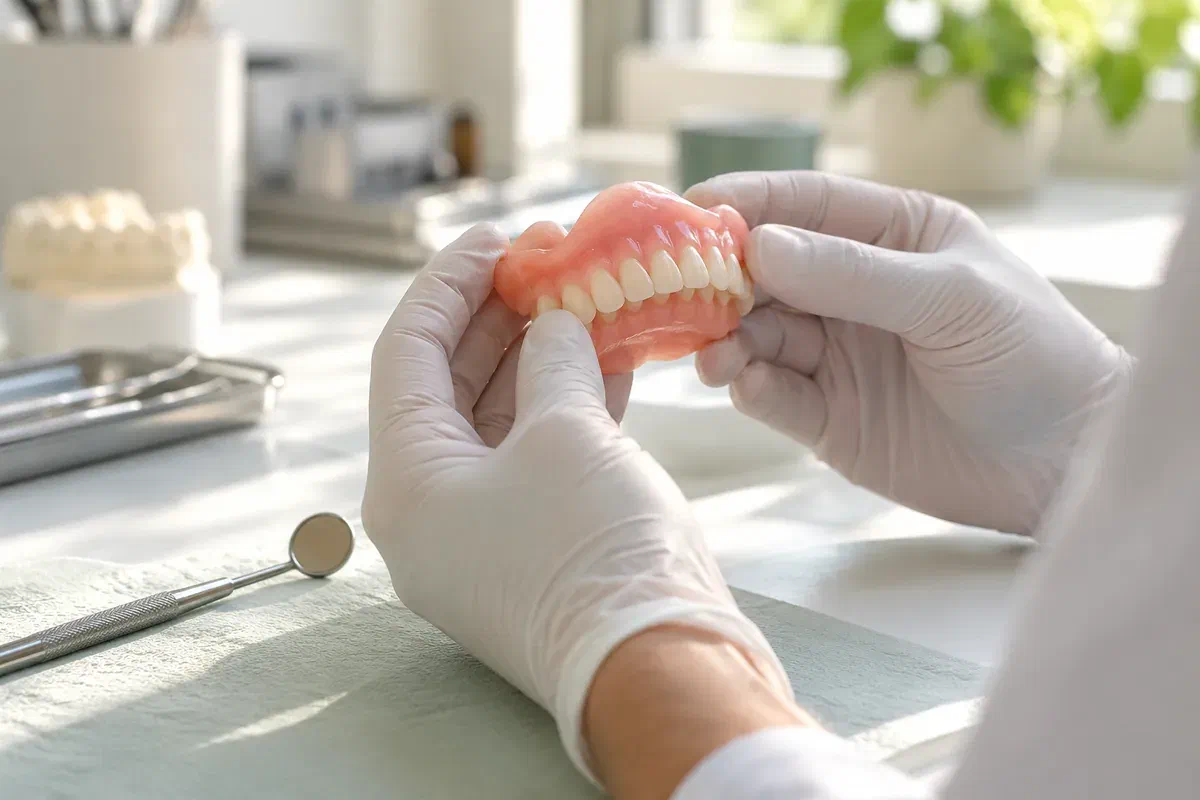
Each denture has a base, teeth and a fit of its own, and the pair share a bite. A rebase is considered when a base needs renewal and keeping its teeth still makes clinical sense for the set.
Wear or past repairs on the upper or lower may justify a closer look. The dentist judges whether a contained repair could do the job or the base should be replaced.
If the teeth on both dentures look right and close together comfortably, they may be worth keeping. Wear and alignment are still checked, because appearance does not settle the question.
Lower and upper dentures rest on different tissues and may change at different rates. Ask which denture, and which part of it, the plan addresses, and how the shared bite will be checked.
Repeated breakage of one denture can be linked to how it meets the other. Understanding that matters, or a new base may reproduce the same strain.
When the teeth and their bite are still appropriate, rebasing one or both dentures can renew the foundation while the tooth arrangement you are used to stays in place. That narrower scope is useful only if what is kept is genuinely sound.
Limits remain. Worn teeth stay worn, a bite that no longer suits you is not reset by a new base, and appearance tied to tooth position stays as it was. Ask what will be unchanged on each denture before choosing a rebase over a new set.
Patient information: American Dental Association — dental terms
When the upper and lower teeth still meet well, keeping them on both dentures may make sense. Ask how the clinician assessed their wear and how they come together.
Sometimes just one denture needs a new base. Ask why that one, and not both, and how the work will be checked against the other.
The assessment lets you weigh benefits, limits, visits and cost for each route. A rebase should meet a clear need, and a new pair may sometimes be the more sensible plan.
The steps depend on how many dentures are involved and what each needs. Ask about records, lab stages, the time each denture will be away and the dates of fitting and review before agreeing.
We look at the gums and ridges under each denture and check how each seats, how the teeth meet and what state the bases are in. Your account of which side bothers you helps focus the examination.
Discuss whether a repair, reline, rebase or new denture best suits each appliance. Be clear on what would be renewed, what would be kept and how the bite between them will be preserved.
Impressions and bite records may be taken so the renewed base works with the opposite denture. You will hear how long each appliance is likely to be away.
The rebased denture is tried in alongside its partner and checked for seating, contacts and function. Care guidance follows, and a review deals with anything noticed in everyday chewing.
The teeth may be the same, but a renewed base can change how the two dentures meet. Follow your instructions and mention any change in comfort or chewing, so we can check the pair properly.
Check when to start wearing the pair again and whether to take care with certain foods at first. Call the clinic about any sore area rather than assuming it will settle.
A new base may need different products. Confirm the brush, cleanser and storage that suit it, especially if the denture has liners or other components.
Describe any rocking, pressure or bite that feels uneven. Having both dentures there lets us see whether a small adjustment will help or a different issue is involved.
A rebase affects one base at a time, but dentures work as a pair. These answers cover planning for one or both, and how rebasing compares with other options.
Book an appointment at our Bronte Street clinic and bring your upper and lower dentures. We review each base, the teeth and your gums, then explain whether rebasing one, both or neither would best address your concern.
Please bring any history of repairs or relines for either denture, so we can see how they have changed.
