Is the base failing?
Cracks, worn areas, material changes or a run of repairs suggest the foundation needs attention. The question is whether one contained repair could cope, or whether the base as a whole should go.


A rebase only makes sense if the teeth on your denture deserve to be kept. Here is how a dentist judges that, and what it means for choosing between a new base, a reline and a brand-new denture.
It sounds backwards, but the first thing to settle with a worn denture is whether its teeth have a future. Rebasing renews the acrylic base and keeps those teeth in place, so the whole idea depends on their condition and on whether the way they are set still suits your bite and appearance.
Teeth that pass that test lead to the next question: is how much of the base needs work. A reline puts fresh material on the side facing your gums and keeps the old base; a rebase replaces the base altogether. If the teeth do not pass, a new denture may be the more sensible path. All of this rests on an examination of fit, bite, wear, appearance and the tissues underneath.
For households in Campbellville, that examination takes place at our Bronte Street practice. We will tell you whether a rebase targets the real issue, and we are happy to show you what we see on the teeth. Bring up any earlier repairs, changes in how it fits and what you hope to keep, and expect a plain account of why the teeth should stay and what the new base will leave unchanged.
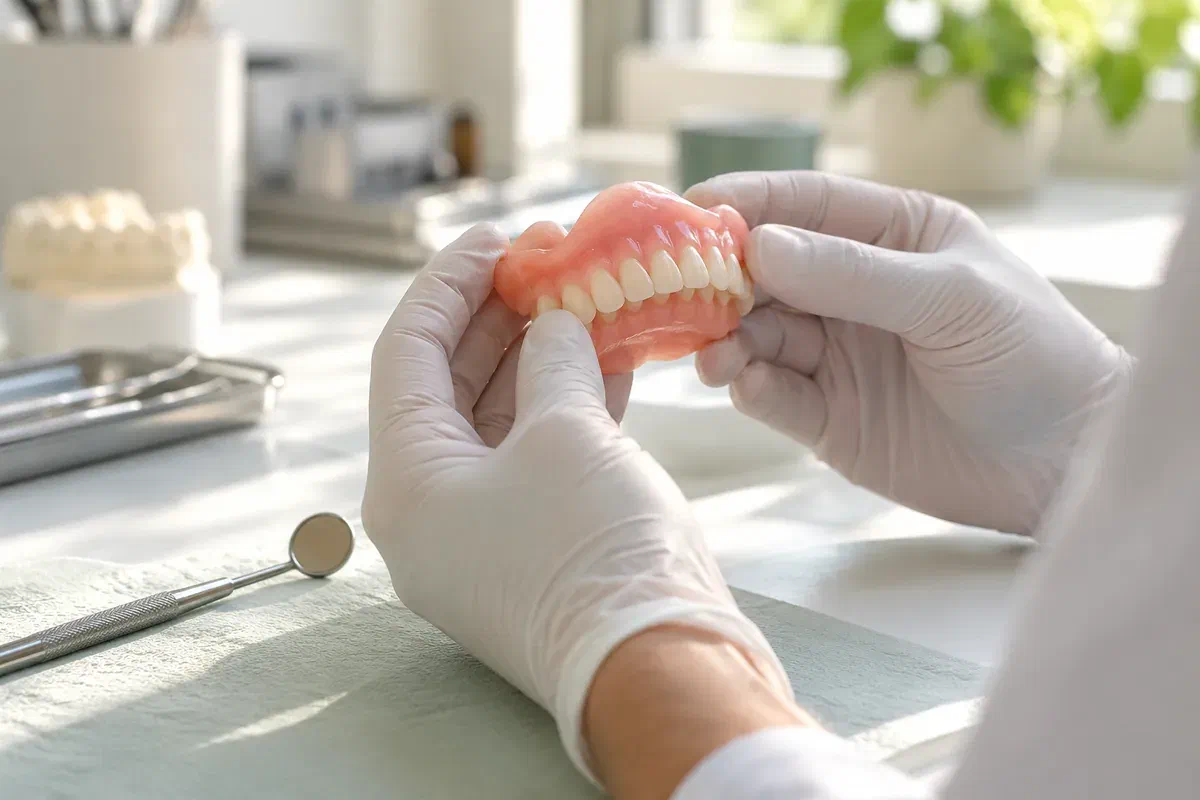
Every assessment comes back to the same short list. A rebase is in the picture when the base needs renewal and the teeth still hold up clinically.
Cracks, worn areas, material changes or a run of repairs suggest the foundation needs attention. The question is whether one contained repair could cope, or whether the base as a whole should go.
Being happy with their appearance counts, but so do biting surfaces, chips and how evenly they meet. A nice smile by itself does not confirm that they belong in a new base.
Gums and bone keep changing, which can leave a denture less stable. Ask which part of the appliance the plan changes, and whether it accounts for support and bite as well as the base.
A denture that breaks or rubs again and again has a reason for doing so. Finding it comes first, otherwise a new base may simply copy the same problem.
When the teeth are sound and well arranged, a rebase lets you hold on to them while the foundation is renewed. That is a narrower piece of work than a new appliance, which is exactly why it suits only dentures whose kept parts are in good condition.
Some things stay as they were. Worn surfaces are not rebuilt, an unsuitable bite is not reset by default and the look that comes from tooth position remains. Before you decide against a new denture, ask which features stay put and which drawbacks you would still have.
Patient information: American Dental Association — dental terms
Teeth that remain suitable can keep the appearance and chewing feel you have adapted to. Ask the clinician to describe the wear and placement they found.
Repeated patches can leave a tired base still tired. If a full renewal is advised, the reasoning should connect to the examination rather than to habit.
Knowing the condition of the teeth lets you compare benefits, limits, visits and cost for each option. A rebase should answer a defined need instead of postponing a discussion about a denture that has run its course.
The sequence adapts to your denture and the treatment chosen. Before agreeing, ask what records will be taken, whether a lab is involved, how long the denture will be away and when fitting and review are booked.
We check your gums and supporting ridges, then the denture’s teeth for wear and position, its base for damage and its overall seating and bite. What you tell us adds context to what we see.
Based on the findings, discuss whether a repair, reline, rebase or new denture fits best. Know what a rebase would change and keep, and why the dentist considers the retained teeth appropriate.
The dentist may take impressions so the new foundation suits the current shape of your gums. You will be told how the denture is handled and how long you may be without it.
The rebased denture is checked for seating, tooth contact and function. You receive guidance on wear and cleaning and a follow-up to look at anything that becomes noticeable once you are back to normal.
The teeth may be old friends, but they now sit on a new base. Follow the instructions given and let us know about any change in comfort or function, so we can judge how the base is working.
Ask how to begin wearing it again and whether to take any precautions. If tenderness appears, phone the clinic rather than assuming it will pass.
Products that suited the old base may not suit the new one. Confirm which brush, cleanser and storage to use, particularly if liners or other components are present.
Describe any shifting, pressure points or a bite that lands differently. That appointment tells us whether a small adjustment will help or something else needs a closer look.
Rebasing depends on the teeth being worth keeping. These answers explain how that is judged and how rebasing compares with other treatments.
Bring your denture to our Bronte Street clinic. We will check the teeth first, then the base and the gums beneath, and explain whether a rebase, a reline, a repair or a new denture is the right next step.
Have the denture with you, along with any history of repairs or relines; it helps us understand how its condition has changed.
