Stains, roughness or a changed surface
Marks that do not clean off, rough patches or past repairs may mean the acrylic is ageing. The dentist decides whether a localized repair is enough or the base needs replacing.


How you clean, soak and store a denture shapes how long its base stays in good condition. When the base has worn anyway, a rebase may renew it around teeth that still suit you, and a new routine can help protect it.
Brushing, soaking and overnight storage all affect the acrylic that carries your denture teeth. Even with good habits, that base eventually wears, stains or weakens. Rebasing replaces it and keeps the existing teeth, as long as they and the way they are set still suit your mouth.
Relining and a new denture are the other paths. The first adds fresh material to the side that rests on your gums while the original base stays; the second replaces the whole appliance. Deciding among them depends on the full picture, from fit and bite to tooth wear and appearance, as well as the health of the tissues underneath.
When you come in from Erin or Hillsburgh, our Bronte Street practice can review whether a rebase would solve the issue and whether anything in your routine may have played a part. Tell us how you clean and store the denture, what has been repaired and what you want to keep. You will hear why the teeth are worth keeping and what a new base can and cannot improve.
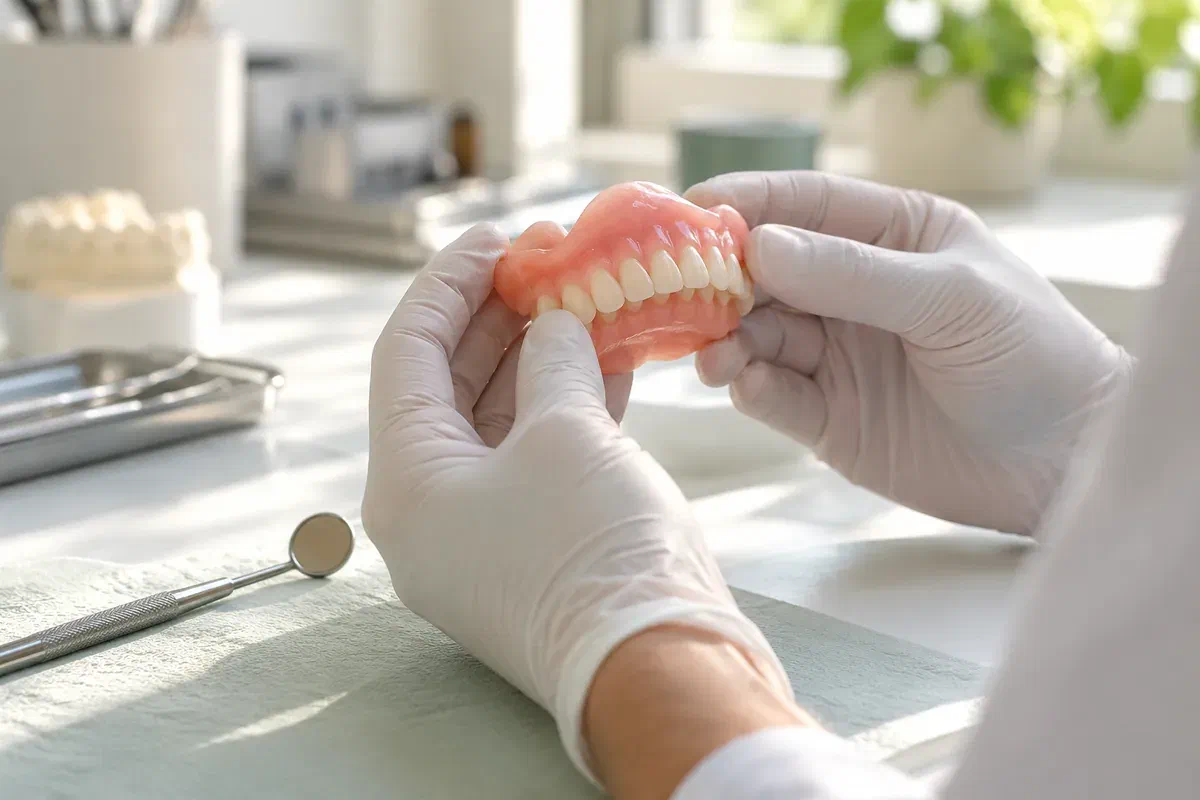
The daily routine is often when changes are first spotted. A rebase is considered when the base needs renewal and the current teeth remain clinically sensible to keep.
Marks that do not clean off, rough patches or past repairs may mean the acrylic is ageing. The dentist decides whether a localized repair is enough or the base needs replacing.
If the teeth look good after cleaning, they may be worth keeping. Wear and arrangement are still checked, since appearance alone does not confirm that a rebase is suitable.
A denture that seats differently after cleaning, or moves more than it did, may have a fit problem. Ask which part of the appliance needs to change and whether the plan considers support and bite.
If the base keeps cracking or causing soreness, look for the cause, including handling and storage. A new base built on the same habits or design may not last.
Where it suits the denture, rebasing replaces the worn base and keeps a tooth arrangement that still works. It is a smaller job than a new denture, and it is useful only when the teeth being kept are sound.
It will not repair worn tooth surfaces, correct an unsuitable bite or alter appearance concerns tied to tooth position. Ask what will stay the same and which limits remain before choosing a rebase instead of a new set.
Patient information: American Dental Association — dental terms
If the existing teeth are still suitable, keeping them may preserve features you already like. Ask how the clinician assessed their wear and position.
Worn or porous acrylic can be hard to keep clean. If a full renewal is suggested over a reline or repair, ask what the examination showed.
The assessment helps you compare benefits, limits, visits and cost for each option. Choose a rebase for a stated reason, and be open to hearing whether a new denture might suit you better.
Plans vary with each denture. Before you say yes, find out what records are taken, whether a laboratory handles the base, how many days the denture will be out of the house and when you come back for fitting and review.
We check the gums and supporting tissues and look at how the denture seats, how the teeth meet and how the base has worn. Your description of your routine helps us interpret what we see.
Discuss whether a repair, reline or new denture would suit the findings better. Make sure you understand which parts a rebase would renew and keep, and why the teeth are judged suitable.
The dentist may take impressions so the new base suits your mouth. You will learn how the denture is handled and how long it may be away from home.
The rebased denture is tried in and checked for seating, contacts and function. You receive cleaning and storage guidance for the new base, plus a review for anything noticed during daily wear.
Your teeth are familiar, but the base material and its care may not be. Follow the instructions you receive and tell us about changes in comfort or function so the new base can be assessed.
You will be told when to put it back in and whether to go gently at first. A tender patch on the gums is worth a phone call; there is no prize for wearing through it.
The new base may need different products from those you used before. Ask which brush, cleanser and storage suit it, especially if there are liners or other components.
Mention movement, pressure or a bite that feels different. The appointment helps decide whether a small adjustment is needed or another cause should be explored.
Daily care and rebasing are closely linked. These answers cover both, and explain how rebasing differs from other treatments.
Bring your denture and your usual cleaning products to our Bronte Street clinic. We assess the base, the teeth and your gums, then explain whether a rebase or another approach would serve you better and how to look after it.
Bring any history of repairs or relines as well, so we can see how the denture has changed over time.
