Cracks, stains or patched acrylic
Visible wear, altered material or repeated fixes can justify an assessment. The dentist weighs whether one targeted repair is enough or whether a whole new base would serve you better.


Told you need a whole new denture, yet the teeth on yours still seem fine? A second look can clarify whether a rebase, which renews the base and keeps suitable teeth, is a reasonable alternative for you.
That is often the first question people bring when they come from Oakville with a denture in a case. Rebasing is a middle path: the base material is taken away and renewed, and the existing teeth are kept, provided both the teeth and their layout are still appropriate for your mouth.
Keep in mind how it differs from its neighbours. Relining refreshes only the surface that touches your gums, leaving the original base in place, while a new denture changes every component. Sorting out which applies takes an assessment of the full appliance, including how it fits and bites, how worn the teeth are, how it looks and the health of the tissues it rests on.
When you visit our Bronte Street practice, the aim is to find out whether a rebase would address the real source of the trouble. Share your repair history, any change in fit and what you most want to keep. A good recommendation spells out why the present teeth deserve to stay and where a renewed base will and will not make a difference.
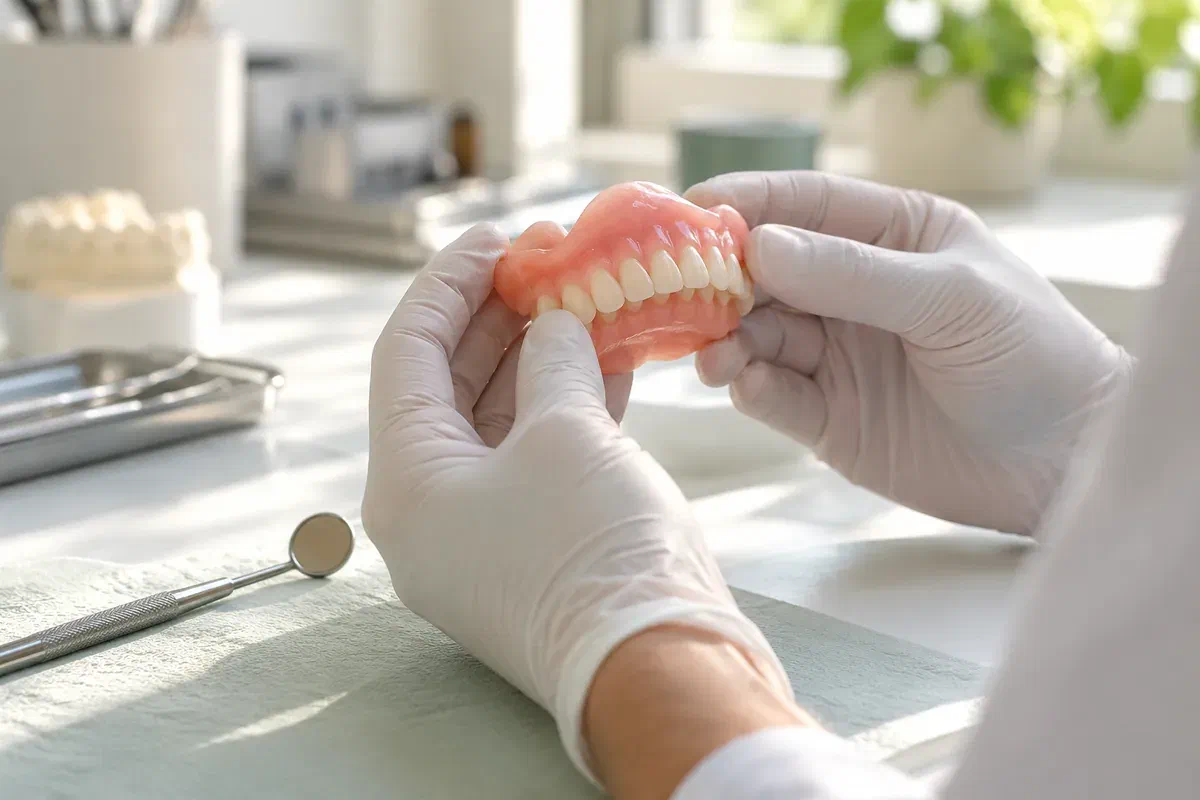
Every denture combines parts that wear at different speeds. A rebase is on the table only when the base needs renewing and holding on to the current teeth remains a sensible clinical choice.
Visible wear, altered material or repeated fixes can justify an assessment. The dentist weighs whether one targeted repair is enough or whether a whole new base would serve you better.
Liking the teeth is a fair starting point, but it is not the whole test. Wear and positioning need checking too, because appearance alone cannot confirm that a rebase is the right step.
A change in fit can open a discussion about relining, rebasing or a new denture. Ask which component the plan targets and whether it considers support and the bite as well as the acrylic itself.
When a denture fractures again and again, or causes repeated discomfort, look for the reason. Rebuilding the same unsuitable layout in fresh material would not solve it.
In a case that suits it, a rebase renews the base and leaves a still-appropriate set of teeth where they are. It is a smaller undertaking than a complete new denture, and it is only worthwhile when what is being kept is in good condition.
Expect limits. Replacing the base leaves worn teeth worn, does not by default correct an unsuitable bite and will not change appearance issues linked to tooth position. Before choosing it over a new set, ask what will stay the same and what limitations will remain.
Patient information: American Dental Association — dental terms
If the current teeth are still suitable, keeping them may hold on to features you are happy with. Ask the clinician how their wear and placement were evaluated.
Where a small repair or reline falls short, a full new base may be worth a conversation. Ask why that scope is proposed and how it links to the examination.
The assessment equips you to set the benefits, limits, visits and cost of each option side by side. Choose a rebase for a stated purpose, not to avoid discussing a denture that may no longer be suitable.
The sequence varies with each denture and plan. Before you commit, ask what records are needed, whether a laboratory is involved, how long you will be without the appliance and when the fitting and review take place.
The dentist checks the gums and supporting tissue, then the fit, bite, teeth and base of the denture. Your history and symptoms help guide the visit, while the condition seen on the day settles suitability.
Discuss which option fits the findings best. Understand what a rebase would alter and keep, and confirm that the tooth arrangement being kept is still appropriate.
Impressions or other records may be taken to guide the replacement base. The team describes how your denture will be looked after and any plans you may need while it is away.
The rebased denture is checked for fit, contacts and function. You receive wearing and care advice and a review appointment to deal with anything that comes up in daily use.
Your teeth may be the same, but the denture can still feel new against your gums. Follow the advice given and tell us about changes in comfort or chewing, so the base can be properly evaluated.
Ask when and how to wear the denture again and if any precautions apply. If a tender area appears, contact us rather than wearing through it because the teeth seem familiar.
Cleaning guidance can change with a new base. Confirm which brush, cleanser and storage method to use, especially where the denture has liners or additional components.
Point out any movement, pressure or change in how your teeth meet. That visit shows whether a small adjustment is needed or whether something else deserves investigation.
Rebasing has a clear scope. These answers can help you separate it from relining, repair and full replacement, especially if you are weighing advice you have already received.
Make an appointment at our Bronte Street clinic to have a worn or problem denture base examined. We look at the teeth, the fit and the supporting tissues, then explain whether rebasing or a different route would suit your concern better.
Bring the denture, plus any notes on earlier repairs, relines or the advice you were given, so we can see how its condition has changed.
