Rocking that comes and goes
Movement only when chewing, speaking or opening wide may hint at a different cause from steady looseness. Describing the pattern helps the dentist narrow down the right correction.


Reline, rebase or start fresh? When a denture has lost its grip, the right choice depends on what has actually worn or changed. Visitors from Acton can have each option weighed against their own appliance.
Most people arrive with one question: do I need a new denture? Sometimes the answer is no. If the teeth still look and work well and the base is sound, the problem may lie only in the surface that meets the gums.
That is where a reline comes in. A fresh layer is added inside the existing base, shaped to the tissues as they are now, while the teeth and visible form remain. Rebasing goes further by replacing the base material, and a new denture changes everything. Which one suits you depends on what the examination reveals about the gums, the base, the teeth and how they come together.
To help the decision, tell us what bothers you most. Is it movement, soreness, the look of worn teeth or trouble chewing? Once the dentist has examined the appliance in your mouth, the reasons for recommending one option over another can be laid out plainly so you can choose with confidence.
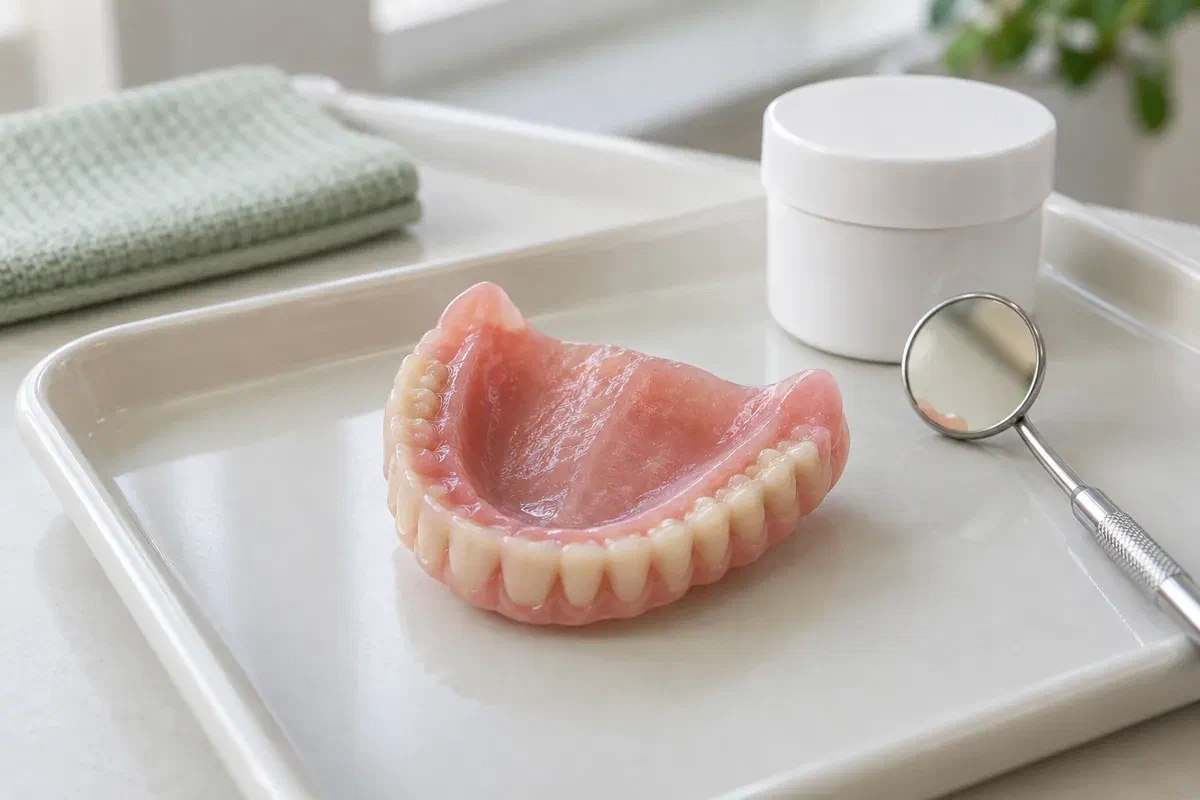
The type of looseness, its timing and the health of your gums all shape the advice. A fit review considers each, since one complaint can lead to quite different plans.
Movement only when chewing, speaking or opening wide may hint at a different cause from steady looseness. Describing the pattern helps the dentist narrow down the right correction.
Healing after extractions changes the ridges beneath a denture. Ask how your stage of healing affects whether a reline, an interim lining or a later decision makes most sense.
Food under the base or a newly sore area should be mentioned even if the appliance looks fine. These details help show whether the inner surface or another feature is involved.
Please have the denture examined before choosing a fix yourself. Home liners and extra adhesive can disguise the situation and make it harder to tell which option would truly help.
If the base is sound, the teeth are in good shape and the bite works, renewing only the fitting surface keeps an appliance you are used to while addressing changed gums. The expected benefit should be explained using what was found in your denture.
That said, relining is not always enough. It leaves worn teeth as they are, does not redesign the borders and cannot restore a weak base. Ask which of your concerns it would solve and whether a rebase or replacement would address more of them.
Patient information: Canadian Dental Association — dentures
The work focuses on the surface that touches your gums. Knowing that helps you weigh it against broader options for the problem you notice every day.
When the existing teeth still look and work as you like, a reline lets them stay. Tell us what you would keep and what you would change.
During healing, an interim lining with reassessment may be the first step. Ask whether today’s choice is a temporary one or meant for the longer term.
The method and appointments vary with the denture, your tissues and the correction chosen. Before treatment, you should understand the steps, any time without the appliance and how it will be followed up.
Arrive with the denture and tell us what matters most, whether that is stability, comfort, appearance or chewing. Mention extractions, earlier relines, sore spots and how much adhesive you use.
The dentist looks at your gums, the condition of the base, the wear on the teeth and your bite. Each finding points toward an adjustment, a reline, a rebase or a replacement.
You will hear what each choice involves, whether a laboratory is needed and how long the denture might be away. Ask what each would change and what it would leave as it is.
After the chosen work, the fit and tooth contacts are checked and you receive care instructions. Return for the review and mention any pressure or movement that appears as you resume normal eating.
Instructions depend on the material used and the condition of your gums. Ask what suits your relined denture rather than assuming earlier products are still appropriate.
Certain linings need gentler products. Find out which brush, cleanser, soak and storage method are safe, and have the team show you how to clean the surface without harming it.
Note new pressure, rocking or changes in how the teeth meet, and when you feel them. Resist pressing on a tender spot again and again or trimming the lining at home.
Routine oral examinations still matter. Your clinician can advise when the denture and gums should be rechecked and whether the decision should be revisited later.
The most useful questions link each option to your appliance. Ask what each would improve, what the appointments involve and how to care for the result.
Our Bronte Street practice can examine a denture that slips, rubs or looks worn. We review the gums, base, teeth and bite, then explain whether a reline, a rebase, a new denture or a simple adjustment fits best.
Tell us what you would most like to improve and about any earlier linings or repairs.
