It shifts while eating or talking
Note whether the denture moves during chewing, conversation or opening wide. Looseness tied to one activity can have a separate cause from a denture that never feels secure.


Maybe it is your mother or grandfather who has stopped eating certain foods because their denture slips. Families from Brampton can bring a loved one in to find out whether a reline would help the appliance fit again.
Often a relative is the first to spot it. Dad leaves the crusty bread, or Grandma takes her denture out after lunch because it rubs. People sometimes stop mentioning a loose appliance, so changes at mealtimes can be an important clue.
One possible answer is a reline, which gives the inside of the existing denture a new surface that rests more closely on the gums. The teeth and familiar appearance stay the same, which many older wearers prefer. Looseness can also come from worn teeth, a changing bite or a base that has aged, so those are reviewed before relining is recommended.
You are welcome to come along. Between you, tell us what has changed, when the denture moves, whether any area is sore and how much adhesive is being used. After examining the appliance in the mouth, the dentist will talk you both through whether relining suits it or another option deserves a look.
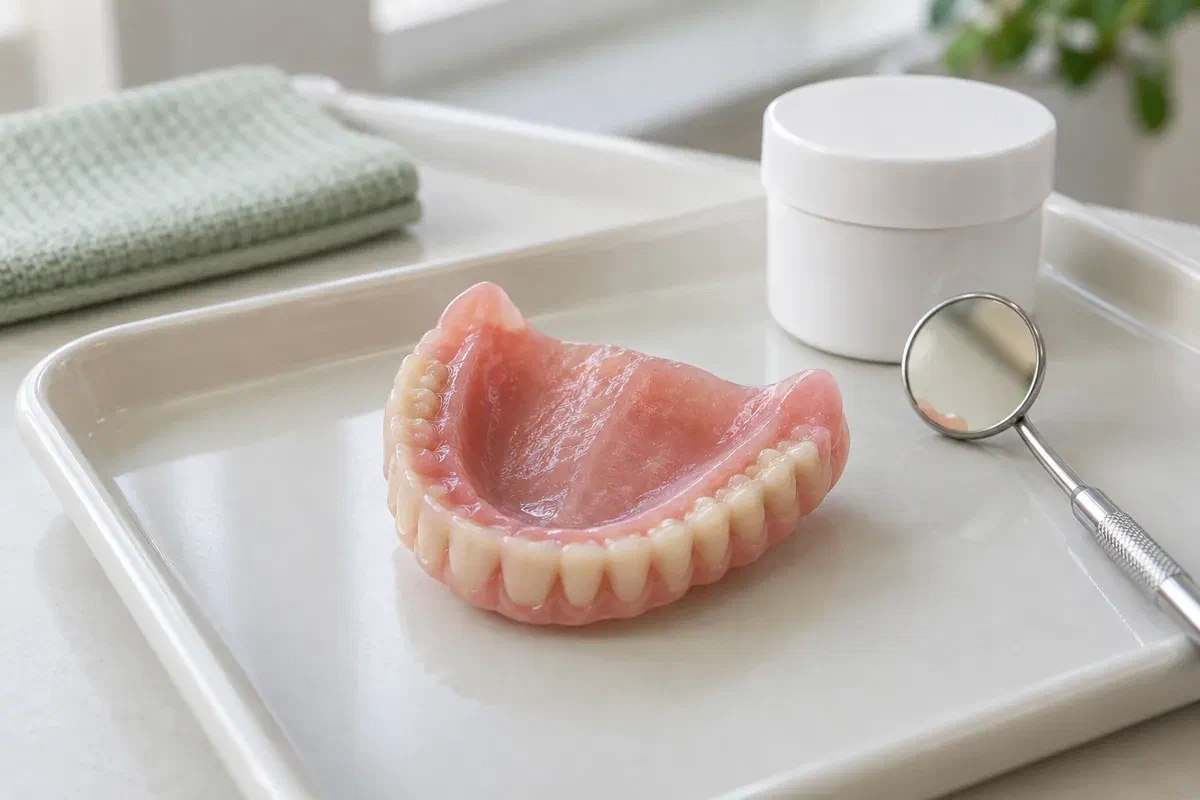
Assessment looks at the support beneath the denture, how it behaves in use and the health of the gums. The same complaint can lead to a different plan for different people, so details from home are valuable.
Note whether the denture moves during chewing, conversation or opening wide. Looseness tied to one activity can have a separate cause from a denture that never feels secure.
Extractions and healing can alter the ridges a denture rests on. Ask how the current stage of healing affects whether a reline makes sense now or later.
Food collecting under the base, or a spot that looks irritated, is worth reporting even if the appliance seems intact. The dentist can check the surface, edges and other features.
Please arrange an examination before trying a home reline product or using much more adhesive. Those can make the denture feel firmer for a while while hiding whether it still fits the mouth properly.
Where the base, bite and teeth remain in good order, renewing just the fitting surface can be a measured way to respond to gums that have changed. That is often easier to adjust to than an entirely new denture, though the expected benefit should be explained using what the dentist finds.
There are things relining will not do. It leaves worn teeth worn, does not redesign every edge and cannot make a cracked or fragile base dependable. Ask which problems are likely to improve and which would still need attention, so expectations at home are realistic.
Patient information: Canadian Dental Association — dentures
The work focuses on the surface that touches the gums. Understanding that helps the family judge whether it suits the slipping, soreness or food trapping you have seen.
If the current teeth and their arrangement still work, they can usually be kept. Tell us what the wearer likes about the denture, as well as what bothers them.
During healing, an interim lining with a later review may be discussed. Ask whether the material and timing are meant to be temporary or suited to a mouth that has settled.
The method and number of appointments depend on the appliance, the gums and the lining material. Before treatment begins, the wearer and any helper should understand the steps, any time without the denture and the follow-up arrangements.
Come with the denture and explain when the trouble began. Recent extractions, earlier relines, sore spots, changes in diet and adhesive use all help shape the examination.
The dentist checks the tissues, the base, the teeth and the bite to see if the mouth is ready and the appliance still suitable. An adjustment, rebase or replacement is considered where relevant.
We discuss the lining type, any impressions and whether a laboratory is involved. Ask how the denture will feel afterward, when it can be worn and how meals might be managed in the meantime.
After the work, fit and tooth contacts are checked in the mouth and care instructions are given, ideally to whoever helps with cleaning. Keep the review appointment and report any pressure or movement that appears.
Care depends on the lining used and on the gums. Ask for instructions specific to this denture, and include anyone who helps with daily cleaning, rather than assuming old products are still suitable.
Some linings need particular care. Ask which brush, cleanser, soak and storage method are safe, and have the team show the wearer or helper how to clean without damaging the surface.
Watch for new pressure, rocking, sore spots or a change in how the teeth meet, and note when it happens. Avoid pressing on a sore area or trying to trim the lining at home.
Routine oral examinations still matter after a reline. The clinician can advise when the denture and gums should be checked again, particularly if healing or other changes continue.
The most useful questions link the proposed lining to the wearer’s denture and daily life. Ask what should change, how appointments will run and what care is needed afterward.
At our Bronte Street practice, we can examine a denture that has loosened or started to hurt, checking how it is supported, how the teeth meet and the health of the gums before explaining whether a reline or another step is the better option.
If you can, jot down the denture’s age, any earlier linings or repairs and the changes you have seen at meals.
