It lifts while eating or talking
Tell us whether the denture moves when you chew, say certain words or open wide. Movement linked to one activity may stem from a different cause than a general wobble.


Timing a reline well matters when you rely on one denture for every meal and conversation. From Campbellville, you can have the fit assessed and plan treatment for a week that suits your household.
When you only have one denture, the worry is simple: what will I eat, and who will I see, while it is being worked on? For a household outside town with chores, family visits and errands to fit in, knowing the plan ahead makes a real difference.
A reline places a new layer inside the existing base so it rests more closely on gums that have changed, without altering the teeth or the outer shape. Depending on the material, it may be done during one appointment or involve impressions sent to a laboratory. It also cannot correct worn teeth or a failing base, so those are examined before any timing is settled.
Start by telling us how the denture behaves, where it is tender and what your next few weeks look like. After the examination, the dentist explains whether relining suits you, which method is likely and how long you may be without the appliance, so you can choose a sensible time.
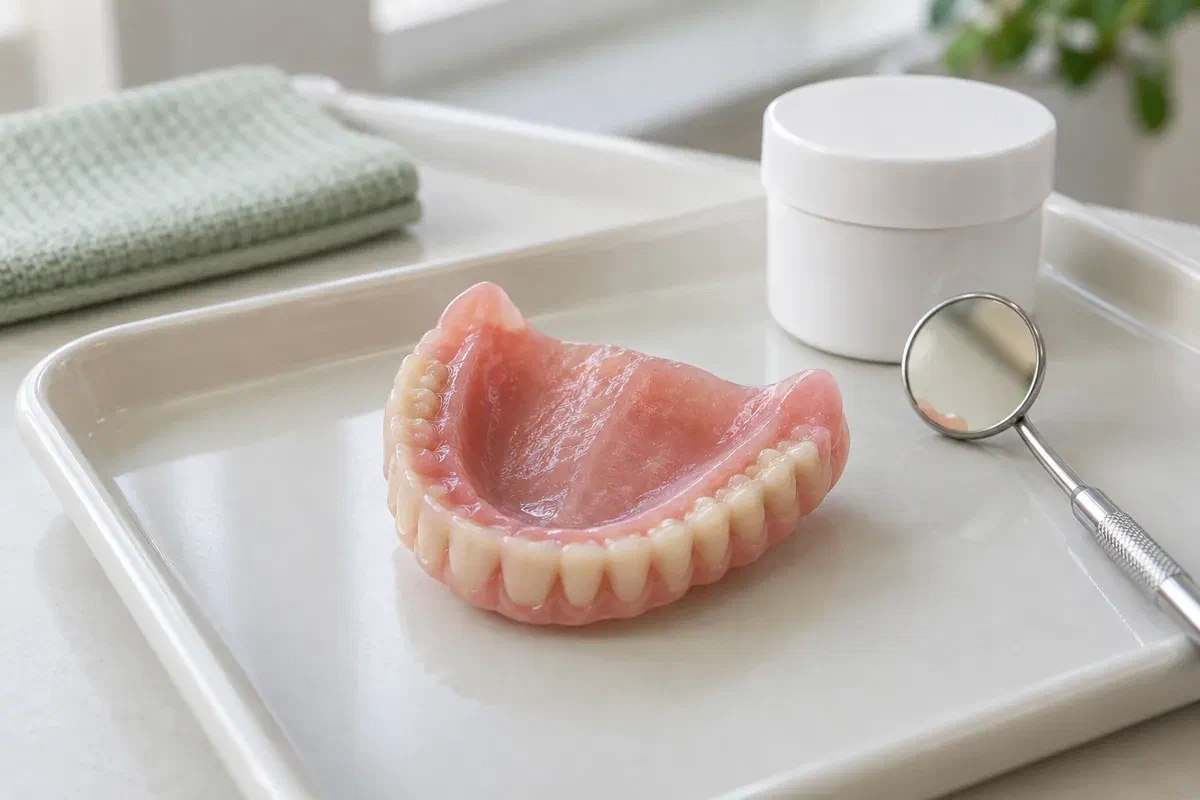
Rural routines make it tempting to wait. A fit review considers how the denture is supported, how it behaves in use and the health of your gums, because the same looseness can need different solutions.
Tell us whether the denture moves when you chew, say certain words or open wide. Movement linked to one activity may stem from a different cause than a general wobble.
After extractions, the ridges under a denture continue to reshape for a while. Ask how that affects whether a reline should happen now or once things have settled.
Trapping or irritation is worth reporting even if the appliance looks undamaged. The inner surface, borders or some other feature could be involved.
Waiting it out with more adhesive or a home liner is understandable but not ideal. Those can hide the problem and leave the bigger question, whether the denture still suits you, unanswered.
If the base, bite and teeth are still serviceable, renewing the fitting surface can address changed gums while you keep an appliance you are already comfortable with. The dentist should explain the expected benefit using what is found in your mouth.
Keep the limits in view too. A reline does not replace worn teeth, rebuild every edge or make a weakened base reliable. Ask which issues should improve and which would remain, so the time you set aside is well spent.
Patient information: Canadian Dental Association — dentures
The lining addresses where the denture meets your gums. That helps you judge whether it matches the movement or soreness that is bothering you.
If the current teeth and their layout still work, they normally stay. Let the clinician know what you would keep, as well as what you hope to change.
During healing, an interim material and a later reassessment may be suggested. Ask whether the plan is temporary so you can schedule future trips early.
The number of visits depends on the lining, your tissues and the appliance. Before work begins, you should know the steps, the time without your denture and when it will be reviewed.
Arrive with the denture and describe when the looseness began, any recent extractions, past relines, sore areas and your adhesive use. Mention dates that would be awkward to be without it.
The dentist checks whether your mouth is ready for treatment and the appliance still suitable. Relining is compared with adjusting the denture, rebasing it or making a replacement.
We discuss chairside or laboratory options, the material and any impressions. Ask how long the denture would be away and whether the review can be grouped with other household appointments.
Fit and contacts are checked in your mouth and cleaning guidance is given. Keep the follow-up, and call before driving in if a problem appears so we can advise whether to come straight away.
Instructions depend on the lining and your gums. Ask what this appliance needs rather than assuming your usual cleanser or soak is still suitable.
Some linings are delicate. Ask which brush, product, soaking time and storage method to use, and ask for a quick demonstration so you can clean the surface confidently at home.
Write down any pressure, rocking or change in your bite and when it happens. Do not keep pushing on a sore area or try to cut back the lining yourself.
Regular oral examinations still matter after a reline. Your clinician can suggest when the denture and gums should be reviewed, and booking early makes it easier to fit in.
Useful questions link the lining to your denture and your week. Ask what should improve, how the appointments are arranged and what care follows.
Our Bronte Street practice can examine a denture that rocks or rubs, review its support, teeth and bite, and recommend a reline or other correction at a time that works for you.
Mention any earlier linings or repairs and dates when being without the denture would be difficult.
