It tips when you close or chew
Notice whether movement starts as the teeth touch, while you speak or when you open wide. A denture that tips only on closing may point to the bite as much as the fit.


Sometimes a denture feels off because the teeth no longer meet evenly, not because the fit has slipped. If you are coming from Erin, we can sort out which it is and whether a reline belongs in the plan.
You close your mouth and the back teeth on one side touch before the rest. Then the whole denture tips slightly. It is hard to tell from the inside whether the base has loosened or the teeth themselves are meeting unevenly, and the answer changes what will help.
A reline deals with the first possibility. It renews the surface inside the denture so the base sits more closely on gums that have changed, while the teeth stay exactly where they are. If uneven contact comes from worn or poorly arranged teeth, a new lining alone may not correct it, and sometimes the two problems overlap.
That is why the visit starts with careful observation. Describe how your teeth come together, when the denture moves and where it feels sore. The dentist then examines the fit and the bite separately and explains whether relining, a bite adjustment, a rebase or a new denture would address what you are feeling.
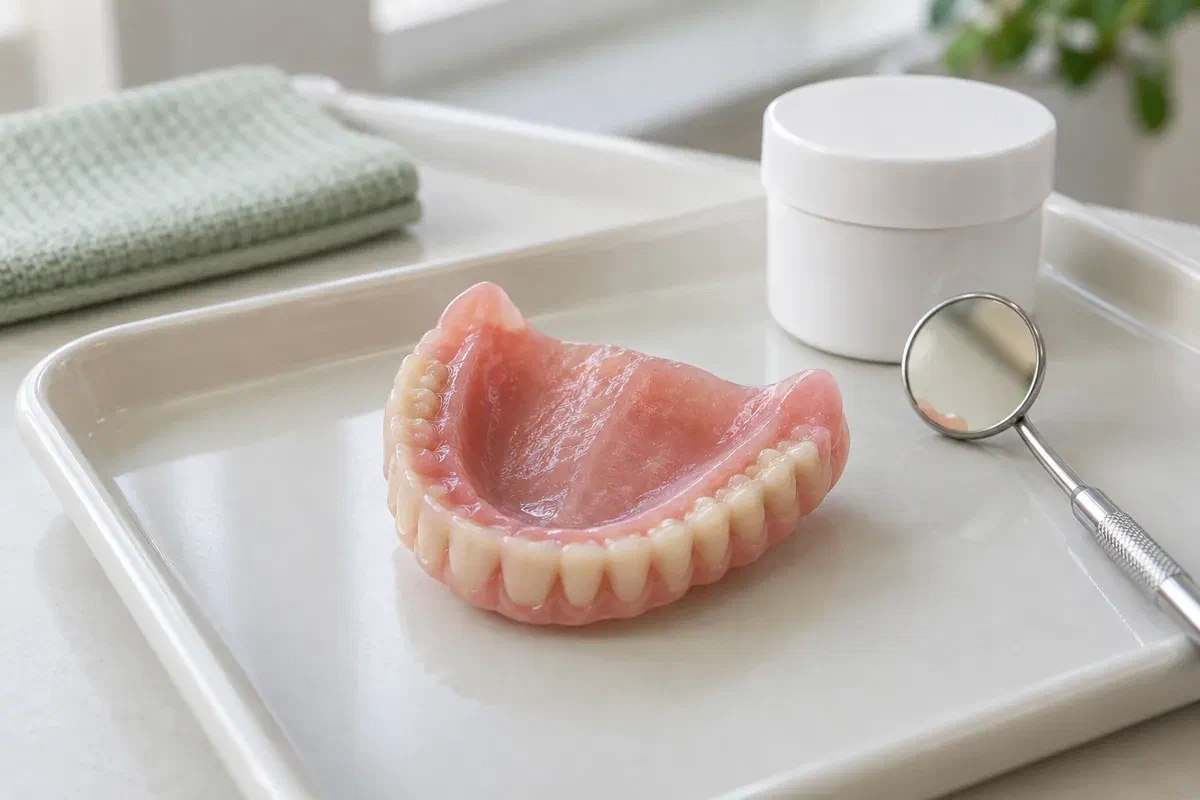
A careful review looks at the support beneath the base, how the denture responds to chewing and closing, and the condition of the tissues. Similar sensations can come from quite different causes.
Notice whether movement starts as the teeth touch, while you speak or when you open wide. A denture that tips only on closing may point to the bite as much as the fit.
As healing reshapes the ridges, a denture can settle differently and alter how the teeth meet. Ask how your stage of healing affects whether a reline makes sense now.
Food under the base or soreness on one side may be linked to either problem. Mention it even if the denture looks fine, so the surface, borders and contacts can all be checked.
Please resist evening out the feel with extra adhesive or a home liner. Both can shift how the teeth meet and make it harder to tell which problem you actually have.
If the teeth, base and arrangement are still in good order, renewing the fitting surface can let the denture sit more closely again, which may help it stay steadier when your teeth meet. The dentist should explain what improvement to expect from your examination.
A reline will not, by itself, rebuild worn teeth or rearrange a set that meets poorly. It also does not repair a weakened base or reshape every border. Ask which of your concerns it should address and whether the bite will need its own attention.
Patient information: Canadian Dental Association — dentures
A reline targets the surface against your gums. Understanding that helps you see whether it matches the tipping you feel or whether the bite also needs work.
When the current teeth look right and meet reasonably well, they are generally kept. Tell the clinician what feels right about them as well as what bothers you.
If healing is ongoing, the plan may include an interim lining and later review of both fit and bite. Find out whether the chosen lining is a short-term measure or expected to last.
The approach depends on the appliance, your tissues and the lining considered. You should know the planned steps, any time without the denture and how the result will be reviewed.
Arrive with the denture and explain when the tipping started and which side feels it. Mention extractions, previous relines, sore spots and how much adhesive you use.
The dentist looks at the gums, the condition of the base, the wear on the teeth and how they come together. Relining is weighed against bite adjustment, rebasing and replacement.
If relining suits you, you will discuss the lining type, impressions and any laboratory work. Ask how the denture may feel afterward and what will happen to the existing tooth contacts.
Fit and contacts are checked once the lining is in place, and you receive care instructions. Keep the follow-up and report tipping, pressure or a bite that feels different.
Care depends on the material and the state of your gums. Ask what this denture needs now rather than assuming your old routine still suits it.
Some linings are softer or more porous. Ask which brush, cleanser, soaking method and storage container are safe, and get a short demonstration before you leave.
Keep track of pressure, rocking or any change in how the teeth come together, and when it happens. Avoid grinding to test it, pressing on sore spots or altering the lining.
Routine oral examinations continue after a reline. Your clinician can tell you when to have the appliance and tissues looked at again, particularly while things are still changing.
The most helpful questions tie the proposed treatment to your denture and how it feels when you close. Ask what should change, how visits will run and what care follows.
A denture that tips, rubs or feels uneven is worth a proper look at our Bronte Street practice. We examine the support, the teeth and the way they meet, and then explain whether a reline or a different correction would help.
Tell us which side feels uneven and about any earlier linings or repairs.
