It rocks with chewing or speech
Let us know whether it moves while eating, speaking or opening wide. A denture that lifts during one activity can have a different issue from one that feels unsteady all the time.


Relining a denture can mean time without it and a follow-up check, so the trip deserves planning. From Etobicoke, we can help you organize an assessment, a reline if it suits you and a sensible review.
The first question people from farther away tend to ask is practical: how many times will I need to come, and will I leave without my teeth? Those are fair concerns, and the answers depend on what the examination shows and which method is used.
A reline renews the surface inside the denture that sits against your gums, so it can follow tissues that have changed. The teeth and the outer shape are kept. Some linings are completed at the chair, while others need impressions and laboratory time. A reline cannot correct a worn bite or a damaged base, so those are checked first to avoid a wasted journey.
When you call, describe how the denture moves, whether you have sore areas and how long it has been loose. That helps us prepare. At the appointment, the dentist examines the appliance in your mouth and explains whether relining is likely to help, what the visits would look like and what alternatives exist.
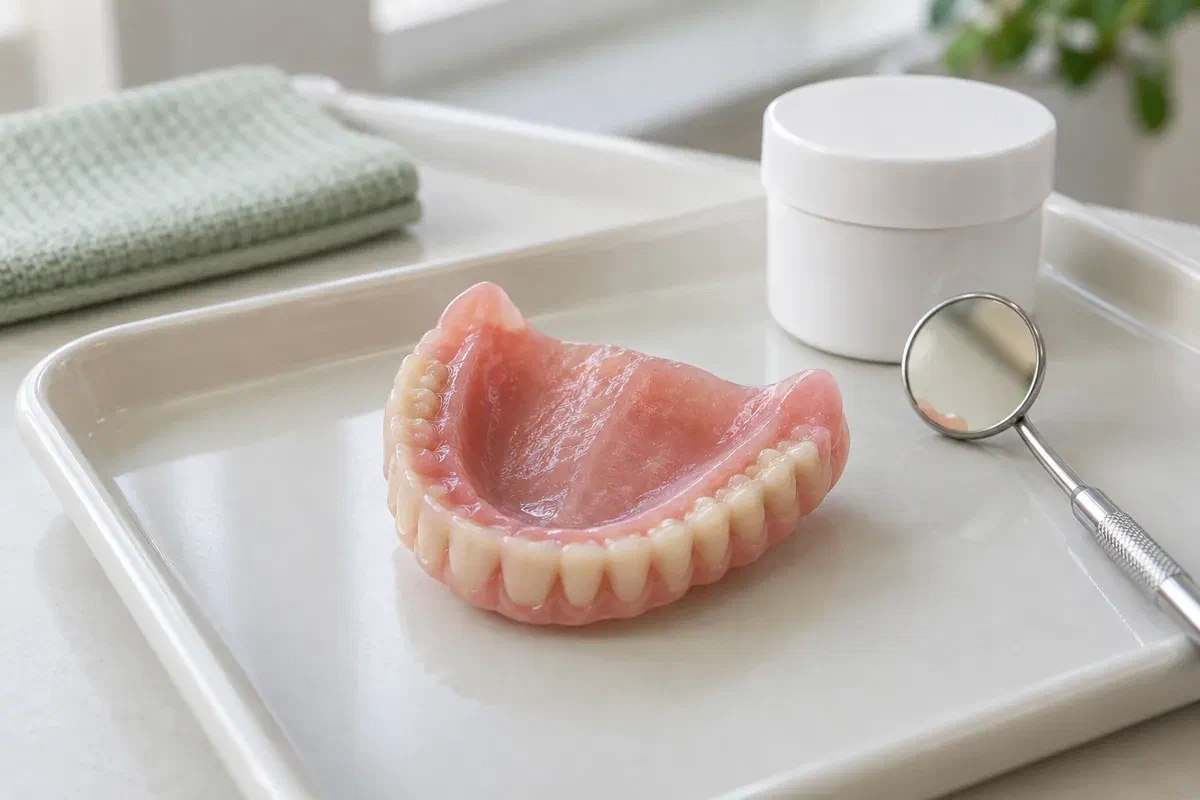
A fit review weighs where the denture is supported, how it behaves in daily use and whether the gums are healthy. Sharing details beforehand helps make the most of your time in the chair.
Let us know whether it moves while eating, speaking or opening wide. A denture that lifts during one activity can have a different issue from one that feels unsteady all the time.
Healing tissues change shape, which can loosen a denture made around the time of extractions. Ask whether a reline would be timely now or more useful after further healing.
Food creeping under the base or a newly irritated area matters even if the denture looks fine. The fitting surface, borders or another feature may be part of the cause.
Please let us examine the appliance before you add a home liner or more adhesive. Those may disguise the issue without showing whether the denture remains suitable, and they can complicate a planned reline.
If the bite, base and teeth are still in good condition, renewing only the fitting surface can deal with changed gums while keeping an appliance you know. The likely benefit should be explained using the findings in your own mouth.
Relining has limits that are worth hearing before you plan travel. It does not replace worn teeth, reshape every edge or turn a weakened base into a reliable one. Ask which concerns should improve and which may need other treatment later.
Patient information: Canadian Dental Association — dentures
The reline addresses the surface that contacts your gums. Knowing that helps you judge whether the trip is aimed at the movement or soreness you actually experience.
When the teeth and their arrangement suit you, they can be retained. Tell us what you are happy with as well as what you would like changed.
During healing, an interim lining followed by review may be suggested. Ask whether the material and schedule are temporary so you can plan future trips.
The number of appointments depends on the method, your tissues and the denture. Ask before booking how long the appliance may be away and when the review should happen, so you can arrange time off and transport.
When booking, mention how long the denture has been loose, recent extractions, previous relines and any sore areas. Then arrive with the appliance and a note of the adhesive you use.
The dentist checks your gums, the base, the teeth and the bite to decide whether relining fits. Adjustment, rebasing and replacement are considered at the same time so you are not asked to return just to compare.
We discuss the lining type, records and any laboratory step, and how that affects time without the denture. Ask how it may feel afterward and what limits to expect.
Fit and contacts are checked in your mouth before you leave, along with care instructions. Book the follow-up for a time that suits your travel and report problems that develop afterward.
Care depends on the lining and your gums. Because you live farther away, it helps to leave with clear instructions for this appliance and a sense of which problems should prompt a call.
Some liners need gentle treatment. Ask which brush, cleanser, soak and storage method are safe, and have the team show you how to clean the surface without wearing it.
Write down pressure, rocking or a shift in your bite and when it appears. Calling with those details helps us advise you. Avoid testing a sore spot or trimming the lining yourself.
Severe pain, swelling or an injury from a broken denture may need prompt care closer to home. Routine reviews and examinations still matter, and we can help you plan them.
Ask how the lining relates to your own denture, how the appointments will be arranged and what to do afterward if something feels wrong.
Our Bronte Street practice can assess a denture that slips or rubs, look at the gums, teeth and bite, and lay out a plan that keeps your visits to a sensible number.
It helps to know the denture’s age, past linings or repairs and any recent change ahead of time, so we can prepare for your visit.
