Movement during meals or speech
Tell us whether it shifts when you bite, form certain sounds or open wide. Movement in one situation may have another cause than a denture that feels loose throughout the day.


Hard or soft? Chairside or laboratory? Choosing how to reline a denture raises real questions. Visitors from Mississauga can have the fit assessed and talk through which approach, if any, suits their appliance.
Someone told you a soft reline would feel nicer. A friend had theirs sent to a lab. Now your own denture is loose and you are not sure which version applies to you. That confusion is common, and it usually clears once the reason for the looseness is understood.
In every version, relining puts a new fitting surface inside the existing base so it can follow the gums more closely. The teeth and the visible shape are kept. What differs is the material and method, and those choices depend on your tissues, the appliance and whether your mouth is still healing. No lining can correct a worn bite or a failing base on its own.
So the visit begins with what you notice. Describe when the denture moves, which areas feel tender and whether you have been reaching for more adhesive. After examining the appliance in your mouth, the dentist can explain whether relining fits and, if so, why one material is preferred.
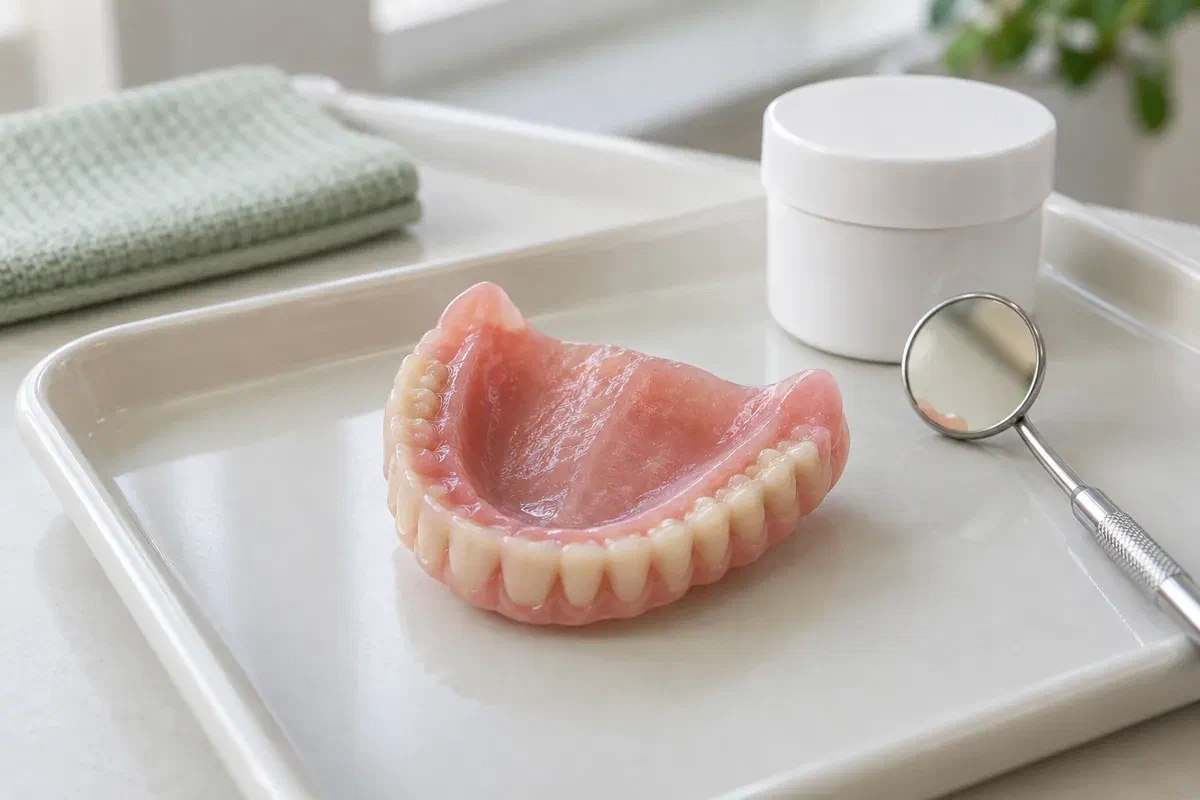
A fit review considers where the denture gains support, how it behaves while you use it and whether the tissues underneath are healthy. Two people with the same complaint can leave with different recommendations.
Tell us whether it shifts when you bite, form certain sounds or open wide. Movement in one situation may have another cause than a denture that feels loose throughout the day.
A denture made around the time of extractions may loosen as healing continues. Ask how that stage affects the choice of an interim or longer-term lining.
Food sneaking under the appliance or a newly sore patch deserves attention even when nothing looks broken. The fitting surface, the borders or another feature may be involved.
An examination should come before any lining is chosen. Home kits and heavier adhesive use can disguise the looseness without showing whether the denture is still suitable.
If the teeth, bite and base still serve you, a renewed fitting surface can be a precise way to address gums that have changed. The improvement to expect, and why a given material was chosen, should be explained using your own findings.
Relining also has clear edges. It does not restore worn teeth, redesign the borders completely or make a damaged base reliable. Ask which of your concerns should improve and which would still need another solution.
Patient information: Canadian Dental Association — dentures
The work is concentrated on the surface that touches your tissues. Seeing it this way helps you decide whether it addresses the specific slipping, soreness or trapping you feel.
When the teeth and their arrangement still suit you, they normally remain. Share what you appreciate about the denture alongside what you would like improved.
Interim and longer-term materials serve different purposes. Ask whether the lining being proposed is for a healing phase or intended for a mouth that has largely stabilized.
The steps and appointment pattern vary with the method. Some linings are placed in the chair while others involve impressions and laboratory time, so ask how long the denture would be away and how it will be reviewed.
Arrive with the denture and explain when the problem began. Mention recent extractions, earlier relines, tender areas and how much adhesive you have been using.
The dentist checks whether your gums are ready and whether the base, teeth and bite are still suitable. Relining is compared with an adjustment, a rebase or a new denture.
You will discuss soft or harder materials, chairside or laboratory work and any records needed. Ask how each may feel, when you can wear the denture and what limits to expect.
The fit and contacts are checked in your mouth, and you receive cleaning guidance for that material. Return for the planned review and report pressure or movement that develops later.
Your routine should match the material that was placed and the condition of your gums. Ask for instructions for this appliance rather than reusing every product you relied on before.
Soft and interim liners in particular may need gentle handling. Ask which brush, cleanser, soak and storage suit the surface, and have the team show you how to clean it safely.
Record new pressure, rocking or a shift in how your teeth meet, and when you notice it. Avoid prodding a tender area repeatedly or trimming the material yourself.
A reline does not end the need for routine oral examinations. Your clinician can tell you when the denture and tissues should be rechecked, especially if they are still changing.
Good questions connect the material and method to your own denture. Ask what should improve, how the appointments work and how to care for the new surface.
Visit our Bronte Street practice to discuss a denture that has become loose or uncomfortable. We will examine its support, teeth and bite, then explain whether relining, and which material, or another fit correction makes sense.
Tell us about any earlier linings, the materials used if you know them, past repairs and recent changes in fit.
