The denture shifts with use
Explain whether it moves while chewing, speaking or opening wide. Movement during one activity can come from a different cause than a denture that never feels quite secure.


What happens after a reline matters as much as the appointment itself. For anyone coming from Rockwood, we explain how a loose denture is assessed, what a new lining feels like and how to look after it.
You get home, sit down to supper and notice the denture feels different. Firmer, perhaps, or a little fuller against the gums. People often wonder whether that is normal and what they should be watching for. Knowing what to expect beforehand makes those first days easier.
A reline renews the inner surface of your existing denture so it fits the gums as they are now. The teeth and outward look are unchanged, but the contact underneath is new, which is why it can feel unfamiliar at first. Relining is only offered after the teeth, the bite and the base have been checked, because it cannot fix problems located elsewhere.
So the process starts well before supper. At the assessment, tell us how the denture moves, where it hurts and how you care for it now. The dentist examines it in your mouth, explains whether relining suits it and talks you through what the weeks afterward should look like.
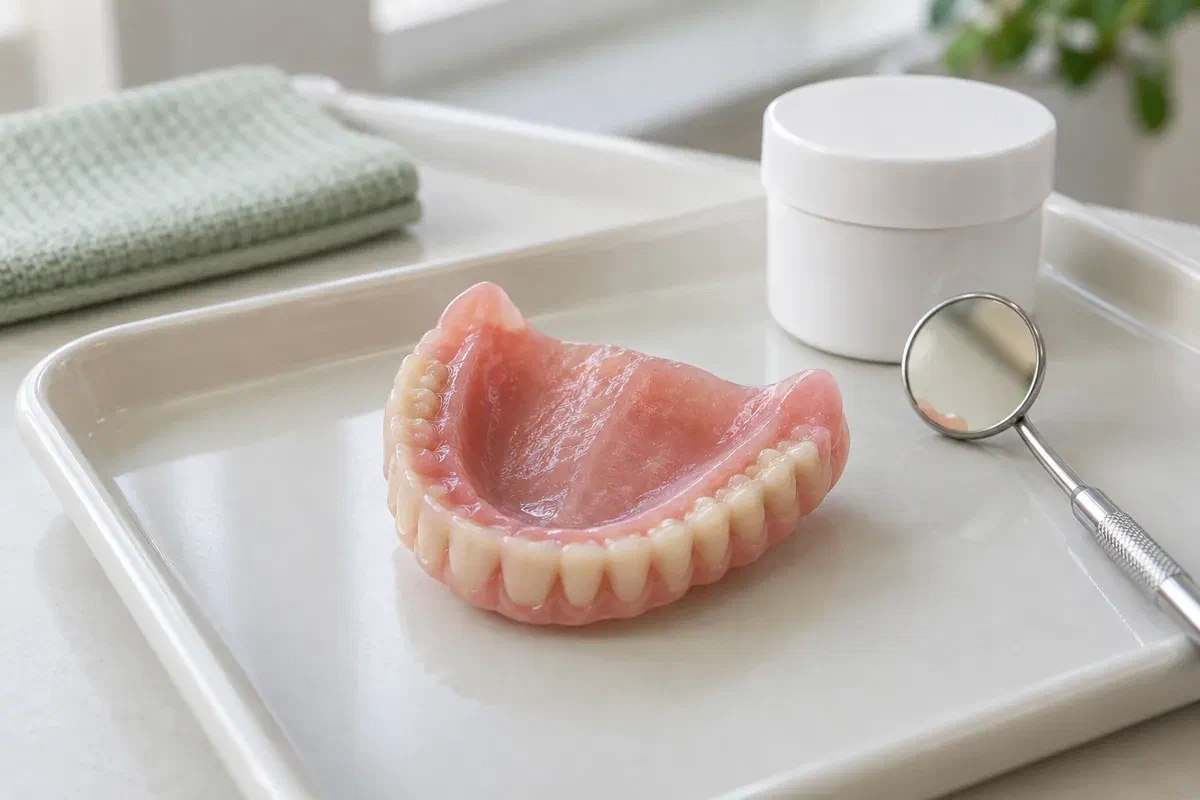
Before any lining is placed, the dentist looks at where the denture is supported, how it behaves and the health of the gums. Similar complaints can still lead to different advice.
Explain whether it moves while chewing, speaking or opening wide. Movement during one activity can come from a different cause than a denture that never feels quite secure.
After extractions, the ridges beneath a denture can keep changing for a while. Ask how your stage of healing influences whether a reline should be done now.
Report food under the base or a newly irritated area even when the appliance looks intact. The fitting surface, borders or another feature may be contributing.
Please have the denture examined before trying a home liner or extra adhesive. Those can conceal the cause and may need to be removed before a professional reline.
If the base, bite and teeth remain suitable, renewing the fitting surface can bring the denture back into closer contact with gums that have changed. The improvement to expect should be explained against what the examination found.
It is equally useful to know what stays the same. Worn teeth remain worn, the borders are not fully rebuilt and a weakened base does not become sound. Ask which concerns should improve, so you know what to look for once the work is done.
Patient information: Canadian Dental Association — dentures
The lining focuses on the surface touching your gums. Knowing that helps you judge, in the weeks afterward, whether it has eased the problem you came in with.
When the current teeth and their arrangement still work, they are kept. Tell the clinician what you value about the denture as well as what you would change.
During healing, an interim lining and later review may be part of the plan. Ask whether the material is temporary and when reassessment is likely.
Every reline is planned around the appliance, the gums and the lining chosen. Ahead of treatment, you should hear what each stage involves, how long you might go without the denture and when the follow-up will happen.
Bring it along and explain when the problem started. Recent extractions, previous relines, sore spots, adhesive use and your current cleaning routine are all useful to mention.
The dentist checks the tissues and the whole appliance. A reline is weighed against an adjustment, a rebase or a replacement, depending on what is found.
Along with discussing the material and any laboratory step, ask how the denture may feel at first, when you can wear it and what you should report.
Fit and contacts are checked before you leave and you receive care instructions. Keep the follow-up, and tell us if pressure or movement appears as you return to normal meals.
How you care for the denture depends on the lining placed and your gums. Ask for instructions specific to this appliance, since some familiar products may no longer be suitable.
Certain liners need gentle products and techniques. Ask which brush, cleanser, soak and storage are safe, and practise cleaning the surface at the clinic before you head home.
The snugger contact may take getting used to. Note any pressure, rocking or bite change that persists, and when it occurs. Avoid testing sore spots or altering the lining yourself.
A reline does not replace routine oral examinations. Your clinician can tell you when the appliance and gums should be checked, especially if healing continues.
The most helpful questions connect the new lining to your own denture and routine. Ask what should change, what to watch for and how to look after it.
Our Bronte Street practice can examine a denture that has loosened or become sore, check its support, teeth and bite, and explain whether a reline or another fit correction suits it.
Let us know about earlier linings, repairs and your current cleaning routine.
