A snapped or cracked base
Do not press the halves together to see if they line up, and keep them apart in a padded container. Let us know whether the denture fell or failed while you were wearing it.


When a denture breaks, the glue in the kitchen drawer can look like the quickest answer. Before reaching for it, call our Milton team from Acton. A proper assessment keeps the pieces aligned and your options open.
It is a very human reaction. The denture snaps, you need it for tomorrow, and there is a tube of strong glue or a drugstore repair kit within reach. The trouble is that even a slight misalignment can change how the denture meets your gums, and household products are not designed for use in the mouth.
Glue also hides information. The dentist learns a lot from clean broken edges: where the material failed, whether the base had been flexing, and whether earlier repairs are involved. Once those surfaces are coated, the assessment and any repair can become more complicated.
From Acton, the better first move is a phone call. Tell our team what broke and whether you have another denture, and we can suggest how to manage for now. At the assessment, the dentist examines the pieces and your mouth, and explains whether a repair is reasonable, whether fit needs attention, or whether replacement is worth considering.
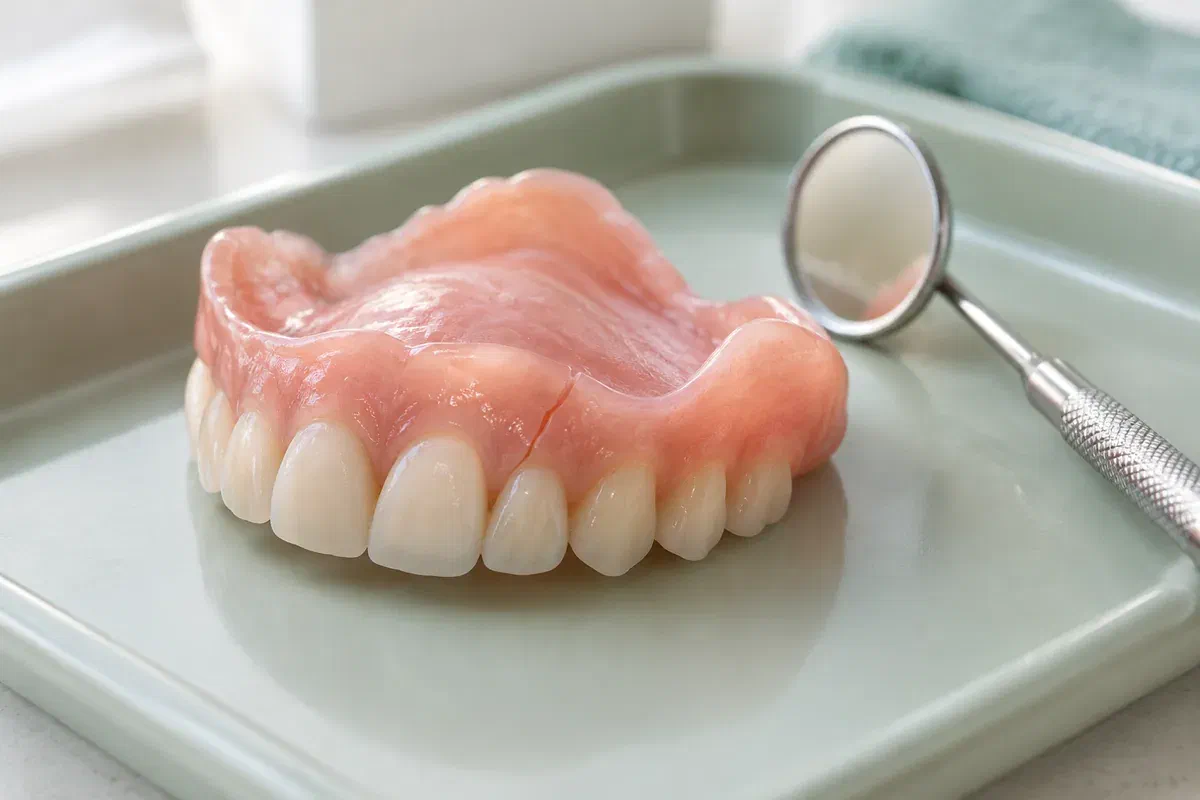
Each type of damage tempts a different home fix, and each is better left for the dentist. Note how the denture was feeling beforehand and what happened at the moment it broke.
Do not press the halves together to see if they line up, and keep them apart in a padded container. Let us know whether the denture fell or failed while you were wearing it.
Pushing the tooth back in with adhesive or glue may set it at the wrong angle. Keep it separately in a closed box so the dentist can judge whether it can be reattached properly.
Straightening a partial denture clasp with pliers can weaken the metal or make it press on a natural tooth. Leave it as it is; the clasp, the tooth, and the fit need to be assessed together.
Please call ahead so we can recommend the right appointment. Repair time depends on the findings and whether lab work is involved, so we cannot promise a same-day turnaround.
A properly planned repair aims to restore the denture’s fit as well as its shape. When the damage is limited and the surrounding appliance is sound, that can return a familiar denture to daily use.
The assessment is also a chance to ask why it broke. If the denture has failed before, the dentist can consider fit, design, or bite forces, and the plan can address those as well as the break.
Patient information: Canadian Dental Association — caring for dentures
A split base, a lost tooth, and a damaged clasp involve different choices. Having the problem explained makes it easier to understand what is proposed and why.
When the appliance is otherwise working well, repair may keep the look and bite you are used to. Mention what you would like to preserve.
Before you leave, find out the purpose of the repair, the limits it still has, and how and when it will be reviewed. A clear follow-up plan is particularly useful if the denture has a history of breaks.
There is no need to decide for yourself whether the denture is fixable. The visit establishes that, considers your mouth as well, and explains the practical arrangements.
Describe the damage, when it happened, whether you have a usable denture, and whether you are in pain. Mention if anything has already been glued, and bring all the parts.
The dentist checks the broken edges and the condition of the appliance. Gums, any natural teeth, and your bite may be examined to uncover problems a repair alone would not fix.
Discuss what the work involves, the cost, how long it may take, and whether it goes to a lab. Ask whether the repair is meant as a long-term answer or a stopgap.
The repaired denture is checked in your mouth for fit and comfort. Keep to the instructions you are given, and book a review if it begins to press or shift.
Once repaired, the denture still needs cleaning every day and a dental check now and then. Ask whether the repair or the cause of the break means anything about your routine should change.
Handle the denture over a towel or a partly filled sink, and use a case when it is out. If your grip has become unreliable, ask the team for an easier removal technique.
A click, a fine line, or a change in how it sits is worth a phone call. The team can decide whether you should be seen promptly.
Gums and natural teeth keep changing. Mention soreness, worn teeth, or using more adhesive at your exams so issues are dealt with together.
These answers explain why home repairs are discouraged and how to manage until the dentist has seen your denture.
Our Bronte Street practice can assess a split base, a lost denture tooth, or a bent clasp. The dentist will review the appliance, set out the realistic repair options, and raise any fit concerns worth handling together.
Call to check availability before you come, and bring every piece clean and unglued in a closed container.
