A fractured base
Tell us whether the denture is in one piece with a crack, or in two or more parts. Try not to flex it, and mention if it broke in a fall or while you were simply wearing it.


Coming from Etobicoke for a denture repair takes some planning. A phone call first lets our Milton team understand the damage, so your visit is well organised and you know when a closer urgent option makes more sense.
A broken denture rarely comes at a convenient time, and a longer journey means you want each visit to be worthwhile. The best way to do that is to describe the damage clearly before you travel: what broke, how, and whether you can still wear the appliance at all.
That conversation also helps sort out urgency. A cracked base with no pain is different from a sharp fragment that has cut your gum or a fall that injured your mouth. For a significant injury, heavy bleeding, or swelling, seeking care nearer to Etobicoke is the sensible first step, and we can help with the denture afterwards.
When you come in, bring the denture, every piece, and any notes on earlier repairs. The dentist will examine the damage, the rest of the appliance, and your mouth, and explain whether repair, a fit correction, or a replacement suits you. We will also tell you plainly how many visits the plan is likely to involve.
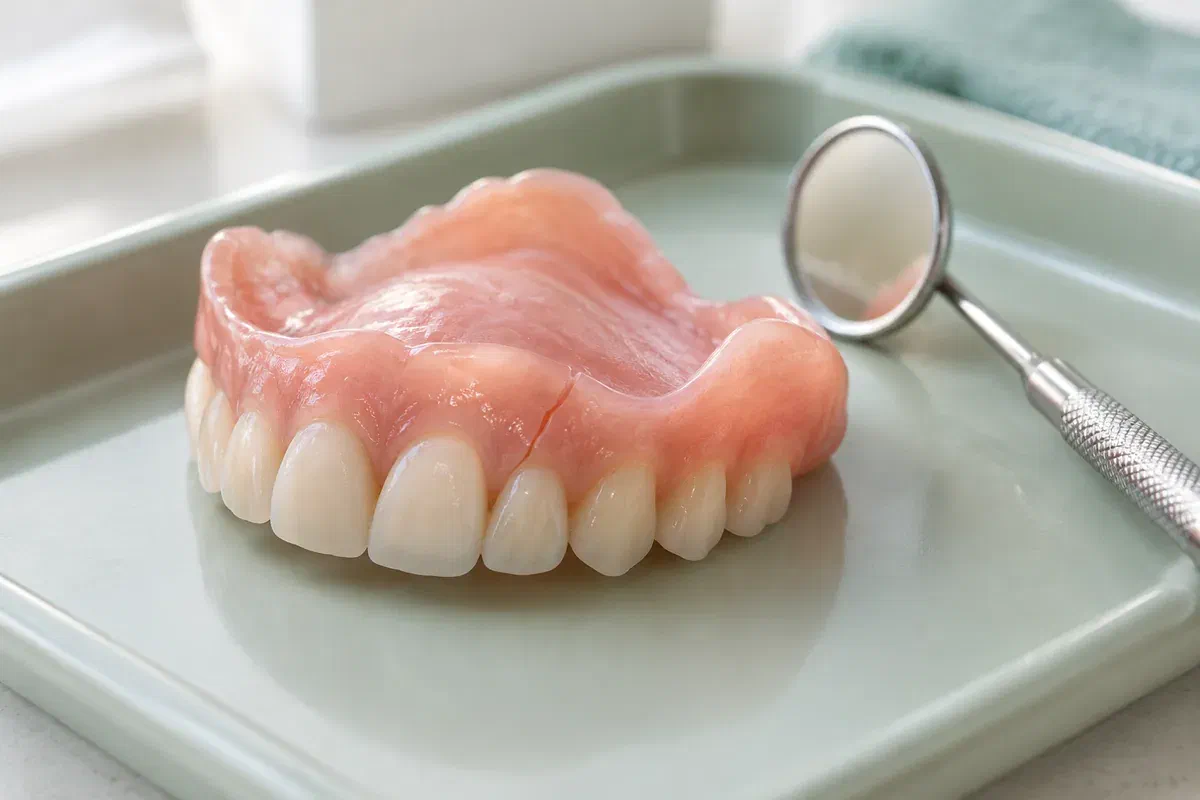
Knowing the type of damage in advance helps the team arrange the right appointment. The dentist will also ask how the denture was fitting beforehand and what happened at the moment it broke.
Tell us whether the denture is in one piece with a crack, or in two or more parts. Try not to flex it, and mention if it broke in a fall or while you were simply wearing it.
Say how many teeth came off and whether you have them. Pack them in a small container with a lid so they travel safely. The dentist will decide if they can be reused.
On a partial denture, describe how the appliance sits now and whether a natural tooth feels sore. Leave the clasp alone instead of bending it; it needs to be assessed with the tooth and fit.
Please call before you travel so we can advise on the appointment. Timing depends on what the assessment finds and whether lab work is needed, so we cannot promise a same-day result.
When the damage is contained and the rest of the denture is sound, a repair can return a useful appliance to service. The dentist checks the condition around the break so the repair has a solid foundation.
Looking at fit, design, and bite during the same visit can also prevent a second trip for a related problem. If your denture has broken before, say so, because a pattern often points to a cause worth addressing.
Patient information: Canadian Dental Association — caring for dentures
Base fractures, lost teeth, and clasp damage each lead to different decisions. Understanding yours helps you follow why a certain approach is recommended.
A repair may preserve the tooth arrangement you are comfortable with when the rest of the denture still works. Tell the dentist what you would like to keep.
Ask what the repair should achieve, what it will not change, and when it should be reviewed. If travel is a factor, ask whether a check can be combined with another visit.
You do not need to know whether the denture is repairable before calling. The assessment answers that, looks at your mouth too, and lays out the timing so you can plan around it.
Share when it happened, whether you have any denture to wear, and any pain or injury. The team can suggest which appointment fits and what to bring.
The dentist examines the damaged part and the rest of the appliance, and checks your gums, remaining teeth, and bite where relevant, to catch issues a repair would not resolve.
Review the repair or alternative, the cost, the timing, and any lab involvement. Ask how many visits are likely and whether the repair is lasting or interim.
The repaired appliance is checked for comfort and function. Follow the care advice, and call if it starts to press, rock, or feel different after you get home.
A repaired denture needs daily cleaning and regular checks like any other. Ask whether the repair or the reason for the break means anything should change in your routine.
A folded towel or a basin of water makes a slip far less likely to cause damage. Travel with the denture in a hard case, and ask for help with removal if it has become difficult.
If you notice clicking, a new line, or a difference in fit, call before making the trip. The team can tell you whether it needs prompt attention or can wait for a planned visit.
Your mouth changes separately from the denture. Mention sore spots, worn teeth, or increased adhesive use, so problems are handled together rather than one trip at a time.
A longer trip raises practical questions. These answers help you decide when to travel, what to bring, and when to seek closer care.
Phone our Bronte Street clinic about a cracked base, a lost denture tooth, or a damaged clasp. After hearing what happened, we can arrange an assessment, explain the repair options, and address fit concerns in the same visit where that is possible.
Always call ahead before making the trip, and bring every saved piece packed in a hard case, without glue.
