A crack along an old repair line
A fracture that follows or runs beside a previous repair suggests that area is carrying strain. Avoid pressing on it to check, and tell the team roughly when the earlier work was done.


Has your denture been mended before, only to give way again in a familiar spot? Close to Old Milton, our team looks at the latest damage and the history behind it, so the next step is based on the whole appliance rather than one crack.
Plenty of people around Old Milton have worn the same denture for years. Over that time it may have been mended once or twice, and each repair felt like the end of the matter. Then the base cracks near the old line, or a tooth beside a previous fix lets go, and the question becomes whether another repair is still the sensible choice.
Repeated damage is worth treating as a clue. The acrylic may be ageing, the denture may no longer rest evenly on your gums, or your bite may be loading one area more than it should. A repair that only rejoins the pieces can leave those forces untouched.
Our Bronte Street practice is close to Milton’s historic downtown. Bring the denture, any loose pieces, and whatever you remember about earlier repairs. The dentist will look at the current damage, the condition of the rest of the appliance, and the fit, then explain whether repair, a fit correction, or a fresh start is the more reasonable path.
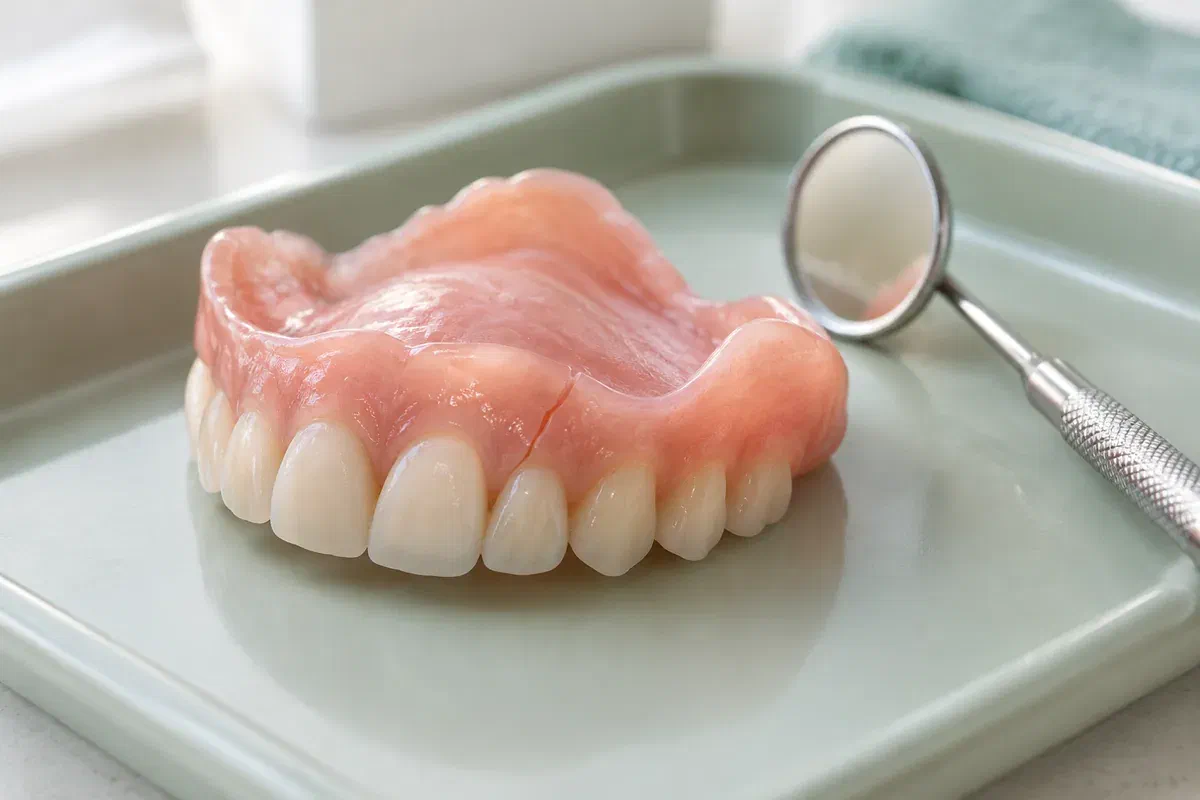
The damage you can see is where the conversation begins. How the denture had been feeling, where earlier repairs sit, and what you were doing when it failed all help the dentist read the situation.
A fracture that follows or runs beside a previous repair suggests that area is carrying strain. Avoid pressing on it to check, and tell the team roughly when the earlier work was done.
Save the detached tooth in a small closed box. The dentist will check its condition and the acrylic around the gap to see whether the original can be reattached as part of a sound repair.
When a clasp bends or breaks, the partial may sit differently on your natural teeth. Leave it as it is rather than reshaping it; the metal, the tooth it holds, and the intended fit need to be assessed together.
Please call before you come in so we can advise on timing. Some repairs involve a dental laboratory, and the length of the process depends on what the dentist finds.
Fixing a well-defined area of damage can keep a good denture in service. That only makes sense, though, when the base and teeth around the break are still sound enough to support the work.
If this is not the first repair, say so. The dentist can consider whether wear, fit, or the way your teeth meet is part of the reason, and the plan may include more than the break itself.
Patient information: Canadian Dental Association — caring for dentures
A broken base, a lost tooth, and a damaged clasp lead to different choices. Having the dentist show you what has happened makes it easier to weigh the suggested approach.
If you are comfortable with how the denture looks and feels, a repair may keep that familiar arrangement. Mention the features that matter most to you so they shape the recommendation.
Ask what the repair is meant to achieve, what it cannot change, and when it should be checked again. For an appliance with several repairs behind it, that follow-up plan is especially valuable.
You can contact us before knowing whether the denture can be saved. The visit is there to work that out, look at your mouth as well as the appliance, and set out the practical arrangements.
Let the team know when it broke, whether you can still wear a denture, and whether anything hurts. Bring the appliance, the pieces, and any dates or details of earlier repairs.
The dentist inspects the damaged area and the rest of the appliance. Your gums, any remaining teeth, and your bite may also be checked, so underlying problems are not overlooked.
Talk through the proposed work, cost, timing, and whether a lab is needed. Ask plainly whether the repair is expected to hold for the longer term or is meant to bridge you to another plan.
A repaired denture should be checked for how it sits and functions, not just how it looks. Follow the care advice, and come back if you notice rubbing, rocking, or pressure.
Once repaired, the denture still needs daily cleaning and regular checks. Ask whether the repaired area or the cause of the break means anything should change in how you handle it.
Handle and clean the denture over a towel or a partly filled basin, and use a case when it leaves the house. If your grip has become less steady, ask the team for a simpler way to take it out.
Check now and then for fine lines near the repair. If you notice clicking, a new mark, or a change in fit, call so the dentist can decide how soon to see it.
Your gums and remaining teeth change over the years even when the denture does not. Mention sore spots, worn teeth, or reaching for more adhesive at your exams, rather than waiting for the next break.
Long-worn dentures raise their own questions. These cover what to do right away and how to think about an appliance that has already been mended.
Contact our Bronte Street practice about a cracked base, a missing tooth, or a damaged clasp. We will examine the denture, explain your repair options, and flag any fit concerns worth handling at the same time.
Call ahead to check availability, and bring every piece you saved, kept together and free of glue.
