A crack in a denture that was moving
Fractures often start where the base flexes most. Avoid bending the denture to check, and describe how it had been moving before it cracked, along with whether it was dropped.


More adhesive each morning, a click when you talk, and then one day a crack. For anyone in Puslinch whose denture loosened before it broke, our Milton team looks at the fit as well as the damage before recommending a repair.
Plenty of denture fractures are not accidents. For months the appliance may have been creeping out of place, needing a little more adhesive, or tipping when you bit into an apple. Each of those movements flexes the acrylic, and eventually a crack forms or a tooth lets go.
That history changes what a sensible repair looks like. Mending the visible damage on a denture that still rocks may leave the same strain in place, so the dentist will want to understand how it has been fitting, not only where it broke.
From Puslinch, call our Bronte Street practice and mention any loosening you had noticed. Bring the denture and every fragment to the assessment. The dentist will examine the appliance, your gums, and your bite, then explain whether a repair, a repair with a reline or adjustment, or a new denture fits the situation.
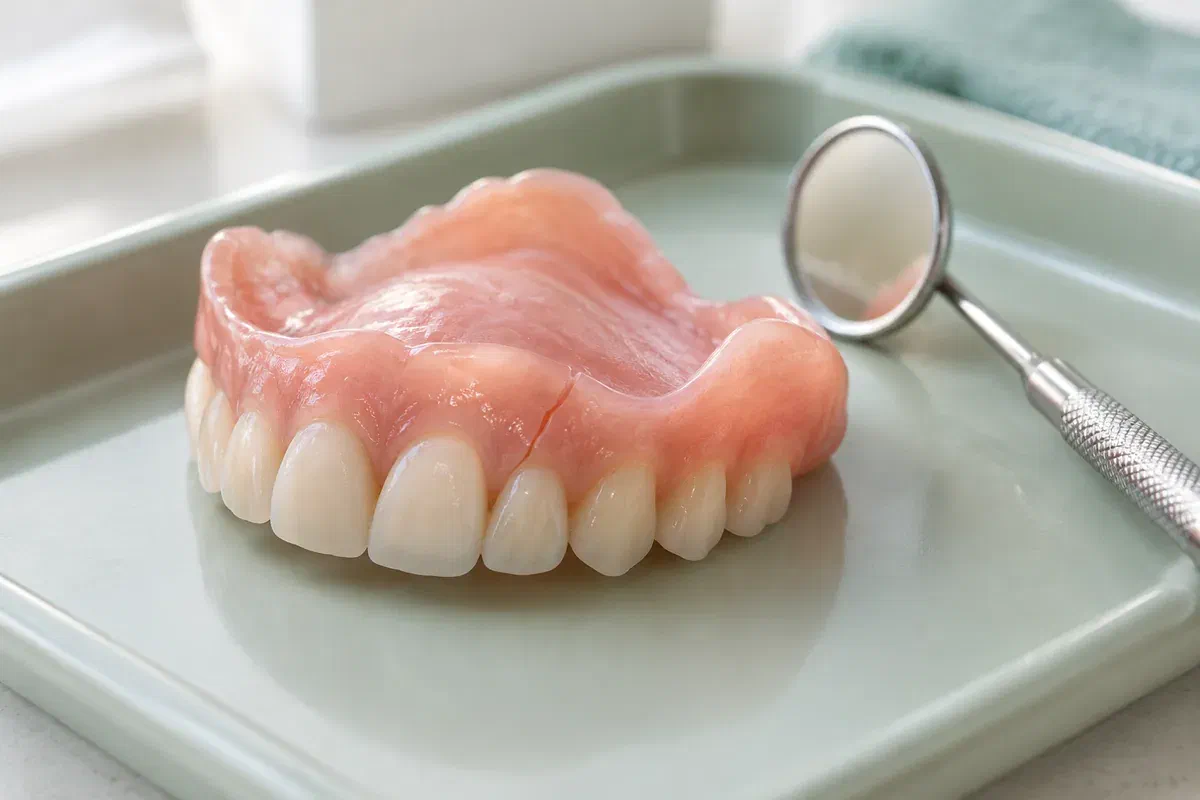
Along with the break itself, the dentist will ask how long the denture has felt loose, whether you have been using more adhesive, and what you were doing when it finally failed.
Fractures often start where the base flexes most. Avoid bending the denture to check, and describe how it had been moving before it cracked, along with whether it was dropped.
A rocking denture can stress the bond around individual teeth. Keep any that come away in a closed container, and the dentist will see whether they can be secured again.
On a partial, a bent or worn clasp can let the appliance shift, and shifting can stress other parts. Do not reshape it yourself; its fit is assessed together with the natural tooth it holds.
Please call before coming in. Combining a repair with fit work can take longer, and lab involvement affects timing, so a same-day result cannot be assumed.
Fixing a limited area of damage can make sense when the surrounding appliance is sound. If the denture has been loose, though, the dentist may suggest improving the fit too, so the repaired area is not carrying the same stress.
This is also the time to talk about patterns. Repeated breaks, steadily increasing adhesive use, or sore spots may all relate to how the denture meets your gums and bite, and a plan that responds to them tends to serve you better.
Patient information: Canadian Dental Association — caring for dentures
Damage that follows months of movement and damage from a single fall call for different thinking. Knowing which you are dealing with makes the recommendation easier to follow and to weigh against the alternatives.
When fit can be improved and the rest of the appliance is serviceable, a repair may keep the look and bite you know. Tell the dentist what you value about it.
Ask what the combined work is meant to accomplish, what it cannot change, and how soon it should be checked. Fit can continue to change over time.
You do not need to know beforehand whether the denture can be repaired or refitted. The visit sorts that out and lays out the work, the timing, and the arrangements.
Tell the team when it broke, how long it had felt loose, how much adhesive you have been using, and whether anything hurts. Bring the denture, the pieces, and notes on past repairs.
The dentist looks at the damage and how the denture sits on your gums. Natural teeth and the way your jaws meet are checked where relevant to understand why it loosened.
Discuss the options, the cost, the expected timing, and any lab step. Ask whether the proposed combination is meant to last or to bridge you to a new denture.
The repaired and adjusted appliance is tried for fit and function. Keep to the instructions provided, and call if it begins to move, press, or need more adhesive again.
After a repair, the denture still needs cleaning each day and periodic professional checks. A relined or adjusted denture may feel different for a short while, so ask the dentist what to expect and whether your care routine should change.
A towel or a sink with some water makes a slip less damaging. Keep the denture in a case when it is out, and ask for help with removal if your grip has become less sure.
If you find yourself needing more adhesive to keep the denture in, that is worth mentioning. Increasing reliance can be a sign the fit is changing again.
Your gums and bone gradually change under a denture. Regular exams let the dentist see that early, along with any sore spots or wear on the teeth.
These answers explain the link between fit and damage, and what to do in the meantime.
Reach our Bronte Street practice about a crack, a missing tooth, or a clasp that has lost its hold. We will look at the damage and how the denture sits, then explain the repair and fit options that make sense.
Please call to confirm availability before travelling, and bring all the pieces with no glue applied.
