Wear, looseness and staining together
Worn teeth, movement and discolouration are often linked. Say which matters most to you, so the conversation covers your actual priority and not only the most visible change.


Stains that won't shift, a surface that feels rough under the tongue, or a cleaning routine that takes longer every month can all hint that a denture is near the end of its useful life. Wearers in Acton can have the appliance and their mouth reviewed before deciding on a replacement.
Most wearers know their cleaning routine by heart. So when stains linger, the surface feels rough, or the denture never seems quite fresh, it is natural to try a stronger cleaner. Sometimes the real issue is that the appliance itself has worn and become harder to keep clean.
Cleaning trouble rarely arrives alone. It often comes alongside a looser fit, flattened teeth, small cracks, or gums that look irritated. A replacement means designing a new denture when these concerns add up. The number of years it has been in use is only part of the picture.
Whenever you come from Acton, our Bronte Street team will look closely at the appliance, the tissues underneath, and the products you have been using. We explain whether a professional clean, a repair or a reline could still help, and what a new denture might change about daily care.
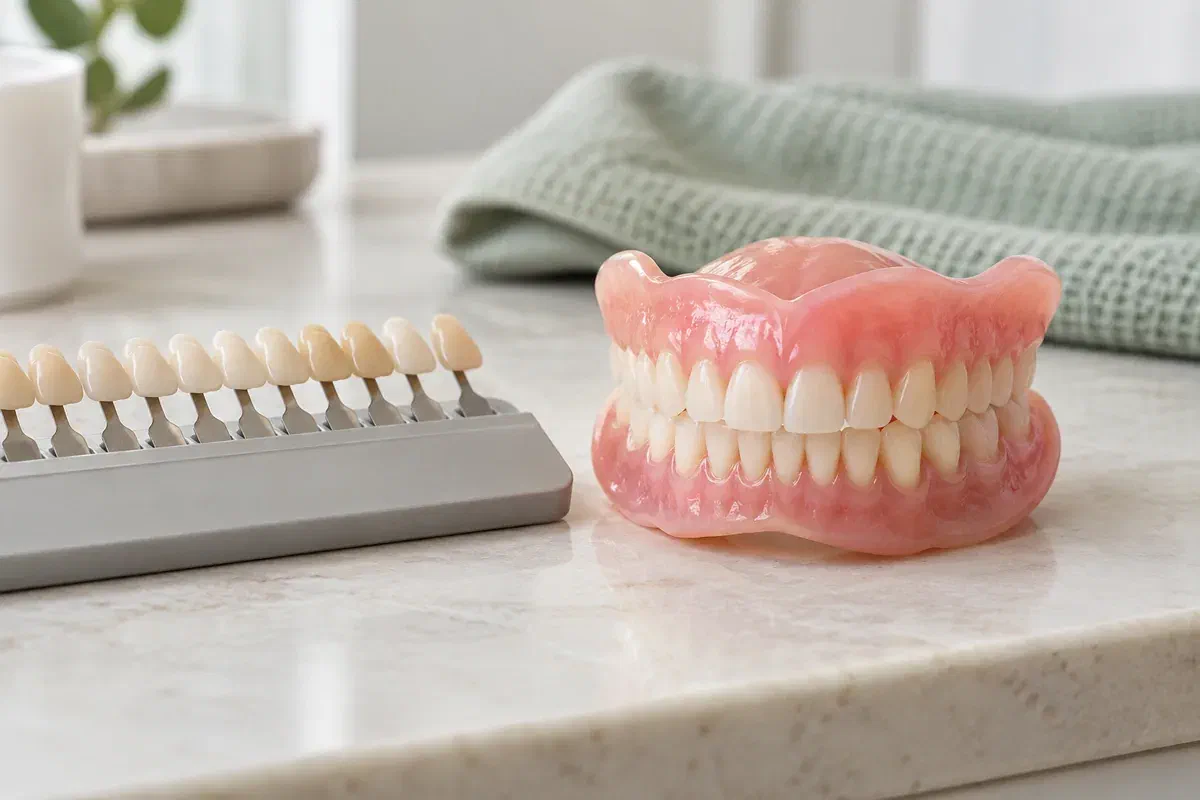
A denture can stay in daily use long after its surfaces and fit have changed. A review looks at the state of the appliance, the health of your gums and any remaining teeth, and the routine you follow at home.
Worn teeth, movement and discolouration are often linked. Say which matters most to you, so the conversation covers your actual priority and not only the most visible change.
Repaired areas can be harder to clean and may weaken over time. When fixes keep adding up, ask whether another repair is a sensible investment or whether the whole appliance needs review.
Redness under the denture, a sore that keeps returning, or more difficulty handling it for cleaning should all be mentioned. A sore that will not heal needs prompt examination.
Dentures don't wear out on a timetable. Regular examinations show whether to keep going, maintain the appliance, or start planning another.
Unlike a repair or reline, a new appliance allows the teeth, base and overall design to be rethought. That helps when the examination shows that worn, repaired or poorly fitting parts are contributing to cleaning difficulties or gum irritation.
Expectations should stay realistic. Any denture still needs daily care, and a new one may feel unfamiliar and require adjustment. A replacement can make the routine easier and the fit more comfortable, but it is not the same as having natural teeth back.
Patient information: American College of Prosthodontists — denture replacement
Tell us which cleaners, brushes and soaking products you use and how often. Your routine, along with what you would keep or change about the denture, shapes discussions about design and handling.
A new plan can consider cleanability alongside appearance and fit. Ask how the examination findings shaped the proposed design and what alternatives were looked at.
Knowing the stages, fittings and reviews makes the change simpler to organize. Mention work, travel and caregiving, and ask whether you may be without a usable denture at any stage.
The order and number of visits depend on the appliance and the health of your mouth. Ask how records, choosing teeth, try-in checks and any earlier treatment will be planned for you.
Bring your current appliance and the cleaning products you use. The dentist examines the gums and remaining teeth, noting which issues a new denture might help and which need separate treatment first.
We discuss whether cleaning, repair or relining could still serve you, and what a replacement would change. The scope, expected visits, costs and limits are laid out before you commit.
Impressions and bite records are used to build the new denture. Depending on the method, you may see a trial version and comment on the teeth before the appliance is completed.
At fitting, the denture is checked in your mouth and you practise insertion, removal and cleaning. A follow-up visit lets us review comfort and care once you have used it for a while.
A replacement may need different handling or products from the one you are used to. Stick to the guidance given for your appliance, and tell us about specific problems instead of putting up with them.
Ask which brushes, cleaners and soaking products are compatible with the new denture, and how to store it overnight. Practise insertion and removal with the team, and mention grip or vision difficulties.
Notice sore areas, redness and any movement while eating or talking. Call us about persistent problems so the fit can be checked, and avoid trimming or adjusting the denture yourself.
The fitting visit is one stage. Attend the review, ask whether further advice would help, and continue regular oral examinations to keep an eye on the tissues beneath the denture.
Useful planning brings together what we see and what your daily routine involves. These answers can help you get ready, without suggesting any design or timeline has been decided.
Book a visit at our Bronte Street clinic to review a denture that is stained, worn or hard to keep clean. We will check your gums and explain whether maintenance or a new appliance is the better route.
Bring the denture, its case, and the cleaning products you use at home.
