Several things seem off at once
Slipping, worn-down teeth and a changed appearance can all appear together. Share which of these worries the wearer most, so the discussion reflects their own priority and not just the most obvious wear.


Helping a parent with a denture that has become hard to manage? A replacement consultation can bring the wearer and the person who helps them into the same conversation. Families from Brampton can review fit, wear, handling and cleaning before deciding whether a new denture makes sense.
Sometimes the first person to notice a denture problem is not the wearer. A son sees his father avoiding dinner, or a daughter finds the denture left in a cup because it has become too fiddly to put back in. These everyday observations are worth bringing to the dentist.
Replacement means designing a new appliance once the old one no longer serves the mouth well. Reasons can include a changed fit, worn teeth, damage, or practical trouble with handling and cleaning. Years in service matter less than what the examination actually shows.
For families coming from Brampton, our Bronte Street team welcomes a caregiver at the appointment if the wearer would like one. Together we look at the denture, the mouth that supports it, and the routine at home, then explain whether a repair is still sensible and what a new design could realistically change.
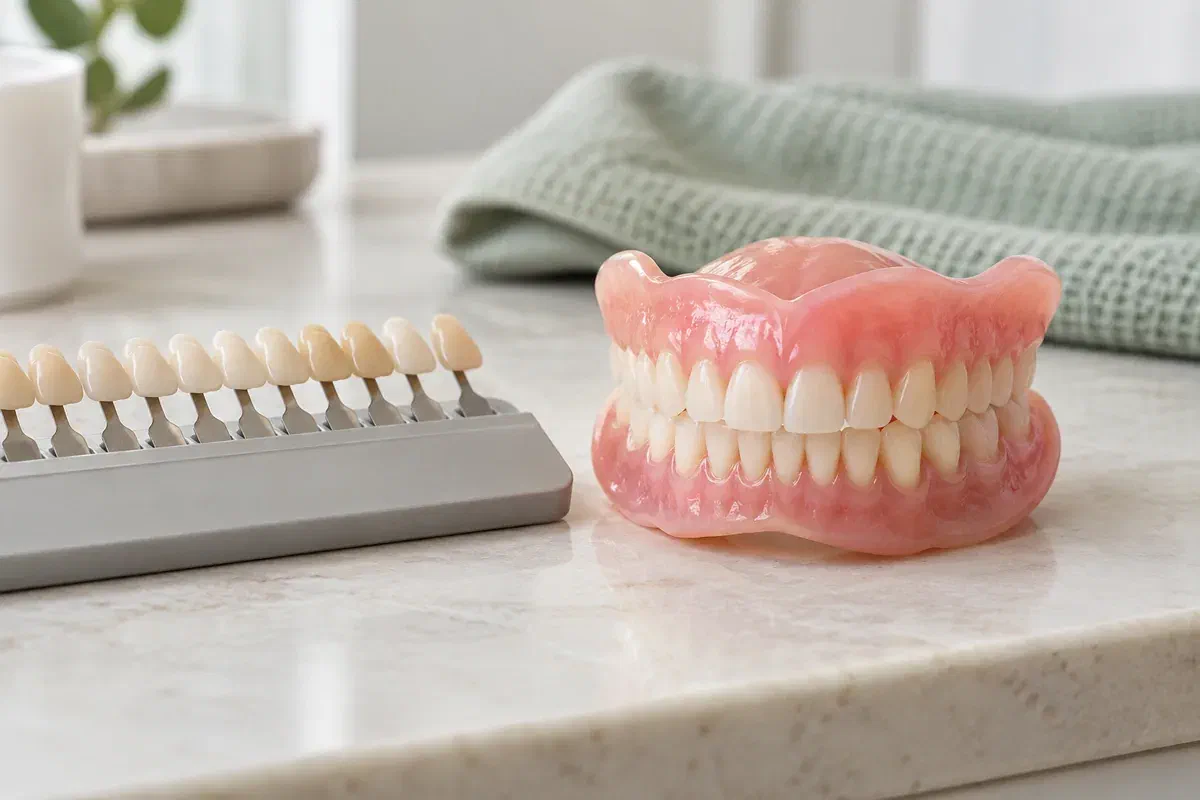
Plenty of dentures remain in use while key features have changed. An assessment brings together the state of the appliance, the health of the gums and any remaining teeth, and the real-world difficulties a household sees.
Slipping, worn-down teeth and a changed appearance can all appear together. Share which of these worries the wearer most, so the discussion reflects their own priority and not just the most obvious wear.
A long repair history is a reason for a broader review. Ask whether one more fix will keep a useful appliance going or simply delay changes the whole denture now needs.
Weaker grip, tremor, poorer eyesight or memory changes can make an otherwise sound denture hard to live with. Describe these openly; they are a legitimate part of deciding what comes next.
A denture's age alone doesn't decide its future. Regular assessment shows whether to keep using it, maintain it, or plan a new appliance.
With a new denture, more of the design can be reconsidered than with a repair or reline. That can include features that make the appliance easier to grip and clean, along with tooth arrangement and worn surfaces, when the examination shows they need attention.
Honest expectations help everyone. A replacement is still a removable appliance, and it may feel unfamiliar at first and need adjustments. It should be presented as a practical improvement for the wearer, not as a return to how natural teeth felt.
Patient information: American College of Prosthodontists — denture replacement
Talk with the wearer about what they would keep and what they would change. Their wishes, together with what caregivers see, shape later discussions about appearance, support and handling.
A new plan can weigh several features together instead of working around the limits of the old one. Ask how the findings led to the proposed design and which alternatives exist.
Knowing the likely stages and reviews makes it easier to arrange drivers, time off work and support at home. Mention any concern about the wearer being without a usable denture.
The exact sequence depends on the appliance and the wearer's oral health. Ask how records, choosing teeth, fitting checks and any earlier treatment will be organized in this particular case.
Bring the current appliance, even if it is rarely worn, and share its history. The dentist examines the mouth and identifies which concerns a replacement might help and which need separate attention.
We cover whether repair or relining remains reasonable and what a new denture would change. The wearer and family hear the scope, expected visits, costs and limits before anyone agrees to treatment.
Impressions or other records guide construction. Depending on the method, there may be a stage to check tooth appearance and try an intermediate version before the final denture is made.
The finished appliance is assessed in place, and the wearer and any helper are shown insertion, removal and cleaning. A review visit addresses concerns that appear once the denture is part of daily life.
A replacement can take time to feel natural, even for someone who has worn dentures for decades. Keep to the care advice given for the new appliance, and report specific problems rather than assuming they must be endured.
Ask for a demonstration with the caregiver present, particularly if the new design is different. Confirm which cleaners and containers suit it, and mention grip, vision or memory concerns so a workable plan can be made.
Notice where discomfort appears and whether the denture moves while eating or talking. Call the clinic about persistent problems so the fit can be checked, and please don't adjust the appliance at home.
The fitting is one step, not the end. Attend the follow-up, ask whether further advice on adapting would help, and continue regular oral exams even when the new denture seems comfortable.
Useful planning includes both what the dentist sees and what the household experiences. These answers are a starting point and do not assume any design or schedule is already decided.
Arrange a consultation at our Bronte Street clinic to look at a denture that has become uncomfortable, worn or hard to manage. We'll explain what still works and whether a new appliance is a better fit for daily life.
Have the denture with you, plus a list of medications, and any notes from family about difficulties at home.
