

Illustrative consultation about replacing an older denture
Restorative Dentistry

Denture Replacement in Old Milton

You may like the way your current denture looks and still find it harder to live with each year. Denture replacement for Old Milton wearers starts by sorting out what to carry forward, what has worn out, and what you would change if you had the chance.

Keeping the smile you know

The face in the mirror matters. So does the way it feels at dinner.

People who have worn the same denture for a long stretch often know it better than anyone. They know the shade of the teeth, the slight gap that friends never noticed, and the foods they now cut into smaller pieces. That knowledge is the best starting point for planning a successor.

A replacement is a newly designed appliance. It is usually considered when the fit has changed, the artificial teeth have worn down, the base is damaged, or several of these happen together. The number of years since the denture was made does not, on its own, settle the question.

Our Bronte Street practice sits a short way from Milton's historic downtown, and we see many longtime Old Milton wearers. In a consultation we examine the denture and the mouth that supports it, explain why replacement is or is not being suggested, and talk honestly about which features can be kept and which may need to change.

Plan a replacement that keeps what you like
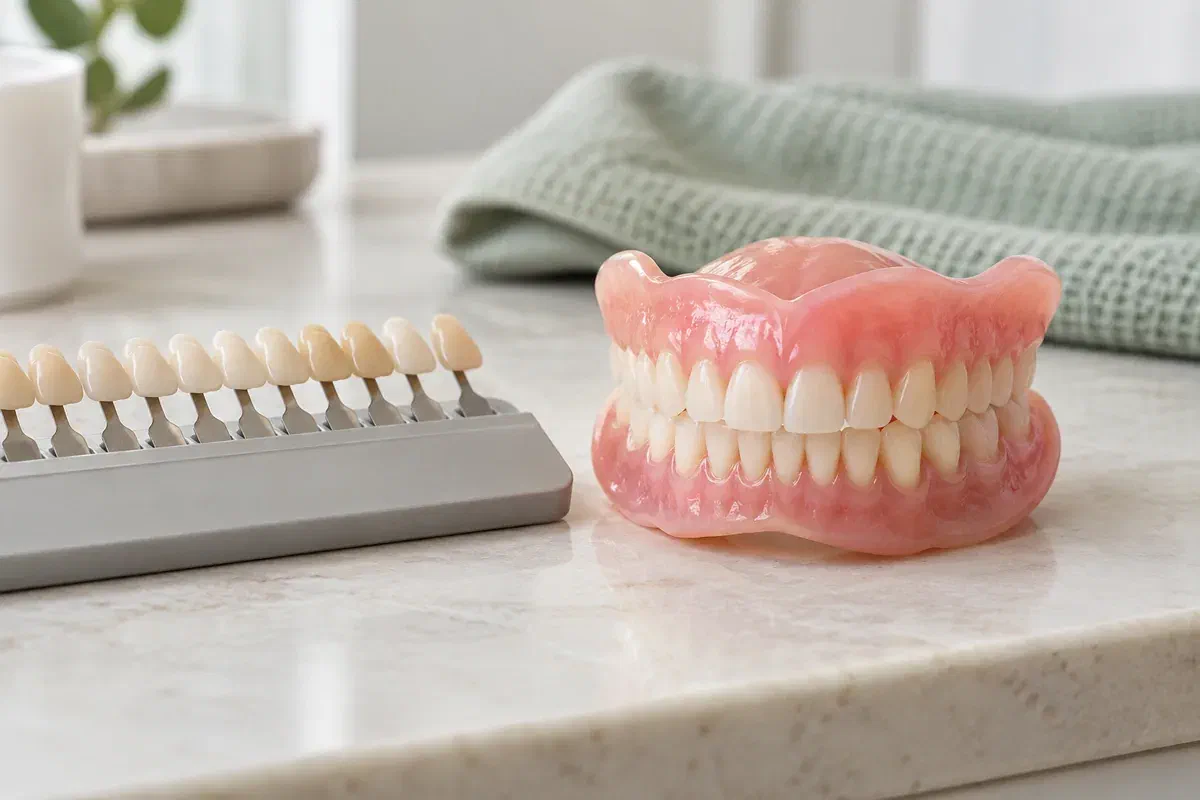
Complete denture set beside a tooth shade guide
Changes that creep in slowly

What you've adapted to may be worth mentioning.

Over the years many wearers quietly adjust how they chew, smile or speak. An assessment looks at the teeth and base, the health of the tissues beneath, and those small habits you may no longer notice.

Teeth that look shorter or flatter

Worn artificial teeth can change both chewing and appearance, often alongside a looser fit. Point out what bothers you most, whether that is how food breaks down or how your lips sit, so the review reflects your own priority.

A denture that has been mended many times

Each repair may have been reasonable, yet a long list of them calls for a wider look. Ask whether one more fix keeps a sound appliance going or only postpones changes the whole denture now needs.

New challenges at home

Changes in your gums, any remaining natural teeth, or your ability to hold and clean the denture can affect whether it still suits you. Mention arthritis, eyesight or similar issues, even if they seem unrelated.

There is no fixed retirement age for a denture. Regular checks show whether to keep wearing it, maintain it or begin planning a new one.

Carrying the good parts forward

A familiar look, with a fresh design underneath

Starting a new appliance means more can be reconsidered than with a spot repair or reline. That is useful when the tooth arrangement, the worn biting surfaces, or the general design no longer match what the examination shows your mouth needs.

It also helps to be clear about limits. A removable denture remains removable, and a new one may feel different and need adjustment for a while. Wanting the familiar look back is reasonable; expecting the feel of natural teeth is not something a replacement can promise.

Patient information: American College of Prosthodontists — denture replacement

Describe the smile you want to keep

Bring photographs if you have them and point out the features of the current teeth you would like repeated. Note too what you would happily change, such as length, colour or how the teeth meet.

Let the design start from today's mouth

A new plan does not have to inherit the old denture's compromises. Ask how your examination shapes the proposed design, and what other approaches were considered.

Arrange the switch around your routine

Knowing the likely stages, fitting steps and review visits makes the change easier to plan. Mention any social events, travel or caregiving that matter, and any worry about a period without a working denture.

Step by step

Four stages, planned around your own appliance

Appointment order depends on the denture and on your oral health. Ask how impressions, choosing teeth, fit checks and any treatment needed beforehand will be arranged for your plan.

  1. Show us the denture and tell its history

    Wear or bring the current set, even if it is uncomfortable, and share what has been repaired. The dentist examines your mouth and separates what a new denture could help with from issues needing their own care.

  2. Look at the choices side by side

    We discuss whether repair or a reline is still reasonable and what a new appliance would actually change. Scope, expected visits, costs and limitations are explained before you decide.

  3. Take records and talk about the teeth

    Impressions or other records guide construction. Depending on the method, you may be able to review how the teeth look and assess a trial stage before the final denture is finished.

  4. Fit, instruct and book a review

    The new denture is checked in your mouth, and you are shown how to place, remove and clean it. A follow-up visit gives the team a chance to look at anything that comes up in normal use.

Settling in

Even seasoned wearers get a learning curve.

Decades with a denture do not mean a new one will feel the same right away. Follow the instructions for your appliance and describe particular problems, rather than assuming every difference must simply be tolerated.

Get comfortable with handling and cleaning

Ask for a demonstration of placing and removing the new set, especially if its shape differs from the old one. Confirm which cleaners suit it and how to store it, and mention any trouble with grip or vision.

Notice sore spots and movement

Pay attention to where pressure builds and whether the denture shifts during talking or certain meals. Call about persistent problems so the fit and bite can be checked, and avoid adjusting it yourself at home.

Keep the follow-up on the calendar

Fitting day is only one step. Attend the planned review, ask whether further advice would help you adapt, and continue regular oral examinations even if the new denture feels good early on.

How much to change

Sometimes a little. Sometimes the whole appliance.

A new denture is one possible answer, not the only one. Your examination helps separate a modest maintenance need from a case where keeping the current appliance would preserve its main problems.

When one concern can be put right

Repair or maintain the current denture

If the appliance still suits you overall, targeted work may be reasonable. Ask how long it is likely to remain useful afterwards and what will stay the same, rather than assuming an older denture must go.

When the gums have changed shape

Refresh the fit, keep the teeth

Relining or rebasing may be discussed if the teeth and their arrangement still work well. You should hear which parts need renewal and why keeping the rest is sensible.

When broader change makes sense

Plan a new denture or another form of support

A replacement lets more of the design be rethought. In suitable cases, other support options may be assessed as well, each with its own treatment steps, costs, upkeep and limitations.

Old Milton questions

Things longtime wearers often want to know

A helpful replacement conversation mixes clinical findings with your daily experience. These answers are meant to help you prepare, not to suggest a design or schedule has already been chosen.

(905) 876-4488
Can the new teeth be matched to the shade and shape I've had for years?
Bring the current denture and any photos you like. Matching the familiar look can be discussed during planning, but the design also has to suit your mouth as it is today. Ask which features can sensibly be carried over.
Would slightly different teeth make me look noticeably different?
Changes in tooth length, position or shade can affect how the lips and face appear. If a trial stage is part of your process, that is a good moment to look closely and tell us how you feel about the appearance.
I've had arthritis develop in my hands. Does that affect the new design?
It can. Grip and dexterity influence how easy a denture is to put in, take out and clean. Explain the difficulty early so handling is considered when the design is chosen, and ask for a demonstration before you leave.
Is there an age at which every denture should be retired?
No single interval applies to everyone. The dentist reviews condition, fit, function and the tissues underneath. Age is useful background, but a recommendation should rest on what the examination actually finds.
Can a family member come with me to the consultation?
Yes, many people find it helpful to bring someone. A relative or friend can help remember instructions, ask questions and support the cleaning routine at home. Let us know when booking if you would like them included.
My old denture never needed adjusting. Why might the new one?
A replacement meets your mouth in a new way, even when parts of it feel familiar. Pressure points or bite contacts may only show up with everyday use. Keep the review appointment and describe what you notice.
From Old Milton

Keep the smile. Rethink the fit.

Visit our Bronte Street practice to review a denture that has served you for years but no longer feels quite right. We will look at what is still working and whether a new appliance is the better path.

Bring your denture, any old photos of your smile, and a few notes on what you would like to keep or change.

Visit Milton Dental Clinic
Unit 1, 342 Bronte St. S, Milton, ON L9T 5B7
Get directions Clinic hours
Monday–Thursday
11am–7pm
Friday–Sunday
By appointment only

Areas we serve

  • Milton
  • Oakville
  • Mississauga
  • Georgetown
  • Halton Hills
  • Acton
  • Campbellville
  • Brampton
  • Burlington
  • Puslinch
  • Rockwood
  • Erin
  • Caledon
  • Etobicoke
  • Old Milton
  • Bronte Meadows
  • Timberlea
  • Dorset Park
  • Dempsey
  • Clarke
  • Beaty
  • Coates
  • Harrison
  • Scott
  • Willmott
  • Ford
  • Bowes
  • Cobden
  • Walker
  • Mountain View
  • Milton Heights
  • Hawthorne Village
  • Valley View
  • Fallingbrook
  • Nassagaweya
  • Trafalgar
  • Esquesing
  • Nelson
  • Brookville
  • Moffat
  • Glen Williams
  • Norval
  • Limehouse
  • Stewarttown
  • Ashgrove
  • Hornby
  • Silver Creek
  • Speyside
  • Scotch Block
  • North Oakville
  • River Oaks
  • Glen Abbey
  • West Oak Trails
  • Palermo
  • Bronte Creek
  • College Park
  • Joshua Creek
  • Uptown Core
  • Preserve
  • Iroquois Ridge
  • Lisgar
  • Meadowvale
  • Meadowvale Village
  • Churchill Meadows
  • Erin Mills
  • Central Erin Mills
  • Streetsville
  • East Credit
  • Creditview
  • Heartland
  • Sheridan
  • Mount Pleasant
  • Credit Valley
  • Huttonville
  • Churchville
  • Springbrook
  • Northwest Brampton
  • Bram West
  • Fletcher's Meadow
  • Fletcher's Creek South
  • Alton Village
  • Orchard
  • Millcroft
  • Headon Forest
  • Tansley
  • Brant Hills
  • Tyandaga
  • Kilbride
  • Lowville
  • Aberfoyle
  • Morriston
  • Arkell
  • Hillsburgh
  • Freelton
  • Carlisle
  • Waterdown
  • Flamborough
  • Mountsberg

How can we help?

Milton Dental Clinic

Have a question about your smile? Choose the option that works best for you.

For urgent dental concerns, please call.
Messages are reviewed during clinic hours.