The denture was already giving trouble
If movement, worn teeth or a changed look were bothering you beforehand, mention them. That way the decision is not based only on the crack, but on everything you would like to improve.


A denture that snaps on the bathroom floor forces a quick decision: mend it, or use the moment to plan a new one? Households in Puslinch can call us first, get the break assessed, and then talk calmly about whether repair or replacement is the better long-term choice.
It slipped out of a wet hand, hit the sink and split. The first instinct is to get it fixed as fast as possible, and often a repair is exactly right. Still, a break is a good moment to ask how the denture was doing before it fell.
If it was already loose, worn flat or mended before, repairing the crack may bring back those older problems along with the denture. In that case a replacement, meaning a newly designed appliance, could be worth discussing. The number of years it has been in use is only one consideration.
From Puslinch, it is sensible to call our Bronte Street practice before setting out. We can advise how to handle the pieces and whether you should be seen soon. At the visit we examine the denture and your mouth, explain whether repair is reasonable, and outline what a new appliance would involve if you would rather start fresh.
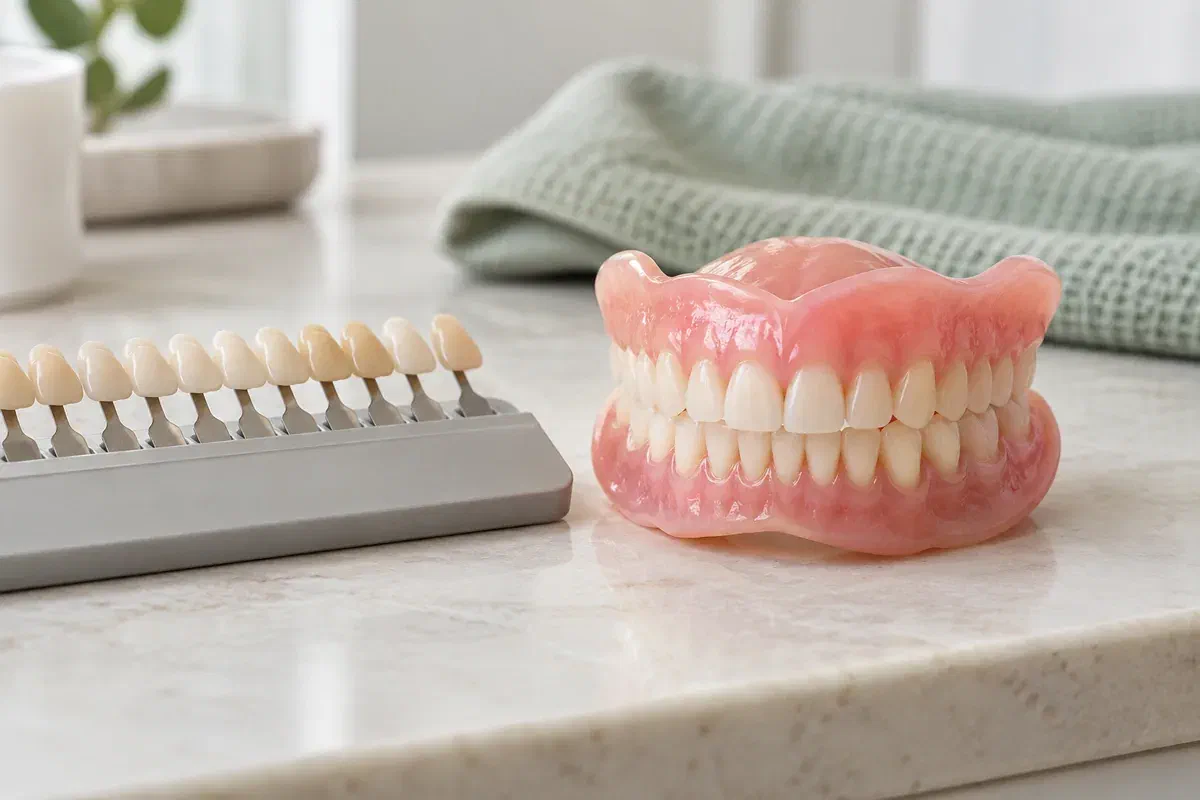
Breakage sometimes reveals problems that were already building. An assessment considers the damaged appliance, the condition of your gums and any natural teeth, and how the denture was working before the accident.
If movement, worn teeth or a changed look were bothering you beforehand, mention them. That way the decision is not based only on the crack, but on everything you would like to improve.
Repeated fractures in the same area can point to a fit or bite issue rather than bad luck. Ask whether another repair would hold, or whether the appliance as a whole needs rethinking.
A broken edge can injure the gums or cheek. Stop wearing a denture with sharp fragments and call for advice. Note any soreness, and mention new difficulties handling the appliance.
Not every broken denture needs replacing. A careful assessment shows whether a repair, maintenance or a new appliance is the more appropriate response.
A repair restores the denture you had. A replacement lets more of the design be reconsidered, including tooth arrangement, worn surfaces and fit, which matters when the examination shows that the old appliance had problems beyond the crack.
Keep expectations level. Any new removable denture may feel unfamiliar for a time and need adjustment. Replacement can address several issues together, but it will not feel like natural teeth, and that should be part of the conversation from the start.
Patient information: American College of Prosthodontists — denture replacement
Getting you through the next few weeks comfortably is one goal; planning a better long-term appliance is another. Discuss both, along with the features you would keep or change.
A new plan can address several concerns at once rather than repeating old compromises. Ask how the examination findings shaped the recommended design and what alternatives exist.
Ask whether a repair can keep you going while a replacement is made, and what the stages, fitting and reviews will involve. Mention work, travel and other commitments.
Every plan depends on the damage, the appliance and the health of your mouth. Ask how any interim repair, records, tooth selection and fitting will be organised in your case.
Bring all the pieces in a clean container, along with any spare. We examine your mouth, check for sore or injured areas, and identify which concerns a replacement might resolve and which need other care.
You will hear whether repair remains a sound option and what a new appliance would change. Scope, likely visits, costs and limitations are explained before you choose.
If you go ahead with a replacement, impressions and bite measurements are taken. Depending on the method, there may be a chance to review tooth appearance at a trial stage before completion.
On fitting day we assess the new denture in place and go over insertion, removal and care. A review visit then deals with any pressure or bite issues that appear in everyday use.
A replacement may take a little time to settle, even if you have worn dentures for many years. Keep to the care advice for your new appliance, and describe specific problems rather than assuming they must be tolerated.
Many breaks happen during cleaning. Work over a folded towel or a basin of water, use the products the team recommends, and ask for a demonstration of insertion and removal if the design is new to you.
Notice where pressure builds and whether the denture moves when you eat or speak. Phone the clinic about persistent issues so the fit can be checked; don't glue, file or bend it at home.
Fitting is one step in the process. Attend the follow-up, ask whether more adaptation advice would help, and continue routine oral examinations even if the denture feels fine.
The right choice depends on what the examination shows and how the denture was working for you. Treat what follows as general guidance; your own plan and timing come after the assessment.
Book a visit at our Bronte Street clinic to assess a broken, cracked or repeatedly mended denture. We will explain whether repair makes sense or whether a new appliance is the better long-term option.
Keep every piece in a clean, dry container, and jot down how the denture was fitting before it broke.
