A new gap, rocking or pinching
When a supporting tooth changes, movement and appearance problems may appear together. Tell us which matters most so the visit addresses your priority rather than only the most obvious change.


Losing another natural tooth can change how a partial denture sits overnight, and sometimes the old appliance can be adapted while sometimes it can't. For wearers in Rockwood, a review sorts out which applies and plans the right next step for your remaining teeth.
A partial denture relies on the natural teeth around it for support and grip. When one of those teeth is lost, cracked or treated, the appliance may suddenly rock, pinch or leave a new gap. Complete dentures face a similar issue as the gums slowly change shape.
In some situations the existing appliance can be adapted, for example by adding a tooth. In others the changes are broad enough that a new design makes more sense. Wear on the artificial teeth, damage and a changed fit all feed into that choice, while age on its own does not.
Coming from Rockwood, you can expect our Bronte Street team to look at your remaining teeth as carefully as the denture itself. We explain whether the current appliance can be modified, what a replacement would change, and how both choices affect the natural teeth you still have.
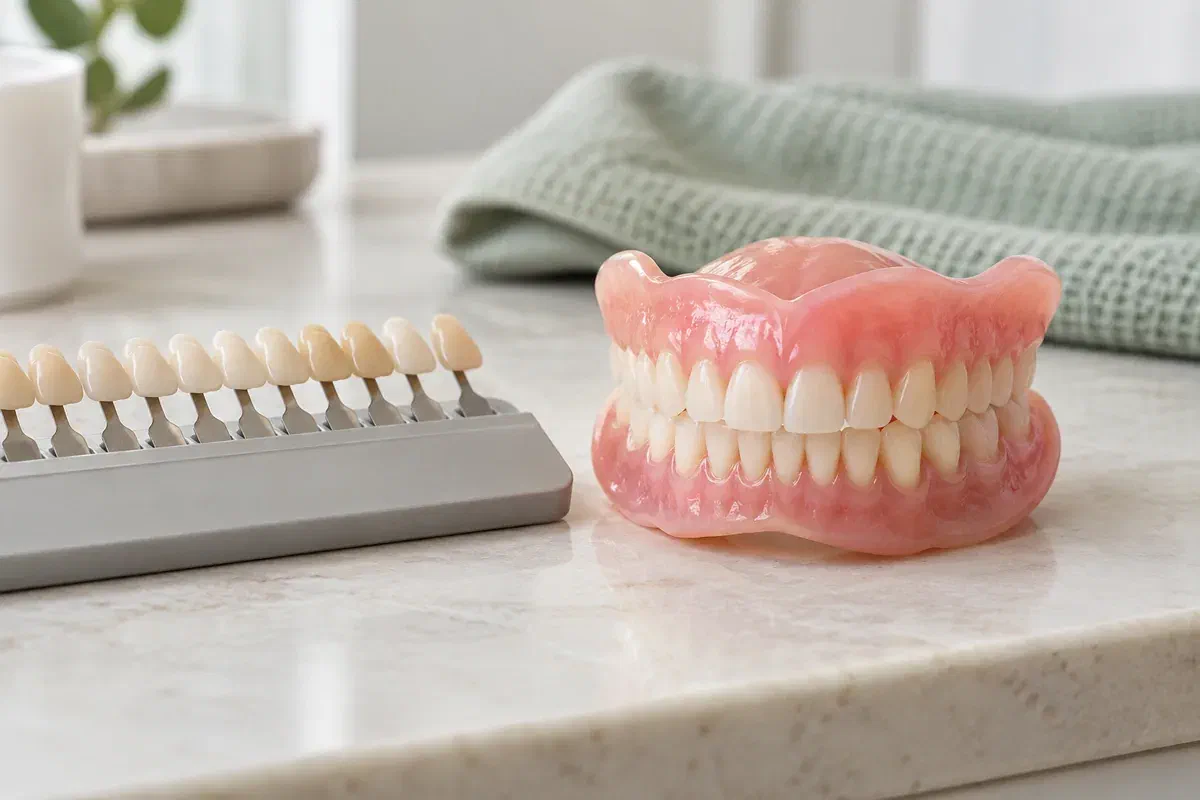
A denture can still be worn after the mouth around it has changed. An assessment takes in the appliance, the health of your gums and natural teeth, and the everyday difficulties you mention.
When a supporting tooth changes, movement and appearance problems may appear together. Tell us which matters most so the visit addresses your priority rather than only the most obvious change.
Bent clasps, refitted teeth and patched areas suggest it may be time for a wider review. Ask whether another fix will hold, or whether the whole appliance now needs rethinking.
Decay, gum disease or sensitivity around the teeth that support the denture should be checked. Mention any changes, along with difficulties cleaning around clasps or handling the appliance.
There is no fixed point at which every denture must be replaced. A thorough examination shows whether to adapt, maintain or start again.
Modifying an appliance works within its original layout. A new denture lets the support, tooth arrangement and overall design be reconsidered around your current natural teeth, which helps when the examination shows the old layout no longer suits.
Be clear about limits. Any removable appliance has trade-offs, and a new one may feel unfamiliar or need adjustment at first. Planning should also consider the long-term care of the natural teeth, rather than focusing only on the denture.
Patient information: American College of Prosthodontists — denture replacement
Describe what works about the current appliance and what doesn't. That gives a practical starting point for discussing support, appearance and how easily you can clean around your teeth.
A new design can take your remaining teeth into account from the outset. Ask how the examination findings influenced the proposal and what alternative approaches were considered.
Fillings or gum care may be needed before a new appliance is made. Ask about the stages, fittings and reviews, and whether there could be a period without a usable denture.
The order of appointments depends on your appliance and on any care your natural teeth need. Ask how records, choosing teeth, fit checks and preliminary treatment will be scheduled.
Bring the denture you use, even if it is uncomfortable, and mention any recent tooth loss or treatment. The dentist checks your mouth and works out which issues a new appliance could help with.
We explain whether adding a tooth, repairing or relining remains reasonable, and what a replacement would change. You hear the scope, visits, costs and limits before choosing a plan.
Once the natural teeth are ready, impressions and bite records are taken. Depending on the method, there may be a trial stage to review appearance and fit before the final appliance is made.
The new denture is assessed in place, and you are guided through insertion, removal and cleaning around your teeth. A review appointment lets us address concerns that arise in everyday use.
A replacement can feel different, especially if the way it attaches has changed. Stick with the care instructions for your appliance, and describe specific problems instead of assuming they're normal.
Ask for a demonstration, particularly if clasps or other features are new to you. Confirm which cleaners suit the appliance, how to clean around your natural teeth, and mention any trouble with grip or eyesight.
Notice sore gums, sensitivity or movement while eating and speaking. Contact the clinic about persistent problems so the fit can be checked; please don't bend clasps or adjust the denture at home.
The fitting visit is only one part of the process. Attend the follow-up, ask for further advice if adapting is hard, and continue routine examinations to look after the remaining teeth.
Sound planning brings together examination findings and your daily experience. These answers are a starting point and do not imply any design or timeline is already decided.
Book a consultation at our Bronte Street practice to review a partial or complete denture that no longer suits your mouth. We will check your remaining teeth and explain whether adapting or replacing is wiser.
Bring your denture and let us know about any teeth that have recently been removed or treated.
